


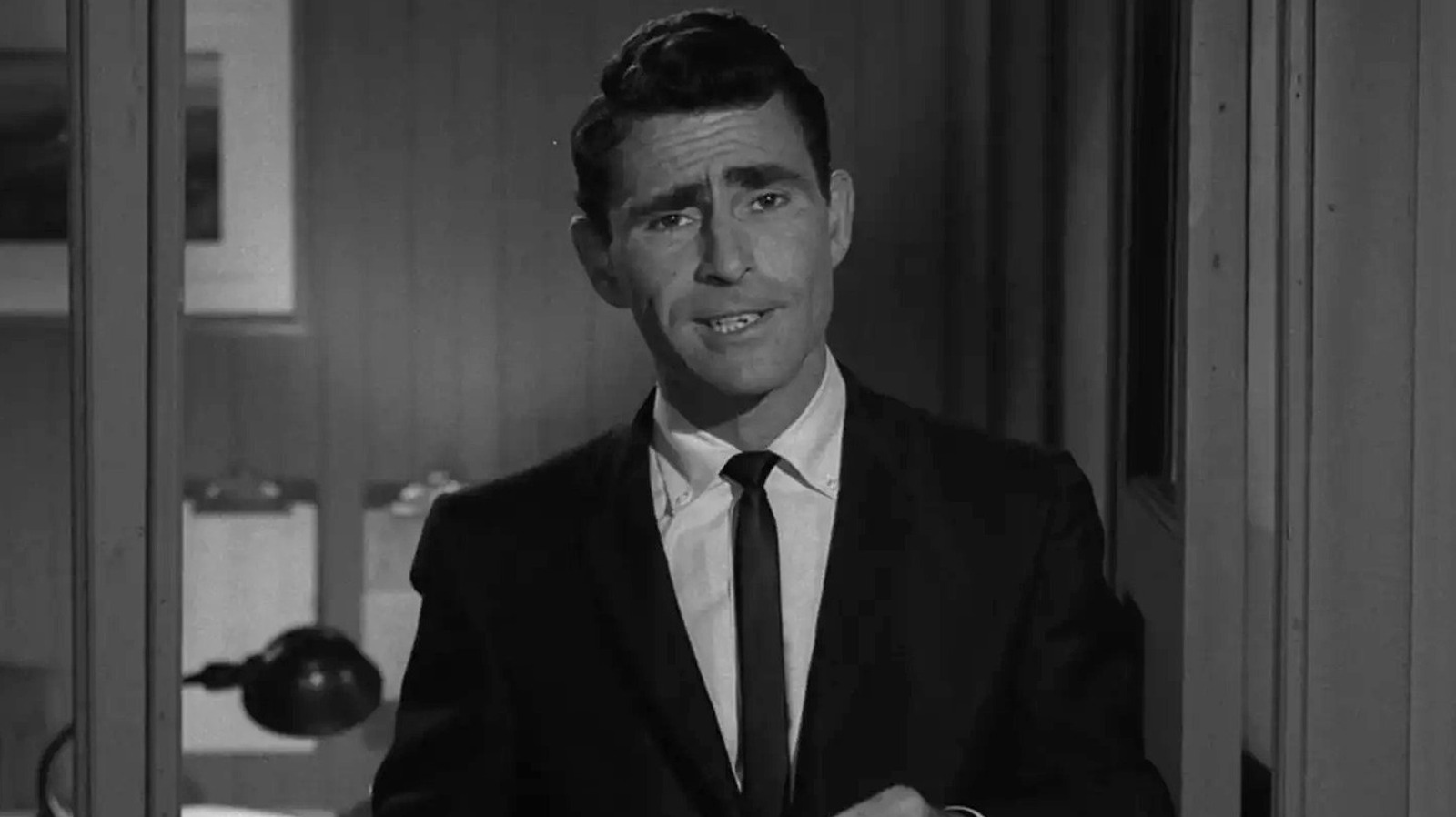
When it comes to classic TV series that specialize in surprising and thought-provoking endings, it’s hard to top Rod Serling’s “The Twilight Zone.” The esteemed sci-fi show doesn’t have a single bad season, and surprisingly few truly atrocious episode endings.
Even the worst episodes of “The Twilight Zone” can wrap up in a reasonably interesting way, regardless of how they get there. Meanwhile, the best “Twilight Zone” episodes of all time almost invariably deliver mind-blowing moments that can stand up against just about any other show’s finest conclusions. With so many standout endings to choose from, narrowing them down isn’t easy.
Still, there are 10 “The Twilight Zone” episodes that stand out for wrapping up their stories in especially powerful and memorable ways. Here’s a look at what makes these endings so great — and how they rank against each other.
10. An Occurrence at Owl Creek Bridge (Season 5, Episode 22)
Rod Serling took Robert Enrico’s French short film “An Occurrence at Owl Creek Bridge” into “The Twilight Zone” fold for good reason. Based on Ambrose Bierce’s short story of the same name, this Season 5 standout tells the tale of Peyton Farquhar (Roger Jacquet), a Civil War-era man who’s about to be hanged by Union soldiers. A lucky break comes when the rope snaps. After surviving the fall into the river below, our protagonist begins an arduous journey to reunite with his beloved wife, Abby (Anne Cornaly).
The twist at the end is as sudden as it is cruel. After finally reaching his love, Farquhar is pulled back to the very moment of the drop, and the truth finally reveals itself. He never escaped the noose or made the trek. Everything we’ve seen after the soldiers drop him from the bridge is the final hallucination of a dying man, cut short by the moment of his demise.
As a short film, “An Occurrence at Owl Creek Bridge” won an Academy Award in 1964. Folded into an episode of “The Twilight Zone,” its ending feels right at home among the show’s most devastating twists. Still, the beautiful way the story builds toward those final, crushing moments works like a dream, allowing this unusual entry to deliver one of the best endings the series has to offer.
9. Five Characters in Search of an Exit (Season 3, Episode 14)
A literal mystery-box (well, barrel) episode, “Five Characters in Search of an Exit” devotes the majority of its runtime to exploring the titular quintet’s predicament. The Major (William Windom), the Ballet Dancer (Susan Harrison), the Clown (Murray Matheson), the Bagpiper (Clark Allen), and the Hobo (Kelton Garwood) inexplicably find themselves locked in a featureless container that they’re unable to escape. They neither have nor need any sustenance, and their apparent prison seems inescapable.
When the Major finally manages to flee the cylinder, the truth unfolds. All five are actually toys, and the cylinder is a Christmas toy collection box for an orphanage. The Major is promptly returned to the box, and the characters end the episode in an inanimate state, having finally realized their true nature.
Like Pixar’s “Toy Story” series would prove decades later, there is an inherent horror aspect to the idea of being a sentient toy, especially one that’s abandoned. By embracing this aspect of its premise, “Five Characters in Search of an Exit” delivers a haunting twist ending that closes with the sheer existential horror of the Ballet Dancer’s tears. There is a glimmer of hope, of course. The five are headed to the orphanage, perhaps to be loved and cherished once again. For now, however, they’re very much in hell — just like the Major speculated earlier in the episode.
8. The Passersby (Season 3, Episode 4)
“The Passersby” introduces a strange Civil War-era scene where an unnamed, wounded sergeant (James Gregory) limps along a mysterious road and meets Lavinia Godwin (Joanne Linville), who lives nearby. The two observe the endless trickle of wounded soldiers passing by, and as the episode draws near its close, they finally figure out the truth: Everyone along the road is dead, including them.
The gradual reveal of the Civil War death road’s true nature is skillfully done, but the very end of the episode takes things to the next level. As Lavinia struggles to face the truth and join her dead husband (Warren Kemmerling) on the road, she encounters the recently assassinated Abraham Lincoln (Austin Green). Even without the Lincoln moment, the moody episode’s ending would work. However, Green’s powerful portrayal of the Shakespeare-quoting president elevates the conclusion of “The Passersby” to elite status, even by the show’s lofty standards.
7. I Shot an Arrow into the Air (Season 1, Episode 15)
“I Shot an Arrow into the Air” is ostensibly a story about a spaceship crash. The handful of survivors struggle to get along, and Corey (Dewey Martin) — the most survival-minded and ruthless among them – ends up killing the others to keep all the remaining water for himself.
Though the episode largely plays the marooned astronauts’ plight straight, there are signs that things aren’t quite what they seem to be. Most prominently, a dying Pierson (Ted Otis) attempts to draw a strange sign in the sand just before he passes away. This sign becomes part of a particularly nasty surprise ending, when the murderous Corey learns they’re still on Earth, and Pierson’s drawing was a telephone line near a road that leads to Reno, Nevada.
By working together, the surviving crew members could have made it to civilization — but instead, Corey becomes a killer for no reason at all. It’s a powerful lesson about the dangers of selfishness and the benefits of working together, “The Twilight Zone” style.
6. The Invaders (Season 2, Episode 15)
The best sci-fi anthology TV shows know how to subvert expectations, and “The Twilight Zone” does exactly that with “The Invaders.” It’s a fairly simple story about a nameless woman (Agnes Moorehead, doing all the heavy lifting without dialogue) who has to fight off tiny space invaders that land their UFO on her roof and attack her for some unknown reason.
When the woman eventually manages to gain the upper hand and is about to wreck the tiny invaders’ spaceship, the episode delivers its surprise ending: The vehicle is actually a U.S. Air Force space probe. The minuscule aliens were actually human astronauts all along, and the unfortunate woman they attack is a gigantic alien from a mysterious planet they have landed on.
“The Twilight Zone” endings rarely shy away from moral lessons, and this episode definitely isn’t messing around. By framing the astronauts as evil space invaders and the alien woman as the distressed protagonist who only hopes to survive the ordeal, “The Invaders” delivers a poignant message about humanity’s tendency to mess with and attack the unknown — and the consequences this sort of behavior can lead to.
5. The Monsters Are Due on Maple Street (Season 1, Episode 22)
You can tell from the early minutes that “The Monsters Are Due on Maple Street” will end badly. When a mysterious phenomenon in the sky triggers a power and communication blackout that disrupts the peaceful life on the titular street, a boy named Tommy (Jan Handzlik) convinces everyone that the situation resembles an alien invasion story he once read, and that some people in the neighborhood are actually extraterrestrial monsters in disguise. Soon, the people of Maple Street are consumed by suspicion, and mayhem ensues.
For much of the episode, the residents’ descent into madness feels almost inevitable. However, it’s easy to write it off as simple paranoia, right up until the ending reveals two very real aliens (Sheldon Allman and Bill Walsh) who have been manipulating the neighborhood’s power to deliberately drive the residents insane as a trial run for a world-conquering plot. The twist that aliens are weaponizing humanity’s tendency to panic and overreact when faced with a mysterious situation is particularly striking.
As one of the sci-fi shows that define the genre, “The Twilight Zone” features many tales of extraterrestrials who are up to no good, as well as lessons about humanity’s tendency to shoot itself in the foot when given the chance. Few episodes have delivered both of these messages as well as “The Monsters Are Due on Maple Street,” and the episode’s delightfully dark ending is a large part of its success.
4. Will the Real Martian Please Stand Up? (Season 2, Episode 28)
“The Twilight Zone” is no stranger to twist-heavy episodes, and it doesn’t get much twistier than “Will the Real Martian Please Stand Up?” The episode’s title and opening narration already establish that one of the people in the diner we spend the bulk of our time in is actually a Martian, and the two state troopers (John Archer and Morgan Jones) hot on the trail of a UFO’s occupant soon find out that identifying the alien is far from simple.
Because of this heavy foreshadowing, it seems the episode’s ending will hinge on revealing the Martian’s identity. Instead, “Will the Real Martian Please Stand Up?” gives us whammy after whammy. Everything initially appears to resolve peacefully, as the seemingly Martian-free group leaves the diner and Haley the cook (Barney Phillips) stays behind. Then, Ross (John Hoyt) returns and reveals himself as the Martian who’s been deceiving the group with illusions before sending them to their deaths, bragging that his kind is on its way to take over the planet.
However, Haley isn’t frightened in the slightest. Instead, he reveals himself as another alien from Venus, noting that his people have already attacked the Martian ships. Slapping both the viewer and the disguised Martian with a surprise second alien reveal is a genius move that takes the ending to a whole new level.
3. To Serve Man (Season 3, Episode 24)
When the seemingly benevolent Kanamits reveal themselves in “To Serve Man,” viewers might expect something to be off. After all, nine-foot-tall aliens played by Richard Kiel are rarely a recipe for great news, especially on “The Twilight Zone.”
Yet, the episode spends plenty of time showing that the Kanamits appear genuinely benevolent, as the technology they provide transforms Earth into a utopian place where peace reigns and resources are abundant. There’s just one lingering question. As cryptographers Michael Chambers (Lloyd Bochner) and Patty (Susan Cummings) find out, the Kanamits’ book, titled “To Serve Man,” proves difficult to decode. Why bother, though? After all, the Kanamits seem altruistic, and they’re even offering to take volunteers to their own, even cooler home planet.
Therein lies the twist. As humanity — and Chambers — kick back and relax, Patty continues the decoding work. Just as Chambers boards a Kanamit ship, she arrives with horrifying news: “To Serve Man” is a cookbook, and the Kanamits have turned humanity into complacent cattle. It’s here that we realize the episode’s opening moments showed Chambers already aboard the ship, on his way to the Kanamit planet to be eaten. The episode is one of the finest layer-cake endings “The Twilight Zone” has ever baked, and the way Chambers draws the viewer in with his final, fourth-wall-breaking monologue is the perfect cherry on top.
2. Eye of the Beholder (Season 2, Episode 6)
There are many predictable TV plot twists you can see coming a mile away. “Eye of the Beholder” isn’t one of them. Perhaps the most famous left-field ending in “The Twilight Zone” is ultimately a simple one: The bandaged, horrendously malformed patient Janet Tyler (Maxine Stuart and Donna Douglas) is actually conventionally beautiful, while the world she lives in is full of people who, from the viewer’s point of view, are hideous.
The episode hides its cards well, however. We never quite see the faces of the doctors and the nurses until the time comes, and they emphasize Janet’s supposed deformities and many failed surgeries so effectively that the big reveal manages to be both surprising and impactful — even with the not-so-subtle clue in the episode title.
The ending doesn’t stop at commentary on beauty standards, though. The distraught Janet soon encounters a similarly “malformed” man (Edson Stroll), who leads her to a small but happy outcast community of their kind. With this, the episode concludes with a surprisingly heartwarming message: Regardless of how society views you, you can still find your place in the world.
1. Time Enough at Last (Season 1, Episode 8)
What makes the ending of “Time Enough at Last” so effective is that it doesn’t hold your hand. It simply presents the events that lead to one of the most ironic post-apocalypse fates imaginable for poor, downtrodden Henry Bemis (Burgess Meredith).
You may already know how this iconic example of “The Twilight Zone” twist plays out: Bank teller Henry is an avid reader who’s saved from the nuclear apocalypse when he happens to be taking his combined lunch and reading break in the bank vault. Though initially shocked, he soon realizes that he has enough supplies to survive, a whole library of books to read, and all the time he could ever want. Unfortunately, he almost immediately breaks his glasses, leaving him functionally blind. With no one around to help him get new ones, Henry is left despondent as he realizes he’ll never enjoy his beloved books again.
It’s a classic case of monkey’s paw wish fulfillment, which “The Twilight Zone” often excels at. However, there are other layers to what makes “Time Enough at Last” so potent, from the notion that even the most misanthropic person needs others to survive to a commentary of society’s views on reading and education. Combined with Meredith’s stellar performance shaping Henry into a sympathetic — if not always likable — figure, the John Brahm-directed episode captures all the strongest suits of Rod Serling’s show in one powerful story.