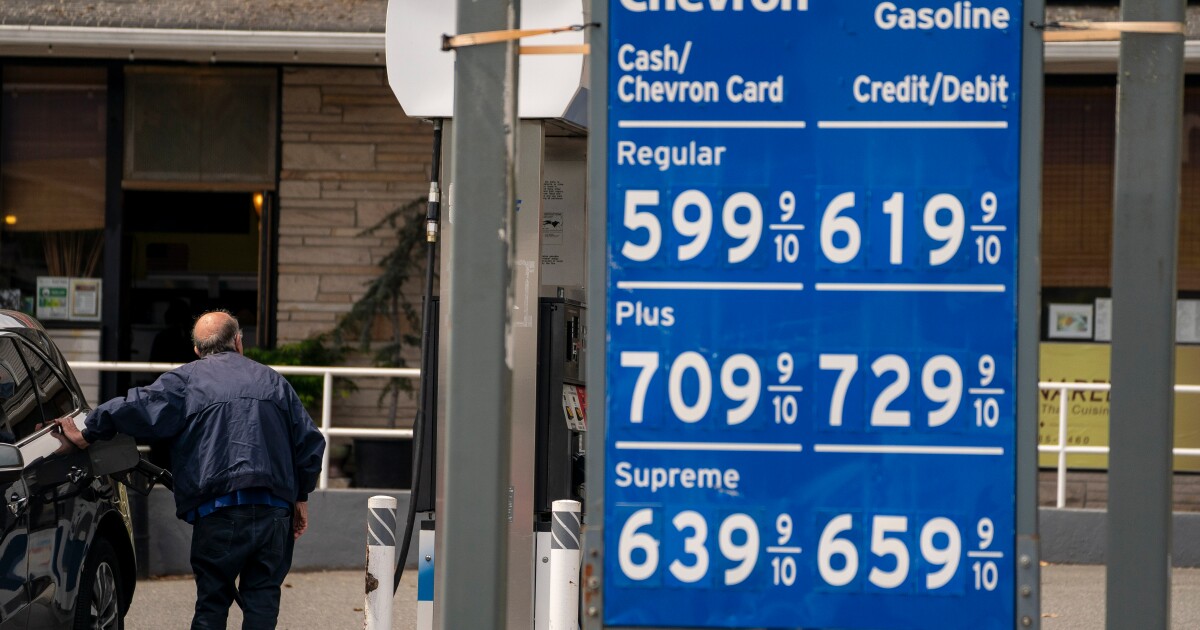
I’ve mentioned a few times lately that I think there is a price for oil and by extension gas that on its own can break the economy. I think this because I saw it happen in 2008. The thing that tipped the economy back then was when oil hit $140 a barrel and gas hit $4 a gallon (the national average) during the summer. You could almost literally see the economy come to a grinding halt after that. Later the NBER would officially date the recession to December 2007, but in the summer of 2008 people were still saying everything was fine. High oil prices were the last straw. The economy got worse, and all the problems that had been festering exploded. The financial crisis that started in September was a result, not a cause.
Processing Content
Given that precedent, I’ve been wondering what the price is today that could do something similar. The national average is already north of $4 a gallon, but that number doesn’t hold the same psychological hammer it did in 2008. Might $5 be the mark? $6? It would have to be a number that causes not just financial pain but psychological pain.
For now, it seems most folks think prices would have to rise much more than they already have to tip the economy into recession, our Maria Volkova reports. “There is no quote-unquote ‘breaking point,'” said Adie Tomer, a senior fellow at the Brookings Institution. “The question is: At what price does oil become a drag on the economy.” Some of the people Maria spoke with said if oil prices rose above $150, it would start having a noticeable effect on the economy. Maybe.
To me, the real question revolves around, obviously, the Strait of Hormuz, but it’s not just a binary question of whether the strait is open or closed. The issue is twofold: what is the downstream damage already caused by the 72-days-and-counting closure, and how is that damage compounded with every additional day that the strait remains closed. The price of oil feeds into the prices of everything else, from gas to groceries to data centers. The higher it goes, and the longer it stays high, the greater the drag on the economy becomes. Every day that waterway remains blocked makes the damage that much worse.
There is already a noticeable effect, which I’ve talked about a few times. Consumer delinquencies were near a 10-year high before the Trump administration launched its attack on Iran. The cost of living has only gone up since then. The question, then, isn’t whether or not there’s an effect on consumers from the war. The question is how material is the effect.
We will get some inkling of that this morning, when the April consumer prices index report lands. Bank of America predicted that prices overall were up about 3.7% last month, and most of the other previews I’ve seen are in that range. But at that level, real wages would once again be falling, argues Joseph Brusuealas, the chief economist at consultancy RSM. Moreover, he expects that inflation will peak later this year at 4.5%. “The buffers that have cushioned the global supply shock will be exhausted over the next three to four months.” The market, he said, is not pricing this in.
And what I’m most cautious about isn’t just the price of oil, but the price of oil filtering through to a market and economy that has several different piles of kindling piling up. I mentioned these yesterday: private credit, the AI bubble, a president attacking the independence of the central bank, the federal debt crossing the $40 trillion mark later this year and growing exponentially. Any one of those on their own might not be so bad, but if the economy shuts down because gas is too expensive, does some of that kindling catch fire? I don’t know, but I don’t feel good about the odds of nothing happening.