


Welcome back to World Brief, where we’re looking at U.K. Prime Minister Keir Starmer’s refusal to resign, elections in the Bahamas, and growing financial ties between Africa and France.
Hanging On
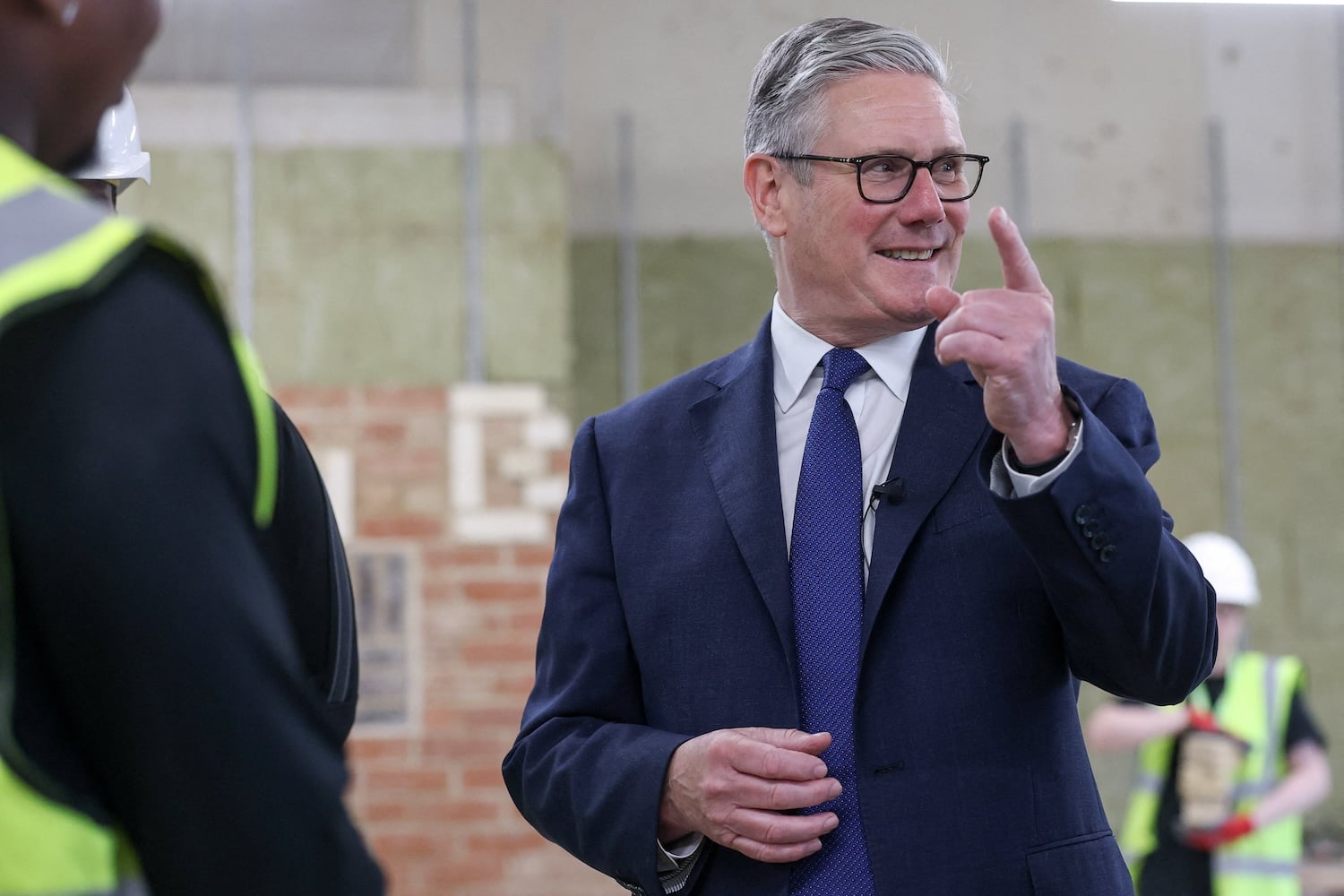
British Prime Minister Keir Starmer stubbornly clung on to his job for another day on Tuesday despite a growing chorus of voices from his own Labour Party calling for his resignation after a disastrous showing for Labour in local elections last week.
Welcome back to World Brief, where we’re looking at U.K. Prime Minister Keir Starmer’s refusal to resign, elections in the Bahamas, and growing financial ties between Africa and France.
Hanging On
British Prime Minister Keir Starmer stubbornly clung on to his job for another day on Tuesday despite a growing chorus of voices from his own Labour Party calling for his resignation after a disastrous showing for Labour in local elections last week.
As of time of writing, roughly 90 Labour members of Parliament (MPs) had asked Starmer to step down. Four junior ministers resigned on Tuesday, including Health Innovation and Safety Minister Zubir Ahmed, who is an ally of Health Minister Wes Streeting, a potential Starmer challenger. “[T]he public across the UK has now irretrievably lost confidence in you as Prime Minister,” Ahmed wrote in his resignation letter.
Last week’s election results appeared to show as much: Labour lost 1,229 council seats across the United Kingdom, while Nigel Farage’s right-wing Reform U.K. Party netted 1,372 and the left-wing Green Party also made significant gains. Labour also lost power in Wales and had its worst-ever showing in the Scottish Parliament.
That’s quite a turnaround from the general election less than two years ago, when Starmer’s party secured a 174-seat majority in the House of Commons—one of its best-ever showings—and ended 14 years of Conservative Party rule. Upon entering office, “Starmer promised to restore stability and to rule in a way that would, in his words, ‘tread more lightly’ on the lives of ordinary citizens,” Jamie Maxwell wrote for Foreign Policy shortly before the elections earlier this month. “Instead, his administration has blundered from one crisis to the next,” accelerating the decline of Britain’s Labour-Tory duopoly.
Getting Starmer out of Downing Street may be hard, though. To trigger a leadership vote, 20 percent—or 81 out of 403—of Labour MPs need to unify around a single replacement candidate. Because of Labour’s internal splits, including some 100 MPs who signed a letter today opposing a leadership contest, a direct challenge would be hard to mount.
“The Labour Party has a process for challenging a leader, and that has not been triggered,” Starmer told his cabinet at a meeting in Downing Street today. “The country expects us to get on with governing. That is what I am doing and what we must do as a cabinet.”
At least in public, his cabinet has been loyal so far. But after today’s meeting, several members avoided talking to the press, including Home Secretary Shabana Mahmood, who has reportedly called in private for Starmer to resign, and Streeting, who has scheduled a one-on-one meeting with Starmer tomorrow.
Outside of Westminster, opinion polls look promising for another potential contender: Greater Manchester Mayor Andy Burnham, the most popular Labour politician among the public right now, according to YouGov. However, he would first have to win a seat in Parliament to mount a challenge. Still, he appears to be interested—the Telegraph reported that Burnham traveled to London on Tuesday to meet with MPs who were supportive of his ambitions.
To most observers, the question is when—not if—Starmer will fall. Whoever comes after will confront the party’s dismal poll numbers, as well as a glut of political problems that Starmer has failed to solve. Speaking to reporters outside Downing Street today, Deputy Prime Minister David Lammy, who continues to back Starmer, warned: “The only person that benefits from the Labour Party navel-gazing in this way is Nigel Farage and the populist right.”
Today’s Most Read
What We’re Following
The edge of escalation. U.S. Defense Secretary Pete Hegseth said on Tuesday that the White House has “a plan to escalate” the war with Iran if necessary. His comments, made during a congressional budget hearing in Washington, come one day after U.S. President Donald Trump rejected an Iranian proposal to end the conflict and called the cease-fire with Tehran “unbelievably weak.”
According to another top Defense Department official’s testimony from the hearing, the United States’ costs over the course of the war have risen to around $29 billion—a figure that does not include the cost of repairing U.S. bases in the region that have been hit by Iranian attacks. That figure would only rise if major combat operations resumed, an option that Trump is reportedly considering as a result of his growing frustrations with the closure of the Strait of Hormuz.
As the war continues to disrupt the global economy, the United Kingdom and France co-hosted a meeting of more than 40 nations on Tuesday to discuss a multinational defensive mission to secure the strait once a peace deal is reached. Iranian Deputy Foreign Minister Kazem Gharibabadi warned that such a mission would amount to “the militarization of a vital waterway, and an attempt to cover up the true root of insecurity in the region”—and would trigger “a decisive and immediate response.”
Bahamas election. Voters in the Bahamas headed to the polls on Tuesday for their first general election since 2021 as the Caribbean archipelago faces inflection points over immigration and a high cost of living. Three parties—the incumbent Progressive Liberal Party (PLP), the opposition Free National Movement (FNM), and the Coalition of Independents (COI)—are vying for 41 seats in the House of Assembly, with a record 209,245 voters registered.
Prime Minister Philip “Brave” Davis announced the early election in April, the same day that the government abandoned a value-added tax on essential food items to help ease the nation’s affordability crisis. His PLP is hoping that voters will trust it to maintain the country’s post-COVID pandemic recovery. “Today we decide whether our momentum continues or whether it is cut short,” Davis said in a social media post. If he is successful, Davis would be the only prime minister since 1997 to win reelection.
The FNM, led by Michael Pintard, has campaigned aggressively against immigration—especially from Haiti—and rising energy prices from the Iran war. The COI, meanwhile, faces long odds as a third party. In 2021, it netted a little more than 6 percent of the vote and won no seats. But it has built momentum with social media clout and its first (and so far only) representative, who defected from the FNM last year. U.S. observers will monitor voting, at the FNM’s request, and alcohol sales will be suspended until polls close at 6 p.m., much to the frustration of visiting cruise passengers.
De-risking African credit. African leaders’ push for easier credit access gained momentum on the second day of the Africa Forward Summit on Tuesday, when French President Emmanuel Macron said he would lobby for the issue at next month’s G-7 summit. Co-hosted by Macron and Kenyan President William Ruto, the summit has already mobilized 23 billion euros in investment from French companies and African entities.
Macron proposed a first-loss guarantee mechanism to de-risk investments across Africa, where average external borrowing costs have nearly doubled in four years and are significantly higher than in advanced economies. Speaking at the summit’s opening, U.N. Secretary-General António Guterres denounced the “injustices of the [global financial] system,” echoing African governments’ criticism that credit ratings agencies unfairly penalize the continent.
Rhetoric at the summit—which was held for the first time in an Anglophone country—highlighted African leaders’ insistence that partnerships move beyond the paternalism associated with France’s colonial legacy. Such ties “must not be built on dependency but on sovereign equality,” Ruto said, “not on aid or charity but on mutually beneficial investment, and not on extraction or exploitation but on win-win engagements.”
Odds and Ends
Finding parking in Pyongyang is becoming a problem for car-owning North Koreans—not just Supreme Leader Kim Jong Un, a luxury Maybach enthusiast. Satellite imagery shows full lots and traffic-lined streets for the first time in the country’s history. Experts say it’s the result of a national push to promote car ownership that was also aided by smuggling and legal imports of auto parts from China, despite a U.N. ban on exporting vehicles to North Korea. Just don’t cut off the wrong motorcade.