


By Jonathan Klotz | Published
Science fiction is a risky business, and more often than not, that risk does not pay off. The result is a media landscape littered with great science fiction programming that was so far ahead of its time, it was canceled before people would really sit down and watch it.
That means there’s a treasure trove of amazing viewing that was cut off too soon, out there waiting for you to enjoy. These are the 15 best one-season sci-fi shows.
15. Surface

The success of Lost kicked off a Hollywood land rush to create the next big sci-fi mystery series. Most of them were canceled within weeks of their premiere. The lucky few completed their first season. Surface was one of the lucky ones.
The mystery of Surface focuses on what lurks under the sea. Instead of a hot crustacean band, it’s rising temperatures, gigantic sea monsters, a government conspiracy, and more questions than there are episodes. Surface took so long to answer any of its questions that the audience grew bored and wandered off, but if they had stayed, they would have seen one of the most insane season 1 finales of all time.
In its final episode, Surface flooded the planet. It’s the type of bold, daring move a show makes only when it knows the end is near. It teased a second season of humanity after the apocalypse, dealing with emerging sea monsters and a world that’s suddenly unrecognizable.
Unfortunately, the early episodes of Surface are so slow that you might never get to the ending. It remains a perennial sci-fi “What If?”
14. Street Hawk

You’ll notice that a lot of sci-fi one-season wonders can be considered loving homages to other, more successful shows or blatant knock-offs. Street Hawk is no different. It answered the question, what if Knight Rider were about a motorcycle?
Street Hawk was both the name of the prototype motorcycle used by Los Angeles Police Officer and dirtbike racer Jesse Mach, and the name of his vigilante crime-fighting alter-ego. Using the bike’s advanced technology, including a laser, rockets, submachine guns, and a ludicrous speed mode that reached 300 miles per hour, Jesse solved a new crime each week. This was back in 1985, before studios knew what a “mythology arc” was.
Lacking the charisma of David Hasselhoff, Rex Smith’s Jesse could never get out of the shadow of its more popular competition. Today, Street Hawk is often a punchline among forgotten 80s television. And yet, if you manage to find episodes streaming, give them a chance, because this show’s goofy, ridiculous premise is so over the top and cheesy, you can’t help but enjoy yourself. We were robbed of six seasons and a Street Hawk legacy movie.
13. 1899

The German series Dark is, to this day, one of the greatest sci-fi shows of all time. When the creative team announced their follow-up, 1899, everyone took notice. What would the twisted minds behind a time-traveling cave tunnel come up with next?
1899, named for the year it takes place, follows passengers aboard two ships as they cross the Atlantic to New York. A strange symbol, an upside-down triangle with a line through it, provides a throughline as weird occurrences start up. Hidden passageways, cryptic messages, and teleportation hint at something larger and far more sinister lurking just under the surface of mutineers and class-based conflict.
You need to watch 1899’s first and only season as blind as possible, because, like Dark, where it goes is not where you’d expect from the first episode. You’re left with many, many unanswered questions at the end, and it’s frustrating that we’ll never get to see more. But in one season, 1899 managed to be both gorgeous and thought-provoking, giving fans a puzzlebox mystery that, for once, is worth experiencing.
12. Defying Gravity

Defying Gravity is what happens when a network refuses to give a sci-fi series time to find its audience. Sci-fi fans were put off when the show was first announced. A sci-fi show by Shonda Rhimes? The woman who created Grey’s Anatomy? How will that be any good? It is.
First, Defying Gravity stars Ron Livingston and Malik Yoba; second, the concept of a spaceship making a tour of the solar system for an unknown mission is the type of mystery that can go anywhere.
For the first half of the season, Defying Gravity focuses on the relationships and interpersonal conflict among the crew and the team back on Earth at Mission Control, both in the present and in flashbacks set five years earlier. That’s what kept the sci-fi audience from embracing the series and led to an early cancellation.
For fans who grabbed the DVD, they were able to watch the rest of the season. The unaired episodes revealed the motive behind the space mission: Recover an alien artifact on each planet.
Aliens were real, and they left something behind for humanity to find. Defying Gravity’s finale episodes managed to thread the needle between relationship drama and science fiction in a way nothing has ever since. Sadly, it’s now one of many examples of sci-fi shows canceled too early, just as they were about to pay off.
11. Swamp Thing

Swamp Thing received one of the fastest cancellations on this list. In fact, it hadn’t even started airing yet when word leaked that Warner Bros was going to end it.
The official announcement came one week after the first episode debuted on the DC Universe app. It was perfectly timed for the first wave of critical and fan adoration that praised Swamp Thing as the best thing DC had done in years.
The tale of scientist Alec Holland and his transformation into Swamp Thing had been told many times before, but in 2019, it never looked better. Embracing the character’s horror roots with an equally dark storyline was a recipe for success. The Avatar of the Green isn’t a classic superhero, and this isn’t your usual superhero show.
Bringing to life the dark side of the DC Universe may have led to critical success, but it was also expensive. Money was one of the largest reasons why Warner Bros decided a creative, unique take on superheroes had to go, but the other was the show’s plot.
The dreaded “creative differences” was the second reason Swamp Thing was sent to an early grave. Everything fans loved about it, the incredible visuals, the dark and violent story, was why Warner Bros made another in a long, long line of bad decisions.
Swamp Thing went one episode before cancellation, and yet, Titans aired for four seasons.
10. Terra Nova

In the future of Terra Nova, Earth is overpopulated to the point that humanity will go extinct, so the solution is obviously to send colonists back through time to the Cretaceous period, in strict violation of everything we ever learned about time travel, to harvest natural resources and send them to the future.
Don’t think about it too hard. It’s not that kind of show.
Instead of focusing on the damage being done to the time stream, Terra Nova is about the Shannon family adjusting to life in the past under the authoritarian rule of Commander Taylor, brought to life by Avatar’s Stephen Lang, a man born to play a militant ruler of an exotic outpost. There’s no getting around it; most of the plot of each episode is annoying, the kid and teen characters will get on your nerves almost instantly, but there’s also no denying that, with a slight tweak here and there, this show could have been great.
The colonists end up rebelling against the government of the future, including shipping a T. rex through the time portal in the moment that proves why the show exists in the first place. Dinosaurs are awesome. Unfortunately, Dinosaurs are also expensive, and Fox pulled the plug due to the high cost of every episode, denying us the chance to see a live-action Dino-Riders on network television.
9. Crusade

Crusade is especially frustrating to talk about because the series that aired is not what the creator of Babylon 5, J. Michael Straczynski, wanted out of the spin-off series.
Just as he had with the original series, Straczynski had developed an elaborate five-year plan for Crusade. Originally about recovering lost Shadow artifacts around the galaxy, the series that ended up airing was laser-focused on curing the Drakh-induced nanoplague that had infected Earth.
The writing was there, the cast was there, including Gary Cole, Daniel Dae Kim, and returning from the original series, Tracy Scoggins as Captain Lochley, but what they couldn’t overcome was an enemy worse than the Drakh or the Shadows: studio interference.
Episodes aired totally out of order. Just watch how the crew’s outfits change during the season, entire plots are dropped, and then picked up again with conversations referencing events that haven’t happened yet. All of the pieces were there for Crusade to be another huge sci-fi hit, but once again, the network, TNT, set it up for failure.
8. Dark Skies

Take The X-Files, but set it in the 1960s in the shadow of the Cold War, be upfront about the invading aliens, and add in real-life historical figures, from Jim Morrison to Dr. Carl Sagan, and you have Dark Skies. It was the most blatant of all the X-Files knock-offs, but at the same time, it’s one of the best.
The 60s setting, complete with fashion and technology of the era, made it look and sound different from anything else airing in the 90s, and the alien Hive, parasitic mind-controlling aliens dubbed “Ganglions”, made for great villains. Opposing the Hive is Majestic 12, a shadowy organization that claims they want to save humanity, and end up recruiting John Leongrard, a Congressional aide, and eventually, a pre-Seven of Nine Jeri Ryan. It’s hard to be a Mulder and Scully when both of them believe aliens are out to get them, because they are, in every episode, but the pair has just enough of a spark to keep the back half of the season interesting.
The early cancellation, after only one season, denied fans the opportunity to see Dark Skies planned gimmick: Every season was going to be a different decade. Starting from the 60s into the 90s, fans would see John and Juliet battle the Hive behind the scenes of American History. Frankly, that sounds amazing, and 30 years later, fans are still upset they never got to see it.
7. Almost Human

Take Blade Runner. Make it a Fox network series starring Karl Urban and Michael Ealy as mismatched detectives. One hates androids, one is an android, That’s 2011’s Almost Human.
It’s a neo-noir cyberpunk sci-fi procedural. The only series remotely like it is Altered Carbon. There’s something about cyberpunk that scares Hollywood away, making it a miracle we ever received even 13 episodes of Almost Human.
Urban’s John Kennex and Ealy’s DRN-0167, or Dorian, slowly reveal the world of New Pittsburgh to viewers as they solve the case of the week. We learn about augmented humans, a gigantic wall that circles the city and separates it from the badlands, and that even in the future, network procedurals love serial killers. The mystery of New Pittsburgh and the stunning revelation in the very last shot of the final episode will remain unsolved.
Almost Human was everyone’s preview of Karl Urban in The Boys, and while Kennex isn’t as homicidal as Butcher, you can see how someone watched the Fox series and thought he’d be perfect to take down Supes. At only 13 episodes, none of the side plots or strange mysteries about the setting are given time to truly breathe, but the chemistry between Urban and Ealy overcomes those shortcomings to turn the series into an underrated, underappreciated series.
6. The Prisoner
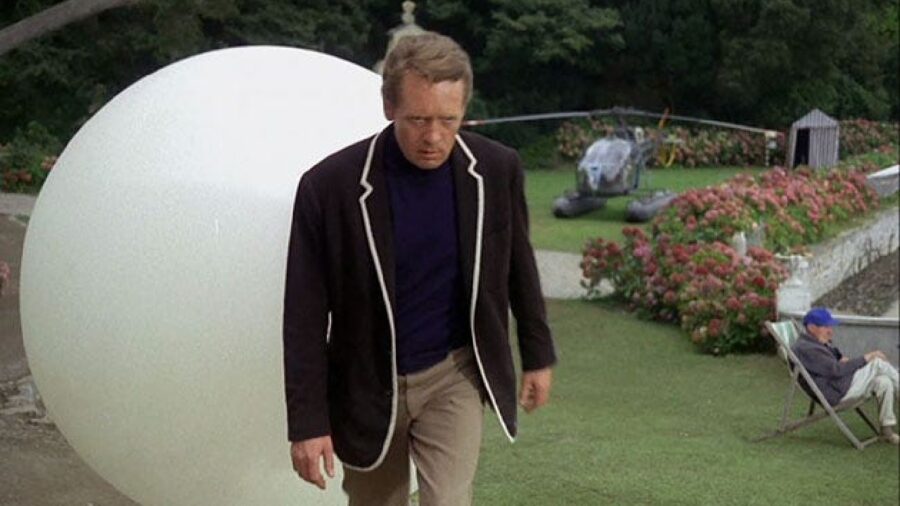
Airing in 1967, The Prisoner is a strange combination of science fiction and psychological horror that’s often been imitated, but never matched. Created, directed, and starring Patrick McGoohan, The Prisoner defies description. This is the series that invented the puzzle-box format used by Lost, Surface, and countless others.
In The Prisoner, McGoohan plays Number Six, a man who wakes up in a strange seaside town called the Village. Some of the residents are prisoners, some are guards, and all are shown as lacking individuality and personal freedom.
It’s a bit heavy-handed in its metaphor, but The Prisoner succeeds by using surreal visuals, including the balloon-like monster guarding the perimeter, and by refusing to give any answers to the audience. Viewers become as desperate as Number Six to learn what the Village is, why Number Two is always someone new each episode, where the Village is located, and why everyone is being held prisoner there.
You never get a good answer in The Prisoner’s only season, but what you realize by the end is that the answers don’t matter.
5. Flashforward

While Lost was gearing up for its final season, ABC was already preparing its replacement, another sci-fi puzzlebox called Flashforward. Created by Star Trek’s Brannon Braga and the writer of The Dark Knight trilogy, David S. Goyer, the series had a simple concept: What if everyone on Earth fell unconscious and experienced a vision of themselves, six months in the future?
Turns out, FBI Agent Mark Benford saw the results of his investigation into the Flashforward event during his own flashforward. Others had visions that were less useful, including his boss seeing himself on the toilet, a doctor who saw himself meeting the love of his life, and, in the case of Mark’s partner, Demetri, nothing.
Flashforward doesn’t shy away from the lasting emotional damage that comes from knowing where you’ll be, what you’ll be doing, and who you’ll be with six months from today. Or in the case of those similar to Demetri, knowing all you saw is the void, embracing self-destructive hedonism during the time you have left.
Unlike other Lost clones, Flashforward answered questions. For every answer there were two more questions, but the first, and only, season tells a complete story. By the time the final credits roll, you’ll know the who, what, where, how, and why of the Flashforward. That’s more than can be said for Lost.
4. Caprica

The prequel to Battlestar Galactica, 2010’s Caprica takes place 58 years before the Cylons enacted their plan. Before it debuted, fans of the Galactica revival were going mad online trying to guess at the plot and what it would reveal about the origin of the Cylons. It was an early case of online speculation resulting in a show that was incapable of reaching the lofty expectations of fans; no matter how good it really was, the imaginary one they dreamed up would always be better.
Caprica did reveal the origin of the Cylons; the first of them was inhabited by the digital consciousness of a teenage girl killed in a terrorist attack, and I swear it’s more compelling than that sounds. Allowed to show the technology that existed on Caprica prior to humanity fleeing for the stars, fans got to see an entire virtual world, elaborate factory setups, and monorails. It’s bright, colorful, and the opposite of Battlestar Galactica’s palette of greys and browns. That’s why at the time, Caprica received mixed reactions; it was very different from the original series.
The marketing campaign, featuring a naked Alessandra Torresani holding an apple, because she’s the first Cylon….Eve….get it?…..didn’t show the type of sci-fi that the series would embrace, and was instead dismissed as irrelevant pandering to lonely nerds. Today, the performance of Esai Morales as Admiral Adama’s father and Eric Stoltz as Daniel Greystone, creator of the Cylons, alongside Torresani as Zoe, are praised by fans who now wish, 16 years later, that Caprica had been allowed to keep going.
At least it ended with a flashforward that sets up the conflict seen in Battlestar Galactica. Not every one-season series is able to tie up loose ends as well as Caprica, which may have failed, but succeeded in its mission as one of the best prequel series.
3. Space: Above and Beyond

When you think of space shows from the 90s, you think of Deep Space Nine, Babylon 5, Stargate SG-1, Farscape, or if you’re a true sicko like me, Lexx. But for a specific type of sci-fi fan, nothing comes close to Space: Above and Beyond. One of the greatest military sci-fi shows ever produced, the one-season fans got to spend with the Wildcards squadron as they went up against the insectoid Chigs, was a tease of the planned five-season storyline.
Space: Above and Beyond complicates the aliens vs. humans setting by introducing Silicates, artificial robotic humans incapable of experiencing fear, and the In Vitroes, genetically enhanced humans treated as expendable fodder by “normal” people. It’s a masterclass in layered storytelling that pivots between political conspiracies, deep-space dogfights, and survivor’s guilt, all within the same episode.
The 13th episode, “Who Monitors the Birds?” isn’t only the best episode of the series, it’s one of the best sci-fi episodes of the last 30 years. The mostly silent episode follows the In Vitroe U.S. Marine Hawkes struggling to survive after a mission behind enemy lines goes horribly wrong. It’s inventive, wonderfully shot, and respects the intelligence of the audience by not spelling everything out. It’s a nearly perfect example of science fiction done right.
There’s never been another series like it, and there never will be. Space: Above and Beyond is the best sci-fi show of the 90s you’ve never watched.
2. Kolchak: The Night Stalker

If you like The X-Files, Fringe, or Supernatural, you should thank 1974’s Kolchak: The Night Stalker. A mix between the supernatural and science fiction, Kolchak was a monster of the week procedural long before the term was ever uttered by a fan.
Every week, Investigative reporter Carl Kolchak stumbled into a new mystery involving a vampire, or a mummy, or a succubus, or a monster lizard, or Helen of Troy. Kolchak the series worked so well because Kolchak the character was a regular guy. He’s smart and very lucky, but he’s not a trained federal agent or a former soldier going up against the beasts of the night. He’s a journalist with a deadline and a very frustrated boss.
Kolchak: The Night Stalker is over 50 years old, but it holds up better today than shows from 5 years ago. The special effects are horrible, the presentation was low-budget even by the standards of 1974, but the writing and especially Darren McGavin’s performance as Kolchak, prove why it’s a revered cult classic.
Kolchak was often terrified of what he was up against. McGavin’s wild-eyed stare doesn’t make Kolchak look like a cool action hero; it makes him look like a regular guy in far over his head with no idea what’s going on.
That’s the key ingredient that was missing from the 2005 revival attempt starring Stuart Townsend. Townsend was 3 years removed from playing Lestat in Queen of the Damned. He didn’t look like a regular guy over his head, he looks like an American Eagle model briefly inconvenienced by multiple run-ins with serial killers.
Even though Kolchak: The Night Stalker lasted only one season before star Darren McGavin decided to call it quits, its legacy lives on through X-Files, Supernatural, Sleepy Hollow, The 11th Hour, and countless other series. Next to Star Trek, it may be the most important sci-fi series of all time.
1. Firefly

Death, Taxes, a new season of NCIS, and Firefly appearing on a list of greatest one-season sci-fi shows. These things are inevitable.
Firefly wasn’t the first sci-fi western, but it is the best, and for good reason. Everything, from the cast to the writing, the worldbuilding to the action, is, as the kids say, peak.
Set at the edge of civilization years, after a failed rebellion, Firefly is all about the ragtag crew going from one job to another, scrapping together enough to get by, and keep flying. It’s a simple concept, but what makes it work is how not a single person in the cast feels like they’re acting. You will believe Nathan Fillion is the charming Captain Malcolm Reynolds, Alan Tudyk really is Wash, the crew’s pilot, and the late Ron Glass, as Shepard Book, is a former government killer attempting to lead a quiet life of contemplation and atonement.
When it aired back in 2002, Firefly suffered from a poor timeslot on Fox, and a general public that wasn’t ready for science fiction this different. Going from a spaceship to horseback riding, battling space cannibals to a duel with an arrogant aristocratic noble was too jarring for the average viewer to handle. Then again, the ratings Firefly was pulling in 2002 would, in 2026, make it one of the hottest shows on television now.
As viewer habits have changed, Firefly has risen in popularity, going beyond being a cult classic. It’s too beloved and too popular. Firefly’s gone mainstream.
There’s not a lot that can be said about Firefly that hasn’t already been said over the last 25 years. It’s a classic for a reason, and it’s required viewing for sci-fi fans. Firefly was taken off the air far too early, but for millions of fans worldwide, you can’t stop the signal.