


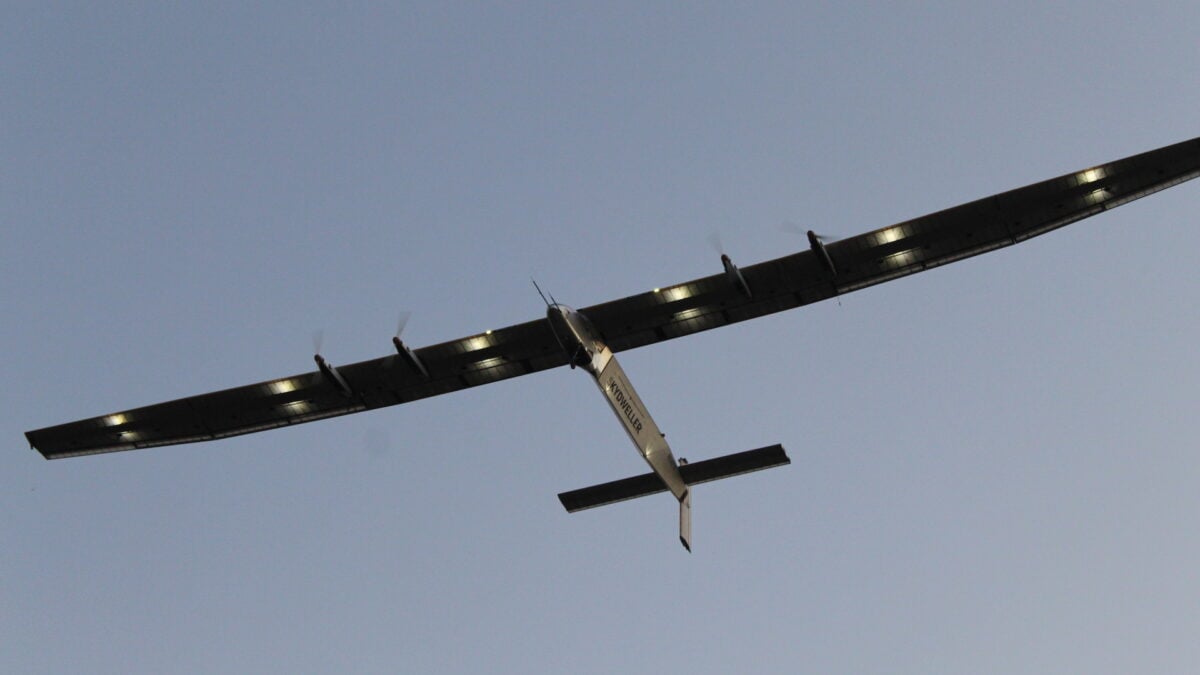
Solar Impulse 2, the pioneering aircraft known for the first round-the-world solar flight, was lost during an uncrewed flight, ending its decade-long journey in the skies.
The experimental aircraft crashed into the Gulf of Mexico on May 4 after losing power during an autonomous test flight, according to a report by the National Transportation Safety Board. There were no fatalities or injuries.
The loss of the unconventional aircraft marks the end of an inspiring attempt to promote clean energy and push the boundaries of aviation.
Around the world
Swiss psychiatrist Bertrand Piccard and entrepreneur André Borschberg developed Solar Impulse 2 in 2015 after co-piloting the first non-stop balloon flight around the world. The two aviators set out to complete the first circumnavigation of Earth using only solar power and draw attention to sustainable energy technologies.
The carbon-fiber aircraft stretched across 232 feet (70 meters) and weighed only 5,100 pounds (2,313 kilograms). It was equipped with 17,248 solar cells, which generated 66 kilowatts of peak power. The aircraft’s non-pressurized cockpit included oxygen reserves and additional equipment, allowing for long-duration flights at a maximum altitude of 39,000 feet (11,887 meters).
Piccard and Borschberg flew Solar Impulse 2 around the world in the first circumnavigation of the globe with no fuel. The historic flight took 16.5 months to complete, departing from Abu Dhabi in the United Arab Emirates on March 9, 2015. The two co-pilots alternated duties during their journey, making 17 stops along the way. Solar Impulse 2’s final stop was in Egypt before returning to Abu Dhabi on July 26, 2016.
In 2019, Solar Impulse 2 was sold to Skydweller Aero. The Spanish-American company was not so much focused on the aircraft’s solar-powered capabilities but rather on its potential as a spy plane. Skydweller converted Solar Impulse 2 into a long-endurance uncrewed aircraft system for military surveillance use, and it was no longer a symbol for renewable energy.
Fatal crash
On the day it crashed, Solar Impulse 2 took off from Stennis International Airport (HSA), Mississippi, for a test flight when it suffered catastrophic electrical power loss. The aircraft crashed into the Gulf of Mexico and was destroyed on impact.
Solar Impulse 2’s original developers reacted to the news. “We learned through social media about the crash of the Skydweller solar drone,” Piccard and Borschberg wrote in a statement to Popular Science. “The Solar Impulse team is saddened by the loss of an important technological flagship.”
The experimental aircraft was set to be permanently displayed at the Swiss Museum of Transport, a fitting retirement for the groundbreaking solar aviation technology. Unfortunately, Solar Impulse 2 will not be preserved in its physical form, but its legacy will live on.