


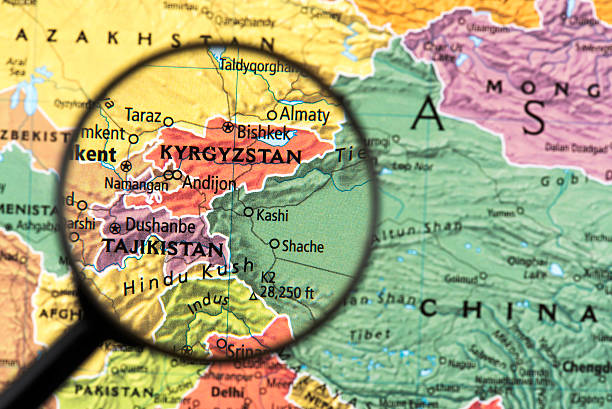
What has been the wider digital and fintech ecosystem like in the Asian nation of Kyrgyzstan?
Kyrgyzstan, a mountainous and landlocked Central Asian nation, has long existed at the crossroads of trade routes between China, Russia, and the wider Eurasian region. As I commented back in 2024, the country’s fintech ecosystem was modest, fragmented, and largely bank-led. By 2026, however, the story is less about infancy and more about acceleration. It is driven by necessity, regional dynamics, and a quietly expanding digital economy.
At a macro level, Kyrgyzstan remains a lower-middle-income economy with a gross domestic product of approximately $22 billion and a GDP per capita nearing $2,900 this year, according to the World Bank. The economy is anchored in gold mining, agriculture, and remittance-driven consumption, with services now accounting for over 50 per cent of GDP. Bishkek, the capital, functions as the financial and commercial centre.
Fintech in the country
In many respects, Kyrgyzstan’s fintech journey mirrors its broader economic evolution: informal but adaptive. The country’s fintech ecosystem, now estimated at 40 active players, has expanded beyond basic mobile banking into digital wallets, QR payments, peer-to-peer lending, and microfinance innovation. Platforms linked to telecom operators and banks dominate, reflecting a hybrid fintech-bank model common across Central Asia.
Key fintech solutions and wider digital efforts include the likes of: MBank (A leading digital banking platform offering mobile financial services), O!Money (Providing mobile payments and financial services linked to telecom operator O!) and Balance.kg (Offering digital financial solutions and payment services). Also, the likes of financial institutions such as Optima Bank and Demir Bank are also increasingly embracing digital banking channels.
In addition, organisations such as Kyrgyz Fintech Association play a role in fostering collaboration between startups, regulators and investors, helping to build a more cohesive ecosystem.
What has changed most significantly between 2024 and 2026 is adoption. QR-code payments alone surged dramatically, with over 53 million transactions recorded in a single quarter last year, reflecting exponential growth in digital payment usage. This is not simply a shift in consumer behaviour. Instead, it signals a structural transition away from cash reliance toward a more formalised financial ecosystem.
Boosting financial inclusion
The National Bank of the Kyrgyz Republic has been central to this evolution. Building on earlier frameworks such as its digital payments development concepts, the central bank has supported interoperability standards, instant payment systems, and discussions around a potential digital som. Between 2024 and 2026, regulatory efforts have focused on strengthening payment infrastructure, enhancing cybersecurity, and cautiously exploring fintech innovation through pilot frameworks. While open banking remains nascent, there is increasing alignment with regional standards, particularly through Eurasian Economic Union (EAEU) cooperation.
Financial inclusion, often a persistent challenge across emerging markets, presents a more optimistic picture in Kyrgyzstan. As of last year, over 70 per cent of adults now have access to financial accounts, driven largely by mobile wallets and digital government payments. This places Kyrgyzstan ahead of several regional peers, though gaps remain in rural access and financial literacy.
Beyond payments, digital economic transformation has been underpinned by broader policy frameworks such as the National Development Programme (2021–2026), which prioritises digitalisation, financial sector reform, and private sector development. These efforts are complemented by increasing investment in infrastructure, including fibre connectivity and digital public services, positioning fintech as part of a wider economic modernisation agenda.
Institutionally, ecosystem development is still emerging. While Kyrgyzstan lacks a large, formal fintech association, support mechanisms exist through development partners such as the Asian Development Bank and local ICT initiatives. These actors play a catalytic role in fostering innovation, particularly in areas such as small and medium enterprise (SME) finance, digital identity, and financial literacy.
Yet, challenges remain difficult to ignore. The financial system is still relatively shallow, capital markets are underdeveloped, and regulatory capacity continues to evolve. Moreover, external pressures, ranging from geopolitical shifts to reliance on remittance flows, introduce volatility that can influence fintech growth trajectories.
Still, there is a growing sense of momentum. Smaller markets such as Kyrgyzstan are increasingly demonstrating that scale is not always a prerequisite for innovation. Instead, necessity, agility, and regional integration are proving to be powerful catalysts.
The Kyrgyz fintech ecosystem in 2026 is not yet mature. However, it is no longer emerging in obscurity. It is, quietly but decisively, finding its place within Central Asia’s evolving digital economy.