


A California startup is partnering with chip giant Nvidia and residential builder PulteGroup to place small data centers on homes across the U.S.
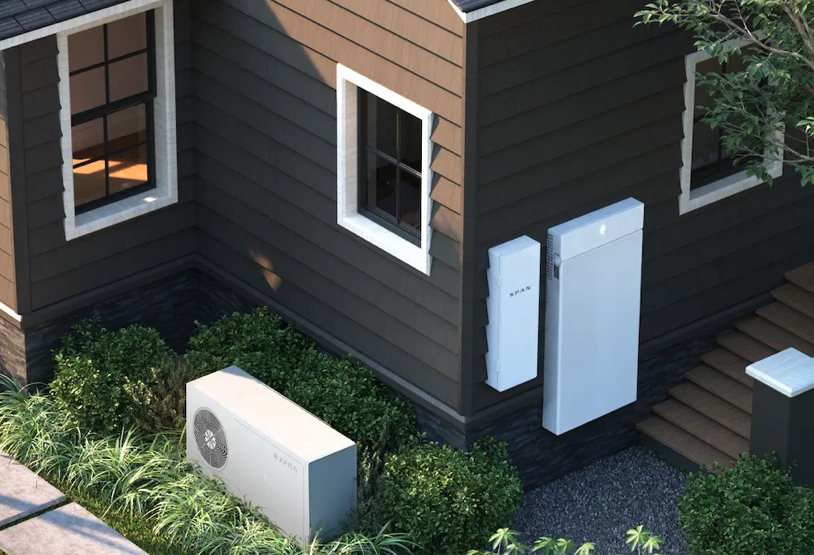
A rendering of Span’s data center nodes on a residential property
San Francisco-based Span is known for its “smart” home electrical systems that help homeowners reduce their utility bills. Now, the company is pivoting toward digital infrastructure, with a plan to install small data center “nodes” powered by Nvidia graphics processing units on residences and small businesses.
The concept behind these data center nodes — branded as XFRA units — is they will utilize otherwise untapped power capacity available on local grid systems to create what is effectively a single, distributed data center spread across the country.
Leaders at Span and Nvidia have framed the effort as a potential answer to one of the largest problems facing major tech firms engaged in an artificial intelligence arms race: Locations where utilities can deliver hundreds or even thousands of megawatts of power to a single site have become increasingly rare.
For companies like Amazon, Microsoft, Google and Meta, access to these massive blocks of electricity has become the primary constraint limiting new data center development.
Although each XFRA unit has just a small fraction of the computing power housed in any traditional data center, Span said its network of residential nodes will communicate with each other in the same manner that processors are networked together in a single facility. The result, it said, will be processing capacity and performance roughly equivalent to a small or midsized conventional data center.
The company claims it will be able to deploy 8,000 of these microprocessing units six times faster and at a significantly lower cost than the build-out of a standard 100-megawatt data center, a big selling point in a data center landscape where construction costs are skyrocketing and speed to market is everything.
“We’re trying to get access to power, and there’s a lot of power right now on the grid. But, unfortunately, to come up with large loads for big data centers — it’s a challenge,” said Marc Spieler, senior managing director of global energy industry at Nvidia, speaking to CNBC about the firm’s partnership with Span. “The ability to leverage existing locations that have access to power makes a lot of sense. … We believe that we can bring on AI solutions quicker, and it should add to the affordability story.”
Nvidia is equipping each XFRA unit with its state-of-the-art Blackwell Server Edition GPUs, which utilize liquid cooling systems. The units also include Span’s power management system, a backup battery and sometimes solar panels and are installed next to traditional residential infrastructure like HVAC systems.
For homeowners, the appeal is the promise of lower utility costs. Owners will have to pay set fees for electricity and WiFi for connectivity that the company’s leadership said are likely to be heavily discounted from typical rates.
Still, whether this concept will ever see broad deployment remains in question.
The company is initially installing the XFRA systems on new houses being built by PulteGroup, one of the largest residential builders in the U.S. The developer is testing the deployment of these data center nodes, evaluating their capabilities and economic feasibility to see “if the technology proves out,” the firm told CNBC.