


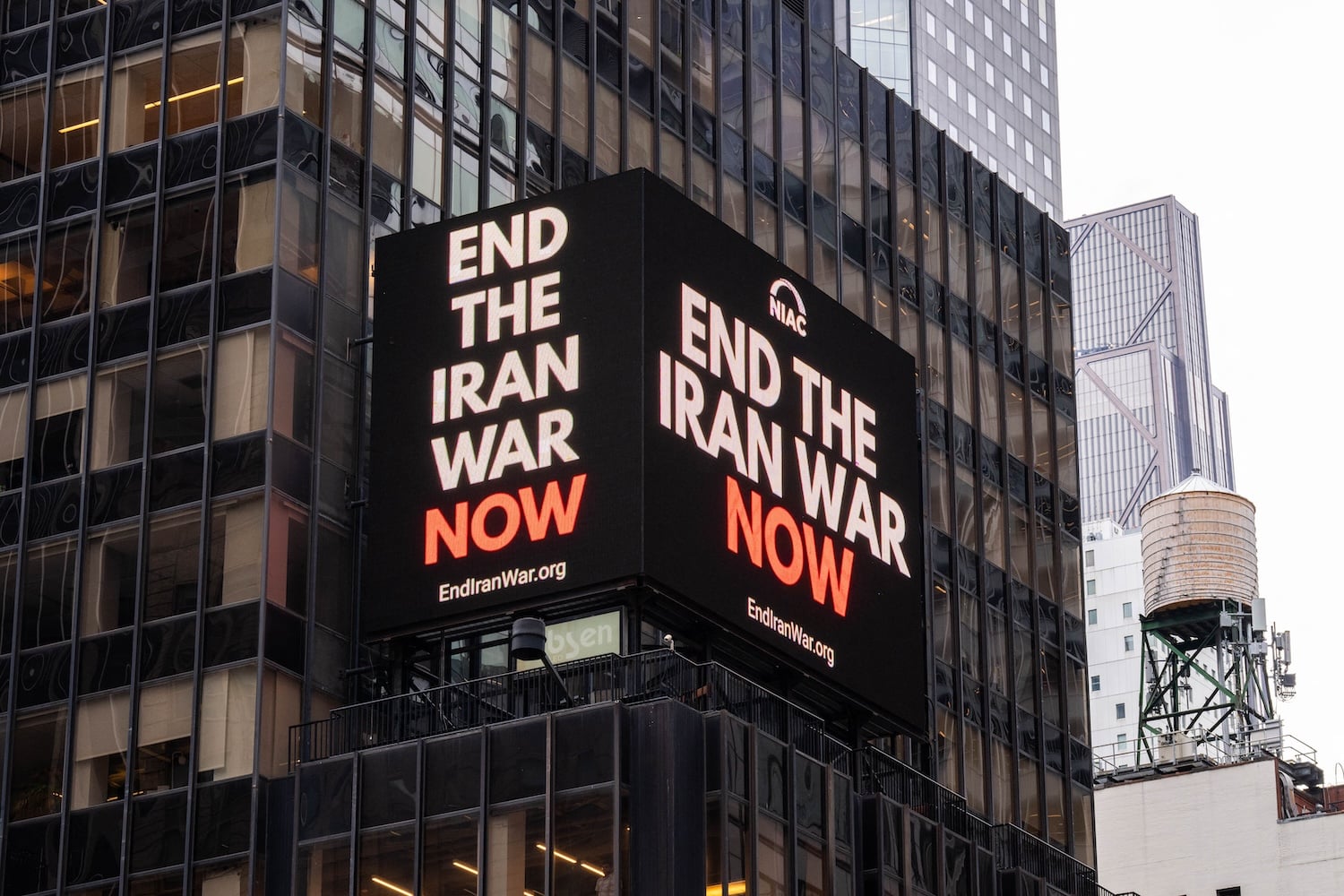
Is the U.S.-Iran conflict becoming a forever war? At first glance, it doesn’t look that way. Rising oil and gas prices, growing congressional pressure around the War Powers Resolution, and scant public support are putting pressure on U.S. President Donald Trump to end the conflict soon.
But if history is any guide, there’s a real chance the war continues to drag on.
Why? Because a few core elements that have turned past conflicts into forever wars are present in this one, too. Those three components are high resolve by the weak, erosion of cost-benefit thinking by the strong, and weak institutional constraints to warfighting on at least one side.
Combined, they mean resisting the expansion of the Iran conflict into a forever war won’t be easy.
Resolve of the Weak
Resolve by the weak side in asymmetric conflicts helps bring about forever wars. Motivated by an existential threat to its survival, the confidence of the weak increases exponentially when it survives initial blows from the strong and enacts pain in return.
This age-old reality has shown up time and again throughout history, from the determined fight of the Boers against the British Empire to the mujahideen against the Soviet Union and the Taliban against the United States. In cases like these, the resolve of the weak fueled a capacity to absorb massive costs, and the wars dragged on for years.
Iran today is showing textbook levels of resolve. To the surprise of the Trump administration, it has weathered more than 16,000 U.S. and Israeli airstrikes, lashed out with historic levels of damaging regional strikes, and closed the Strait of Hormuz, causing so much economic pain that Trump was forced into negotiations. After every apparent setback, Iran intentionally seized more ships or launched more strikes to show it isn’t backing down.
Experts say that Iran is “built for endurance” and thinks it’s winning this war; this is understandable, since Tehran’s highest priority is survival. Consequently, they’ve been hard-nosed in negotiations and shown no desperation for a deal—another common feature of the weaker side in forever wars. Tehran has stood up the United States at peace talks twice and refused to send negotiators to meet U.S. officials in Islamabad. It will “determine the end of the war,” Tehran claimed brashly on March 10.
Lack of Cost-Benefit Thinking by the Strong
When asymmetric wars stalemate, history shows the strong often fall into suboptimal decision-making frames that displace cost-benefit thinking. Leaders start to focus on things like reputation (“backing down will hurt our credibility”), chasing sunk costs (“we’ve invested so much, we need to show we’ve gained something”), and/or the hubris of power (“we’re so much stronger, surely they’ll cave”).
These frames motivate leaders to downplay rising costs and avoid tough questions about policy. In Vietnam, where the U.S. lost 58,000 soldiers, the obsession of four U.S. presidents with looking tough on communism escalated a war they knew was unwinnable. In Afghanistan, the fallacy of sunk costs (“just one more year,” war planners argued repeatedly) dominated policy calculations. Fighting lasted two decades.
In the past, Trump has avoided these kinds of decision-making traps. In 2020, he eschewed sunk-cost thinking and brokered the deal to end the Afghan war. Last year, he stopped bombing the Houthis in Yemen when he realized he’d need to escalate with boots on the ground to defeat them. He rightly deemed those costs weren’t worth it to U.S. national security.
With Iran, Trump hasn’t shown that same kind of pragmatism.
While he has so far smartly opted not to use force in the Strait of Hormuz, Trump’s unchanging, maximalist demands at the negotiating table (“we have all the cards,” he has said) and tendency to brush off the costs of the war for everyday Americans show that other decision-making frames are crowding out straightforward cost-benefit calculations.
Reputation is one of those frames. Trump longs to go down as the president who transformed the Middle East. After the United States toppled Venezuelan dictator Nicolás Maduro, Israeli Prime Minister Benjamin Netanyahu leveraged this hubris to convince Trump to attack Iran.
Since the war started, Trump has repeatedly told advisors that eliminating the Iranian nuclear threat could be one of his signature achievements. He also turned down Iran’s recent proposal to open the strait without a nuclear deal because it would deny him “a victory.”
This could get a lot worse. If Democrats win one or both chambers of Congress in November, Trump will likely devote more attention to foreign policy—as he did in the second half of his first term—to leave his mark on history. Winning in Iran will be front and center for him, accelerating the U.S. slide into a forever war.
Reflecting the hubris of power, Trump also believes U.S. power can bludgeon rivals into submission, and given the disparity of power between the U.S. and Iran, it makes no sense to him why Iran wouldn’t capitulate to his terms. For the same reason, Trump is convinced Iran is desperate for a deal. “Why wouldn’t they call?” Trump said in early April. “They’re getting decimated.” It’s no wonder he’s warned Iran that its “civilization will die” and threatened to “obliterate” Iranian energy sites and bomb Iran “back to the Stone Age.”
That kind of decision-making frame fuels Trump’s resolve and keeps open the door to escalation if threats don’t work—the stuff of forever wars.
Weak Institutional Constraints on Warfighting
When leaders are unencumbered by domestic institutional constraints, they find an open policymaking space that allows the malign factors discussed above to take center stage in making decisions. This enables forever wars.
The classic historical case is the Gulf of Tonkin Resolution, where Congress gave President Lyndon Johnson a blank check on Vietnam. Likewise, the broad Authorization for Use of Military Force (AUMF) Congress passed after Sept. 11, 2001, opened the door to past and current forever wars in Afghanistan and across Africa in places such as Somalia and Niger.
Iranian leaders today face almost no constraints on warmaking, since Iran is not a democracy and the new leadership seems more hard-line and unified than ever.
On the U.S. side, the Republican-controlled Congress has done nothing to constrain Trump’s war powers, with only two hearings and no resolutions to limit the war.
Having passed the legally established 60-day mark with no action by Congress, the War Powers Act probably won’t matter much, either. The War Powers Act has never stopped a war, plus Republicans control both houses of Congress and generally support the Iran war.
Even if divided government comes in November, history shows Congress stopping a war is unlikely. So long as presidents offer even a rudimentary strategy, Congress generally gives lots of leeway on warmaking.
Despite nationwide dissatisfaction with the Vietnam War after the 1968 Tet offensive, Congress gave President Richard Nixon space to implement his so-called secret plan for peace, allowing the war to continue into the mid-1970s. President George W. Bush also got two rounds of congressional funding for the 2007 surge in Iraq, despite Democratic control of Congress and opposition to the war.
Any kind of stated strategy by Trump—including some semblance of negotiations—will most likely be enough to get an AUMF from Congress. The door will then open to a forever war.
Is there a way out of this mess? Yes, but maybe not right away.
Even though Congress may not fully stop this war (which would be optimal given the limited U.S. interests at stake) in the near term, there are critical steps it can take to force more cost-benefit thinking and thus restraint.
It’s done this before.
In 1981, the Reagan administration dramatically ramped up U.S. involvement in El Salvador’s civil war, sparking fears of another Vietnam. To avoid that, Congress adopted bipartisan legislation funding President Ronald Reagan’s policy but capping the number of U.S. military advisors and setting six-month reporting requirements on various aspects of the war. Reagan officials hated the constraints—Secretary of State George Shultz said policymaking was “like walking through a swamp”—but they ensured that costs and benefits were properly balanced while respecting the executive’s authority to make foreign policy.
It’s time Congress made Iran policy like walking through a swamp, too. It should condition any AUMF for the Iran war with reporting requirements every 30 days by the administration on the costs, benefits, and progress of overall strategy. To ensure administration compliance and add more leverage, Congress should take an up-or-down vote to reauthorize the war every 30 days as well—a time frame in line with the War Powers Act.
These reauthorizations will give Congress a designated, regularized framework to debate the war’s costs and benefits as well as eventually set a deadline to end the conflict.
Trump—who is now saying there’s “no time frame” for the Iran war—will hate these constraints, but so be it. If curbing executive power now prevents a forever war later, the American people will applaud Congress. After all, the public has hated this war from the start.