


- Key insights: U.S. Bank has waded into the buy now/pay later industry with its own program that it built to solve its merchant customers’ pain points.
- What’s at stake: Banks are mixed in their adoption of BNPL and installment lending. Those that offer it or are planning on offering it say that the primary motivating factor is to stay competitive.
- Supporting data: About half of the respondents in American Banker’s
BNPL research said they offer BNPL products to customers through either a proprietary platform, a white-labelled solution or an embedded partnership with firms such as Affirm and Klarna.
SAN FRANCISCO — As buy now/pay later gains more popularity with merchants and consumers, banks are weighing whether to toss their hat in the ring and offer the short-term lending product.
Processing Content
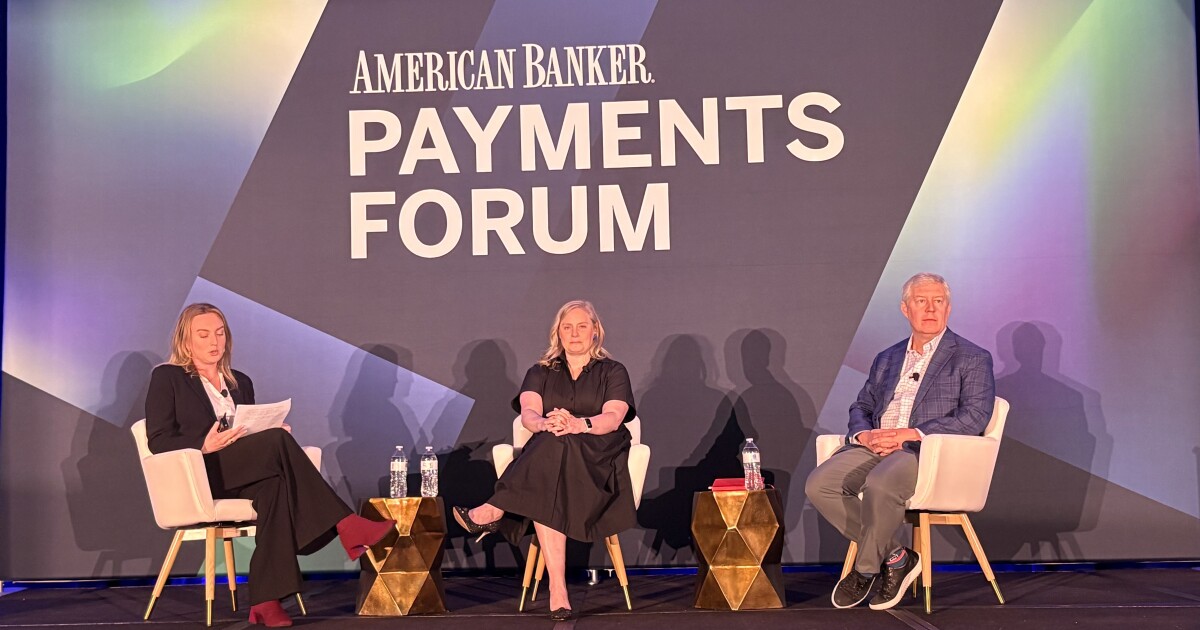
Minneapolis-based U.S. Bank is one such institution that decided to build its own BNPL and point of sale installment lending program because it wanted to solve its own merchants’ pain points, Emily Hartye, head of U.S. Bank Avvance and point-of-sale lending, said at American Banker’s Payments Forum in San Francisco.
The bank built its installment lending and BNPL program within Elavon, U.S. Bank’s merchant acquiring unit.
“We were really trying to solve a problem for our current merchants, which was, ‘Help me sell more.’ And because we have the balance sheet for loans, we actually built it in house,” Hartye said.
U.S. Bank was not just looking for small-ticket conversions; the bank also was interested in helping its merchants convert higher cost items.
“A lot of our merchants were really trying to grow their business substantially, and so what they were looking for is a solution that allows them to defer more of the expensive tickets that their customers either planned for, or didn’t plan for, or just capture higher intent by offering financing at the point of sale,” Hartye said.
Purchases range from $300 to $25,000, and can hold terms that range from three months to seven years, depending on the category.
But U.S. Bank does not see itself competing with entrenched BNPL fintechs such as Affirm and Klarna, Hartye said, because they are more focused on short-term loans.
Ultimately, offering BNPL keeps U.S. Bank relevant at the point of transaction.
“In the moment of checking out or making the financial decision, there isn’t necessarily always a way to force yourself into that conversation, to meet your customer where they are, because they’re just transacting,” Hartye said.
Banks also have the option to partner with fintechs rather than build their own BNPL and point-of-sale installment loan program. DR Bank, a Darien, Connecticut-based digital bank, works with ClarityPay to offer an embedded lending solution that focuses on travel, elective health, retail and home improvement.
“There’s no way a small bank like ours could build our own proprietary platform,” DR Bank CEO Jason Hardgrave said at Payments Forum. “And so we chose to partner through embedded lending.”
Banks are mixed in their adoption of BNPL and installment lending. Those that offer it or are planning on offering it say that the primary motivating factor is to stay competitive, according to American Banker’s