


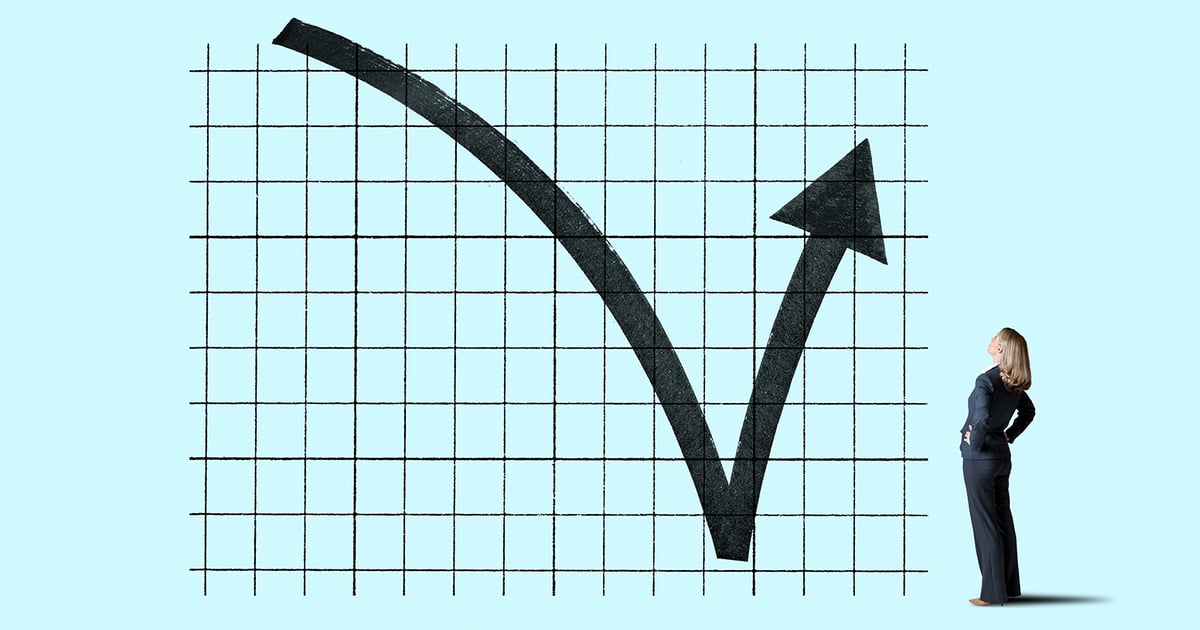
Financial advisors are feeling more confident in both the economy and the stock market.
Advisors’ feelings about the current state of the economy rose seven points in April, landing at a score of 112, according to Wealth Management’s Advisor Sentiment Index, a monthly poll of financial advisors meant to gauge their feelings about the current and future direction of the stock market and the economy. (An ASI score of 100 marks a completely neutral view.)
Likewise, when asked about the stock market, advisor sentiment rose by 10 points to 121.
Both the economic and stock market indicators returned to levels that have held relatively steady since the beginning of the year, only dipping in March as advisors absorbed the news of U.S. military actions against Iran and its implications for the U.S. economy and businesses.
Those concerns have been short-lived as advisor optimism returned, with most advisors seeing positive improvements in the months ahead.
While only 38% of advisors felt good about the current state of the economy in April, that was a 7 percentage-point rise from the prior month.
And for the first time in two years, over half of financial advisors surveyed expect the economy to improve in the next six months; 61% see an improved economy at this time next year—levels of optimism not seen in the past year—with 23% expecting the economy to be “much better.”
Advisors also see a very healthy stock market, with over half, 56%, calling current conditions “good” or “excellent.” Likewise, 54% see improvements over the next six months, a level of market optimism not seen since June of last year. To be sure, 30% of advisors predict a decline in that timeframe.
Almost two-thirds of advisors (66%) expect market improvements over the next year, while 27% predict a decline.
Methodology, data collection and analysis by Wealth Management and Informa Engage. Data collected April 9-30, 2026. The methodology conforms to accepted marketing research methods, practices, and procedures. Respondents are asked for their view on the economy and the stock markets both currently, in six months and in one year. Responses are weighted and used to create an index tied to a neutral value of 100. Over time, the ASI will provide directional sentiment of retail-facing financial advisors.