


For over 40 years, Baron Capital has been known for its mutual funds. Last year, however, the New York City-based investment manager made its foray into the ETF space, launching six actively managed funds from December 2025 through April 2026, with a seventh launch planned for June of this year.
One of the funds, Baron First Principles ETF (RONB), even allocated a substantial amount of its AUM to SpaceX, circumventing the Securities and Exchange Commission’s usual 15% limit on illiquid securities in ETFs by classifying the company’s shares as “less liquid.” The move was partially enabled by the active secondary market for SpaceX shares. (The company’s founder, Ron Baron, was an early investor in SpaceX, as well as in Tesla and xAI. Baron Capital’s holdings in SpaceX have grown from $1.7 billion in 2017 to over $15 billion today.)
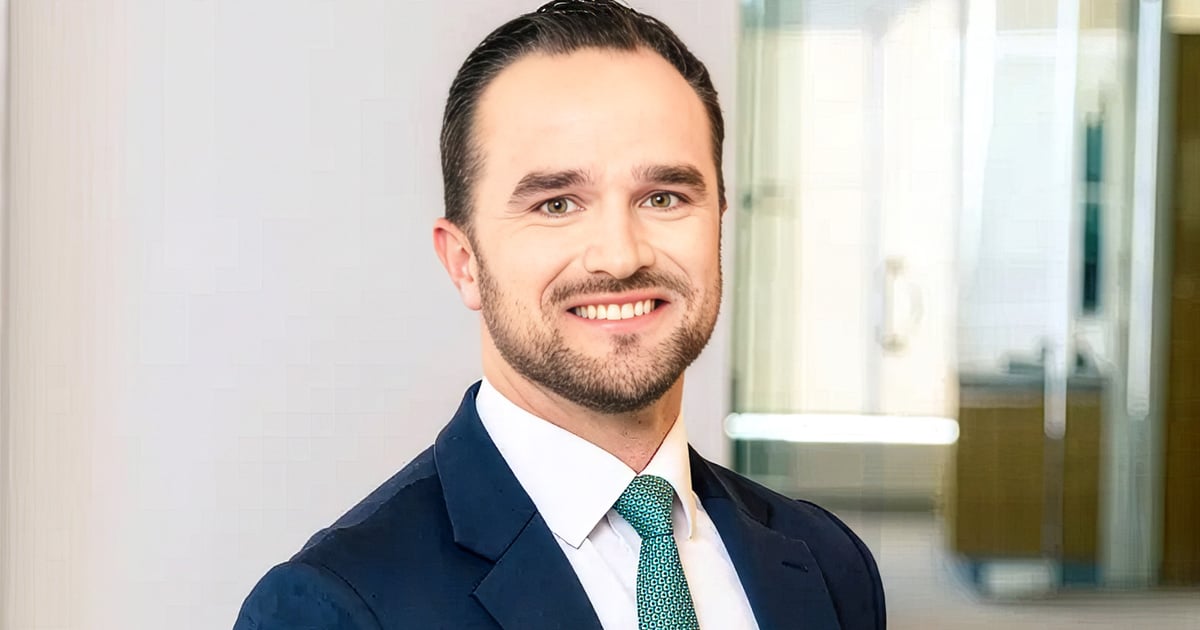
In February, the company brought in Matt Camuso, a 13-year industry veteran who helped run ETFs at BNY Investments, as executive director and head of ETF solutions. Wealth Management spoke to Camuso about Baron Capital’s plans for the ETF space, which strategies it is currently exploring and how it plans to distribute its new products.
This Q&A has been edited for length, style and clarity.
Wealth Management: What drove Baron Capital’s decision to move into ETFs?
Matt Camuso: The decision was two-fold. The first primary driver was existing client feedback, asking us to consider launching the strategies they know Baron Capital for, just delivered through the ETF wrapper, simply because of the tax efficiency the wrapper brings. Of course, we’ve seen that tax efficiency across the industry. So, it was a response to client feedback and getting our line-up in terms of choice to where the industry is today. We are still committed to mutual funds, but are offering ETFs and, also, looking to do more SMAs and use those strategies as well, just to broaden our distribution and offer existing clients more choice when it comes to how they want to consume our active strategies.
The second driver was to grow our footprint across the industry. We look at this as a great opportunity to bring net new clients to Baron Capital. Those historic ETF users who have always just preferred investing in the ETF wrapper are starting to adopt more active strategies as a core complement to passive strategies. And I think we are really well-positioned, just given the high active share, bottoms-up old school fundamental research that we deliver, to make a great complement to core passive across different asset classes. Especially with our growth focus.
We’ve seen both of those come to fruition—existing clients starting to use more of Baron Capital through the ETF wrapper and net new clients who have long waited to use a Baron Capital strategy and now finally have the wrapper to do so.
WM: Who are the investors who are more likely to use the ETF wrapper exclusively? What sets them apart?
MC: There are a few segments we’ll call OCIO that are providing model portfolios to financial advisors who really want to outsource all of that investment work to a third-party expert. A lot of these OCIO-type asset managers have long delivered model portfolios using both ETFs and mutual funds, and have really gravitated toward ETF-only, simply for ease of use. When you are delivering a model portfolio, in terms of availability, accessibility and trying to find the right share class for the client, sometimes that can be difficult in mutual funds. So, they’ve always kind of preferred the flexibility of the ETF wrapper. Because of that, they kind of limited themselves in terms of the active strategies they’ve been able to use up until about five years ago, when we’ve seen this big rise in active ETF availability.
If you look at some of the active ETFs that are coming out, they aren’t this true active profile. They are much more systematic in nature, or they are trying to deliver one outcome, whether that be income or drawdown protection. So, now having these long-term, fundamentals-driven active strategies to complement the core passive as a way to generate potential alpha or just diversify the core exposure you might be using with a market-cap-weighted benchmark really suits our investment philosophy and the types of exposures that we have long delivered. But now we are doing so in a wrapper that these types of clients have always preferred.
They want to offload. A lot of these OCIO asset managers have gravitated toward ETF only, simply due to ease of use. Sometimes it can be difficult in mutual funds. They’ve also preferred the flexibility of the ETF wrapper. If you look at some of the active ETFs that are coming out, they now have these long-term active strategies, I think it really suits our investment philosophy, but now doing so in a way that these clients.
WM: Can you talk about some of the strategies and lessons that Baron Capital has learned with other vehicles that it’s bringing over into the ETF channel?
MC: A big component of us launching our ETF strategy, something that was fundamentally important for us, is that everything we bring out in ETF format, we want it to have that true Baron Capital DNA. So, growth investors, long-term focus, high-conviction active strategies.
You’ll notice that across our now six active ETFs, two of the six at inception were mutual fund to ETF conversions. Those are just existing strategies going from the mutual fund wrapper to the ETF wrapper. The rest of the four are extensions of something we are already doing. As an example, I’ll point to our most recent launch, our Emerging Markets Select ETF (BCEM). That is a more select, or concentrated, version of our Baron emerging markets mutual fund strategy. So, all of our ETF strategies have a related strategy we’ve been running in a mutual fund format, and follow the same portfolio management team, process and philosophy, just with subtle differences.
We are not trying to chase trends or do anything different. We have followed the same investment philosophy for over 40 years, where we have a strong track record, and we are just looking to bring that same investment philosophy to the ETF strategies.
WM: How do you plan to distribute the ETFs?
MS: We’ve always been focused across channels. Specifically for our distribution teams, we are focused both on the intermediary—RIA, independent broker/dealers and wirehouse platforms—as well as the broader institutional landscape. That does take some time. We need to get a track record built up, AUM at scale, to meet some of the due diligence criteria to have this broad availability across all the channels I’ve mentioned. So, right now, we are putting a heavy emphasis on the RIA and institutional space where there is just more choice, more open architecture from an offering perspective. As we scale those up, starting to find approvals from the traditional broker/dealer and wirehouse platforms that we’ve long covered.
It is the same sales team. Now, it’s just responsible for distributing both mutual funds and ETFs. That’s by design—again, this is supposed to be an extension of what we were already doing, not something brand new.
WM: Baron Capital obviously has a very well-known name, but we have heard over the past year that the ETF landscape is becoming so crowded with new products that it’s increasingly harder for new entrants to successfully break through. Can you talk about your experience surrounding this issue?
MS: There is certainly a lot of activity, specifically with active ETFs. Having been in the industry for over 12+ years, some of the numbers even put me back in my seat, and I look at this stuff every day.
If you look at the start of 2025 through the end of April, there’s been over 1,200 new active ETFs brought to market. So, the crowding effect is happening if you look at it from that 30,000-foot lens.
I think it’s important to say that, first of all, all of these ETFs coming to market on the active side are not true active portfolios. We are seeing a lot of single-stock, inverse-levered kind of trading vehicles that are just registered as active ETFs. This is not truly what you think of as an active mutual fund strategy.
You get a lot of mutual fund to ETF conversions happening—there’s been over 200 if you look at a certain time period. Again, that’s just a wrapper switch. That’s now a brand new strategy coming to market.
And then you have another large share of active ETFs that are similar to what we are doing—they are just an extension of something else done in another format.
We usually talk to clients starting with that, because it can be very overwhelming, especially if you are just a financial advisor trying to digest due diligence on all of these strategies coming to market. But it’s important to say this is not all brand new.
It’s still highly competitive, with this continuous record after record of launches and flows happening. It’s so many new entrants coming into the industry. It’s really important to differentiate. I think that’s where our strength in this consistent long-term investment philosophy really shows well for us. This is not anything new for us. This is just coming into a new part of the industry with an ETF option. That helps, as well as the fact that a lot of flows are going to these more systematic, more algorithmic active management, and we are completely different than that. We are high-conviction, high-active-share, true bottoms-up fundamental person-to-person research happening across our portfolio. We are hearing from clients that we are being welcomed with open arms because they are looking for that true active manager.
WM: Can you talk about your bigger plan for the ETF business? How many more funds are you currently looking to launch? What are some of the strategies that appear attractive?
MS: So, we have already filed and are registered for our seventh active ETF. We are hoping to launch that at the end of this month or early June. That will be seven ETFs since December.
We don’t have anything filed after that, but we are certainly having ongoing conversations internally on what we might do next, and we are considering all options: extensions of what we are already doing, mutual fund to ETF conversions. I can say with confidence this next one will not be our last, but no plans right now to register anything in the shorter term.
Everything we are doing from a product development focus is driven by client demand. At a lot of our meetings with clients introducing our ETF lineup, we bring up “What else would you like to see from us?” Even with all these ETFs launching, there is still, I think, white space for differentiated active managers to provide solutions, and we want to be listening to that client feedback. I would say, from an existing line-up, if you had to focus on a handful that are seeing a lot of interest, the first would be our Baron First Principles ETF. That is by far our largest active ETF, and it’s seeing the most flows year to date. It speaks to our expertise in finding these exceptional companies run by exceptional management teams, as Ron Baron and now Michael and David Baron are joining him on the portfolio.
Among the others, because of the market environment and all the conversations around AI, our technology ETF, BCTK is seeing a lot of interest as well. That was one of our mutual fund-to-ETF conversions, so it brings a longer track record, as well as a larger existing asset base. It helps with earlier adoption post-launch because it’s not a brand new strategy looking to build track record.
And certainly, in our view, there is a lot of room for continued growth with the acceleration we are seeing with AI and the disruption that can come from it for a dedicated technology strategy in the ETF wrapper. We are using our expertise and very robust bottom-up due diligence to take a view on a fast-moving asset class and try to identify who are the disruptors, who are those earlier-stage companies that might not be represented in the big indices like the Nasdaq 100, where BCTK can be a really nice complement to a more passive tech-type solution.
WM: Can you provide a few more details about the seventh ETF you are planning to launch?
MC: We are still in registration, but what I can say is the name of the ETF will be the Baron Risk Optimized Large Cap Growth ETF. So, it will be in the large cap growth asset class. This is a newer strategy for us with the risk optimization, which I can’t share all that much about right now.
WM: You mentioned you’ve been asking clients which strategies they’d like to see represented. Can you share what they told you?
MC: We did already hit on it—our Emerging Markets Select ETF was really driven by client demand. They really appreciated what we’ve done in our emerging markets mutual fund, which has a track record going back to 2011, but wanted that option in an ETF wrapper. When we took it back to design, we found a way to make it a little bit more concentrated, so it’s differentiated slightly. But it still brings the same characteristics that get overall exposure and experience of our emerging markets mutual fund.
Our risk-optimized strategy, which I just mentioned, was also driven by client demand.
WM: For Baron Capital itself, how will the ETFs fit into the larger menu of funds you have?
MC: It’s really going back to that choice. We don’t have a preference for how clients use us; it’s offering them the option to use us through the ETF. Throughout the firm, but especially at the top of the house, there is a lot of buy-in and excitement for not only just launching the ETF business, but the reception that we’ve seen since the launch. The platform is already over $700 million in AUM, we are seeing over $400 million in year-to-date flows. We always say we are really wrapper-agnostic. We are still very committed to our mutual fund franchise; this just an extension to offer choice for those clients that might prefer consuming a strategy through an ETF over the mutual fund.