


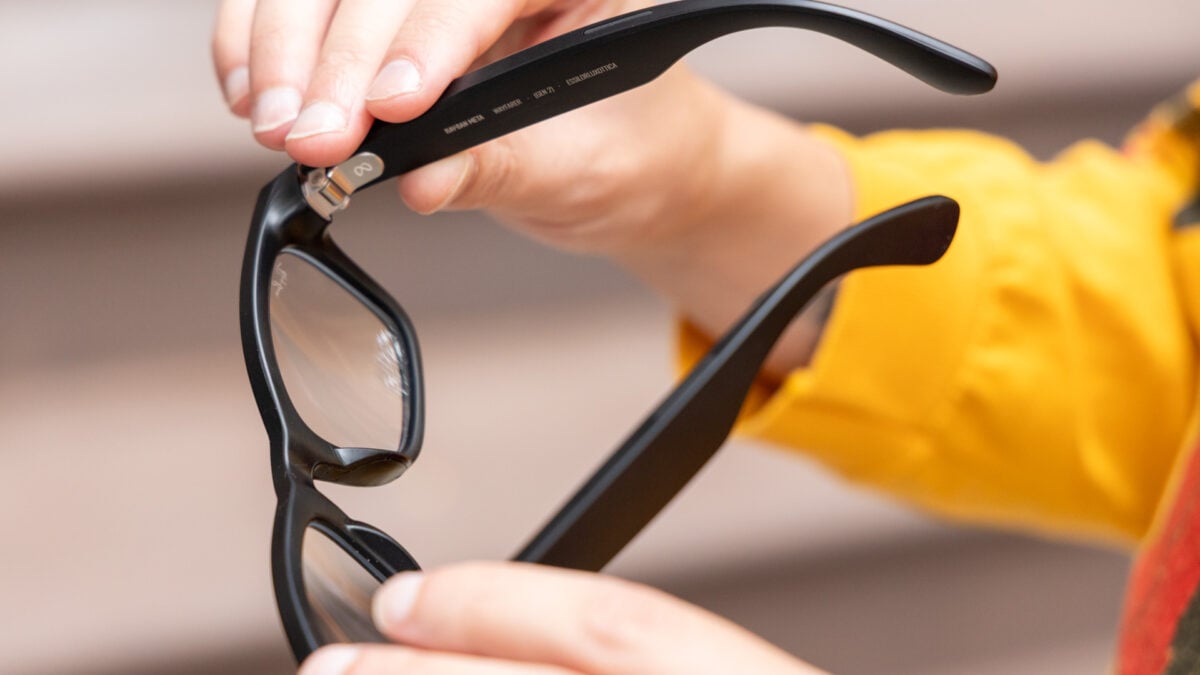
If you’re planning on wearing smart glasses all the time, there are a lot of things to consider. There’s the potentially poor reception from people who might not like that you have a camera on your face, for example, and then also the question of what exactly you want to use them for. Some pairs are AI-forward, some pairs have a screen for productivity, and some are more geared toward audio and photo/video capture.
One thing some people definitely have to consider is whether they’ll be functionally sightless when they’re inevitably forced to take said smart glasses off their faces.
As I’ve covered previously, some major cruise liners have already banned smart glasses in certain areas of the ship due to privacy concerns—namely, the potential for people wearing said smart glasses to record other people discreetly. On the surface, there’s nothing wrong with that ban. In fact, it makes a lot of sense; there are plenty of places where smart glasses should unequivocally not be allowed, like courtrooms or while taking tests, and pretty much in any area where there’s something potentially private happening.
The only problem is, well… prescriptions. Smart glasses, in order to appeal to people who actually wear glasses for sight reasons, also come with prescription lenses, and given the high cost of those prescription smart glasses, people are now wearing them as their only pair, both smart and otherwise. Big mistake, apparently.
Here’s an account from one passenger attempting to wear Ray-Ban smart glasses with prescription lenses on a Royal Caribbean cruise in mid-February, who was either caught off guard by restrictions or willingly ignored them. In the end, they were allowed to wear the glasses on the ship, but only with tape over the cameras. Needless to say, they were not happy about the experience.
I’m going to assume this isn’t an isolated incident. As smart glasses become more popular, issues like this are inevitable, and that inevitability is compounded when people start to make smart glasses indispensable. As much as Meta would love to have everyone wearing smart glasses all day, as evidenced by its new line of prescription-focused Ray-Bans, the Blayzer and the Scriber, it is still not culturally accepted to wear a camera on your face—and it may never be.
Yes, there are pairs that are more discreet than the Ray-Ban Meta AI glasses, like the cameraless Even G2 from Even Realities, which are a lot less likely to encounter pushback over privacy, but the field as a whole doesn’t seem to be headed in that direction. The fact is, as long as there’s a camera on your glasses, someone is probably going to be asking you to take them off.