


(Bloomberg Opinion) — An underappreciated aspect of the one-time 5% billionaire wealth tax likely to go before California voters in November is that for several of the state’s most prominent billionaires, the rate might be far higher than 5%. This is because the text of the proposed 2026 Billionaire Tax Act says that in calculating the tax, “the percentage of the business entity owned by the taxpayer shall be presumed to be not less than the taxpayer’s percentage of the overall voting or other direct control rights.”
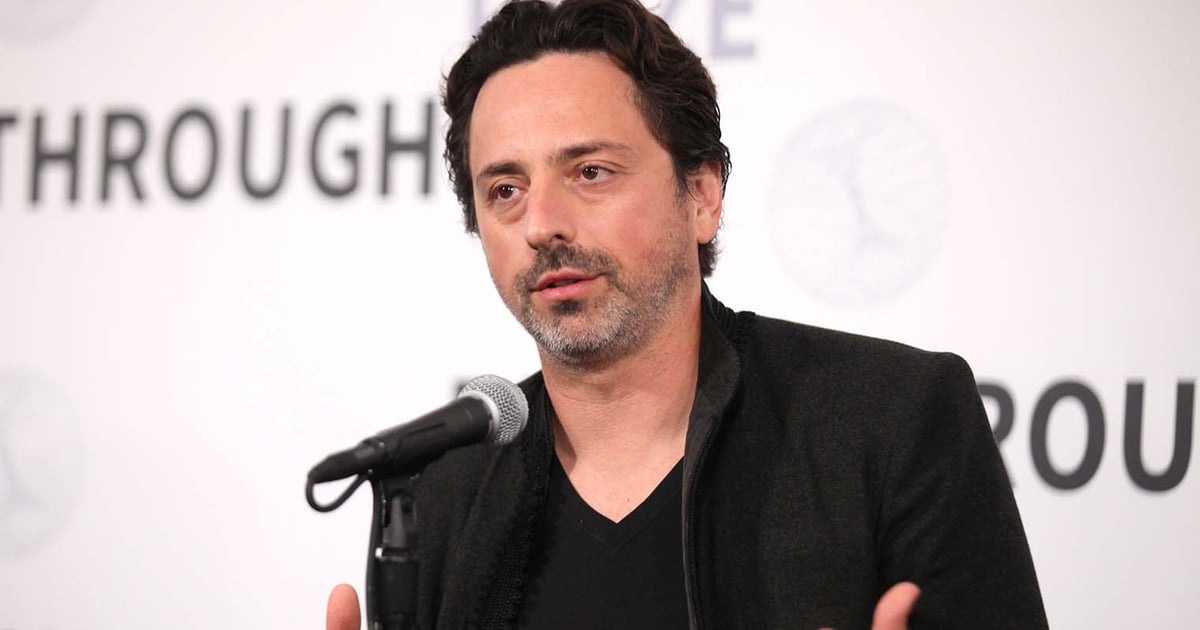
For Google co-founder Sergey Brin, among the most outspoken opponents of the tax, this could mean his taxable wealth is not the $304 billion net worth that the Bloomberg Billionaires Index estimated when last I checked (minus the proposal’s $1 billion exemption) but almost $1.2 trillion. That’s what you get when you multiply Brin’s 25.3% voting control of Alphabet Inc., Google’s parent, with Alphabet’s market capitalization of nearly $4.7 trillion. Five percent of nearly $1.2 trillion is $59 billion, or 19.5% of Brin’s actual net worth. For Brin’s co-founder, Larry Page, the effective tax rate could be 19.6% of his $327 billion net worth, and for Meta Platforms Inc. founder and chief executive officer, Mark Zuckerberg, 21.7% of $215 billion. The most extreme case may be DoorDash Inc. co-founder and CEO Tony Xu, who by my calculations could owe 122% of his Forbes-estimated $1.6 billion net worth. Capital gains taxes from selling shares to pay the billionaire tax could drive overall tax liability much higher, Jared Walczak of the center-right Tax Foundation estimated in January.
I’ve used “could” rather than “would” above because several drafters of the proposal have written that a “straightforward reading” of the voting-rights provision “in context” makes clear that “taxpayers will not be taxed on value that exceeds the market value of their holdings.” Having read it in context, I’m not so sure about that, although I am willing to believe that the California Franchise Tax Board, which would administer the tax, is likely to go with this interpretation because doing otherwise would be crazy. In any case, Brin, Page and Zuckerberg aren’t sticking around to find out — all have left or are leaving the state.
You may also find it crazy, though, that these billionaires’ voting-calculated wealth is so much greater than their actual wealth. That’s due to a so-called dual-share corporate structure: As of Alphabet’s recently released 2026 proxy statement, Brin and Page respectively owned 5.4% and 5.8% of Alphabet’s total shares outstanding but 42.9% and 46.5% of separate Class B shares, which get 10 votes to every one for the Class A shares that run-of-the-mill investors can buy. At Meta, Zuckerberg owns 13.5% of total shares but 99.8% of Class B shares. At DoorDash, Xu owns just 2.5% of total shares but controls all the Class B shares because his co-founders gave him an irrevocable proxy to vote theirs.
These corporations are organized this way to enable their founders to retain complete control even as more and more Class A shares are sold to outside investors. Such violations of the principle of one vote per share were seen partly to blame for the 1929 stock market crash, and dual-class structures were effectively banned for US public companies from the 1930s until the 1980s. They were still uncommon when Google went public in 2004 and Facebook in 2012. Of the world’s 10 largest corporations by market capitalization, Alphabet and Meta are the only ones with such share structures. The lack of dual share classes at No. 1 Nvidia Corp., which went public in 1999, helps explain why founder and CEO Jensen Huang has greeted the wealth-tax proposal with so much more equanimity than some of his Silicon Valley peers.
For the venture-backed Silicon Valley startups that followed in Google and Facebook’s wake, giving founders lots of extra voting power has become standard. Of the 31 tech companies that went public in the US in 2025, according to University of Florida finance professor Jay Ritter, 15 had dual-share structures. This year’s probably larger IPO class will include many more such arrangements, although at the two highest-profile potential class members, OpenAI and Anthropic, voting control appears likely to stay in the hands of semi-independent entities that are supposed to keep the companies’ products from killing us all.
That’s one justification for a dual-share structure. At corporations where founders get the supercharged shares, the reasoning is usually that this allows visionary leaders to execute on long-term plans without having to cater to Wall Street’s whims. Tech companies with dual share classes have in fact massively outperformed those without them post-IPO, with an average three-year buy-and-hold, market-adjusted return of 13.8% in Ritter’s data compared with negative 15.4% for the single-class companies. For non-tech companies, the difference is much smaller, and for the tech companies, the results are clearly affected by the fact that in the past it was only the most promising startups that could get investors to agree to second-class corporate citizenship. Most studies by finance and legal scholars that attempt to separate the dual-share effect from other factors have concluded that dual-share structures actually depress shareholder returns.
The weaknesses are apparent not so much when a company is on the rise but when it begins to struggle. If it weren’t for its dual-share structure, for example, former shoe sensation Allbirds Inc. might have been forced by outside investors to sell several years ago — and gotten a lot more money than the $39 million its assets brought in this spring (I’m assuming the company’s subsequent pivot to artificial intelligence will not in fact work out). The messy, contentious American system of activist investors having the power to push for changes at underperforming public companies seems to kinda-sorta work, and foreclosing that possibility for eternity may be a big mistake.
It’s definitely in fashion, though. Elon Musk doesn’t have a special class of shares at Tesla Inc. and has had to go to great and controversial lengths to get the company’s board to give him more voting power by way of a gigantic pay package; he’s reportedly angling to avoid all that at SpaceX with dual share classes. In incorporation-hotspot Delaware, Tesla’s reincorporation in Texas after an unfavorable court ruling on Musk’s pay package led the state legislature to rewrite the law to make it more amenable to controlling shareholders. The second Trump administration has turned outright hostile to the large outside investors and proxy advisory firms that sometimes oppose controlling shareholders’ plans.
“Corporate governance authoritarianism” is what Tulane University law professor Anne Lipton recently dubbed this phenomenon. Such a trend invites backlash, although it will probably take a sustained market downturn for the opposition to really get going. The voting-shares provision of the 2026 Billionaire Tax Act may be an early, possibly inadvertent and definitely counterproductive precursor of the reaction to come.
To contact the author of this story:
Justin Fox at [email protected]