


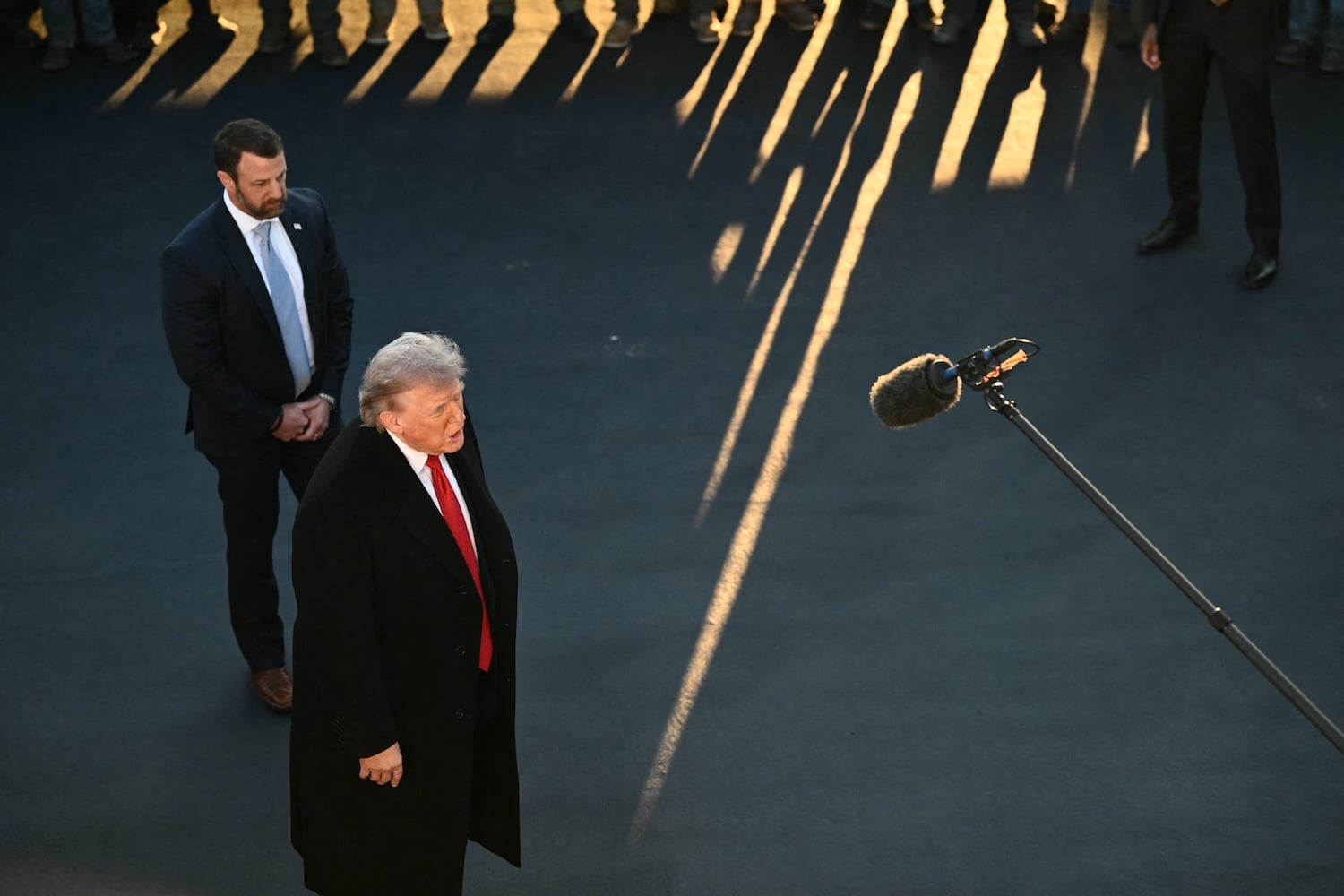
U.S. President Donald Trump’s tariffs just cannot catch a break in court.
Late Thursday, the U.S. Court of International Trade (CIT) struck down Trump’s latest stopgap measure, a 10 percent global tariff that he levied earlier this year after the Supreme Court struck down his prior go at it. Trump is now 0-5 in judicial rulings on his trade war.
U.S. President Donald Trump’s tariffs just cannot catch a break in court.
Late Thursday, the U.S. Court of International Trade (CIT) struck down Trump’s latest stopgap measure, a 10 percent global tariff that he levied earlier this year after the Supreme Court struck down his prior go at it. Trump is now 0-5 in judicial rulings on his trade war.
The CIT’s ruling does not mean that Trump’s latest tariffs are dead; relief was just for the plaintiffs, and these duties on imports could last until July, when the Trump administration is expected to unveil a backup, backup plan using a different section of the same half-century-old legislation.
But the court ruling—like some of those that came before on tariffs, including the Supreme Court invalidation—did raise some interesting and big questions. Such as: Can the president, contra the U.S. Constitution, unilaterally raise taxes for almost any reason whatsoever, let alone under a statute written in the late years of the Nixon administration to address a problem that no longer exists? The court majority thought not.
“This case turns on the meaning of Section 122 and whether the president asserted the existence of the conditions required by the statute in order to lawfully proclaim the import surcharges. As discussed further below, the President’s Proclamation fails to assert that those required conditions have been satisfied,” the majority ruled.
“Such an expansive reading of the statute would raise a non-delegation issue, which in turn would prompt a constitutional question,” the court wrote, noting that when in doubt, any reading of a statute that does not violate the Constitution is to be preferred.
What was at stake in this particular case was that section of the 1974 Trade Act, which Congress passed after then-President Richard Nixon went wild on tariffs to deal with a weak dollar and red numbers everywhere. For two decades prior, the United States had a “balance-of-payments” problem in which foreigners were trading in their U.S. dollars for dwindling reserves of physical gold. (The United States was still functionally on the gold standard until 1971, meaning that each bill was backed by actual ore.) Section 122 of the 1974 Trade Act authorized the president to levy some tariffs, for a few months, to deal with the balance-of-payments problem.
But—as a lot of smart people have noted—it is physically impossible to have a balance-of-payments problem when a country has a floating currency, as the United States and most countries do today. Nobody is raiding Fort Knox and carting off gold. The dollar just goes up, or more usually down.
But there are also some very smart economists who argue that the United States does have a problem with balancing its accounts, whether that is the trade deficit, or national debt, or the annual fiscal deficit. So maybe “balance of payments” is a broad term that can apply to economic malaise more generally.
That is exactly what the Trump administration’s lawyers argued in court.
“[T]he Government seeks to defend the proclamation by arguing that ‘balance-of-payments deficits’ is a malleable phrase,” the court wrote, before arguing exhaustively that it is in fact a brittle and well-defined phrase that Congress was well aware of it when it wrote the bill.
The majority cited the legislative history of the 1974 Trade Act to show that Congress meant specific things, none of which Trump pointed to in imposing his emergency tariffs. However, the dissenting judge noted that this argument would carry more weight if those distinctions had actually made it into the final legislation, rather than being stripped out as unnecessarily restrictive on the president’s authority.
But there’s a bigger picture here. Like the Supreme Court case earlier this year, the court was grappling with a fundamental constitutional issue: Congress, by law, has the power to levy taxes, not the president. It’s true that over the past century, Congress has delegated wide powers to the executive branch to regulate trade in various forms, including tariffs. But all of those delegations had limits and guardrails; even Section 122, the heart of this matter, caps import duties at 15 percent for 150 days, which ends in this case in late July.
The judicial defeats that the Trump administration has sustained in its bid to wrest the power of the taxation purse from Congress are noteworthy, not so much for the particulars of any given case, but because they get to the quid of the question: Is the United States a republic, or a monarchy?
This post is part of FP’s ongoing coverage of the Trump administration. Follow along here.