


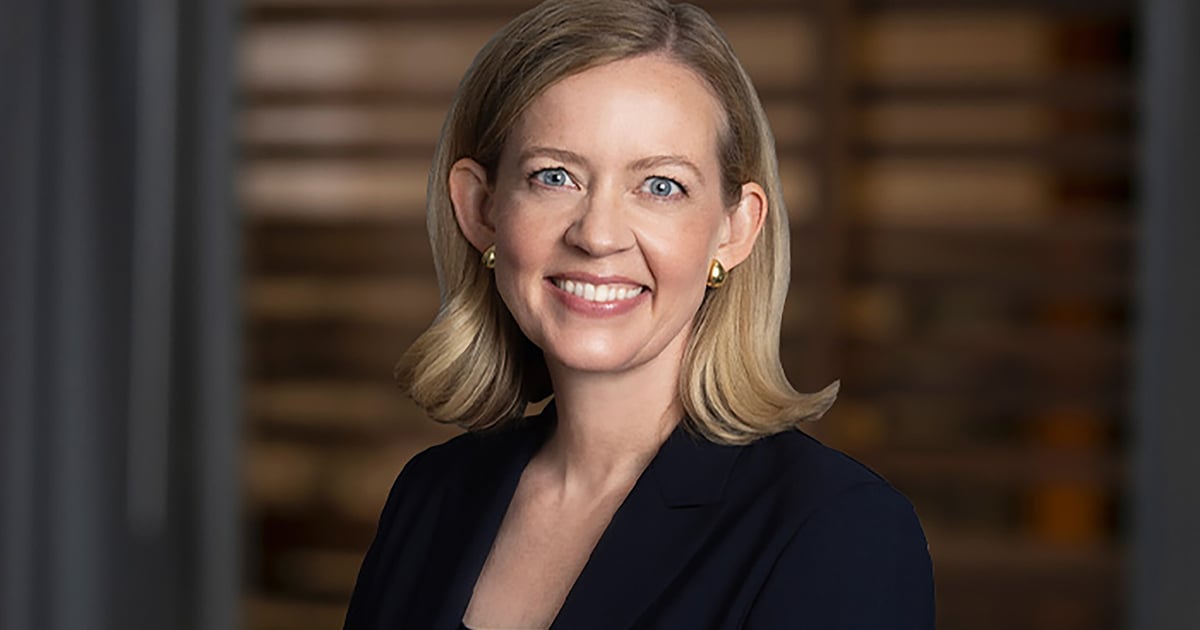
The CEO of one of the country’s largest registered investment advisors said on a panel Tuesday that the talent shortage to watch in wealth management is among those providing adjacent wealth services, such as taxes and accounting, to a growing pool of upper-high-net-worth clients.
“Many of us have probably seen the McKinsey study saying that there is going to be a shortage of 100,000 advisors,” said Cresset Capital CEO Susie Cranston. “But if you look at the graduation rates of accounting schools, if you look at the number of people passing the CPA exams, those numbers have dropped by as much as 50%.”
Cranston made the comments during a press briefing with other RIA leaders from Hightower, New Edge Capital and Dynasty Financial Partners, hosted by Goldman Sachs at its annual RIA Professional Investor Forum.
Figures from the American Institute of CPAs do show a years-long decline in the number of accounting graduates with both bachelor’s and master’s degrees, which has been coupled with a roughly decades-long trend of fewer people getting CPAs.
Cranston, who oversees a $237 billion RIA with roots as a family office, added that advancements in artificial intelligence have also started to erode the professional “training grounds” for tax and accounting professionals that might have been hired by a family office. But she doesn’t see those types of entry-level roles displacing the need for humans to work with UNHW families with assets that can be in the $100 million range.
“Even with all the talk that AI is going to remove all the jobs … I think that’s very unlikely in the ultra-high-net-worth space,” Cranston said. “I think you’re going to see a shortage of qualified, experienced talent, and I think that’s going to give scaled players an advantage because you’re going to really have to start thinking about how to cultivate that talent as the demand for family offices is really skyrocketing.”
The other RIA leaders agreed that the need to serve higher-net-worth families across generations is growing in the U.S.—a trend borne out in recent months, with several RIAs announcing dedicated family office divisions or acquiring family office firms.
Hightower CEO Larry Restieri said the need for more complex wealth services may also ultimately puncture the storyline that AI can replace human advisors.
“In some ways, AI will commoditize what has historically been a value add for the wealth management business,” Restieri said. “What clients are actually paying for is not so much the investment returns, but the actual advisor—the EQ of the advisor.”
He added that the best advisors may even become more expensive as AI advances.
“I can make an argument that the price of advice for the best advisors may go up, because while they can cover more clients, they still have a limited ultimate capacity,” he said. “In the same way that the best concierge doctors can charge the most because they are the best out there, and they have a limited number of spots.”
Dynasty CEO Shirl Penney also sought to flip a common storyline in the financial advisor press on its head.
He told the audience of financial journalists that while there is plenty of reporting on advisors breaking away from wirehouses to go to independent channels, there is little talk of the “client breakaways” to those channels.
“The breakaway client movement is four times bigger than the breakaway advisor movement,” Penney said.
The head of one of the country’s largest RIA platforms argued that last year, about $400 billion in assets moved from bank brokerage accounts to the independent space, with only about $100 billion coming via breakaway advisors.
“The much bigger growth came from organic growth on the installed base of RIAs from breakaway clients,” Penney said. “It has always surprised me that the press hasn’t talked more about that.”
Goldman Sachs’ third RIA forum event had panel topics based on some of the most recent headlines in the financial press, according to moderator Troy Thornton, co-head of the Americas third-party wealth business. Those topics included discussions about global market volatility, AI disrupting wealth management and private credit default risk.
Numerous panelists, however, pushed back on those very headlines during discussions, particularly regarding concerns over private credit.
Lindsay Rosner, head of multi-sector investing for Goldman Sachs, told the RIA audience that private credit has underlying stability and nothing she sees that is “particularly concerning.” Even in software exposure, where markets had particular concern due to AI advancements, she noted those investments did not affect the entire asset class.
“It’s about sizing and diversification,” she said. “Should private credit be 100% of a portfolio? Probably not, but nor should equities. … I think it comes back to how big of a sleeve is it and understanding that it is a less liquid asset class.”
Goldman Sachs President and COO Jon Waldron acknowledged in a separate discussion that the firm is receiving questions from CIOs about private assets, particularly private credit.
“Most CIOs in the last 10 years have been allocating more into private assets,” Waldron said. “Now there is a debate about whether I have too much private, illiquid risk for my portfolios.”