


- Key Insight: Tariff-driven price shocks drove many small businesses to take out expensive merchant cash advances, and the Small Business Administration changed a rule that prevented those cash-strapped business owners from refinancing into government-backed loans, according to two Democratic senators.
- Expert Quote: “This closes an essential escape route for small businesses trapped in spiraling MCA debt.” — Sens. Ed Markey and Ron Wyden
- Supporting Data: Merchants cash advances often carry exorbitant fees and de facto interest rates that exceed 100%.
Processing Content
Two Democratic senators are demanding answers from the Small Business Administration in connection with a Trump-era policy change that they say left tariff-battered firms vulnerable to predatory forms of financing.
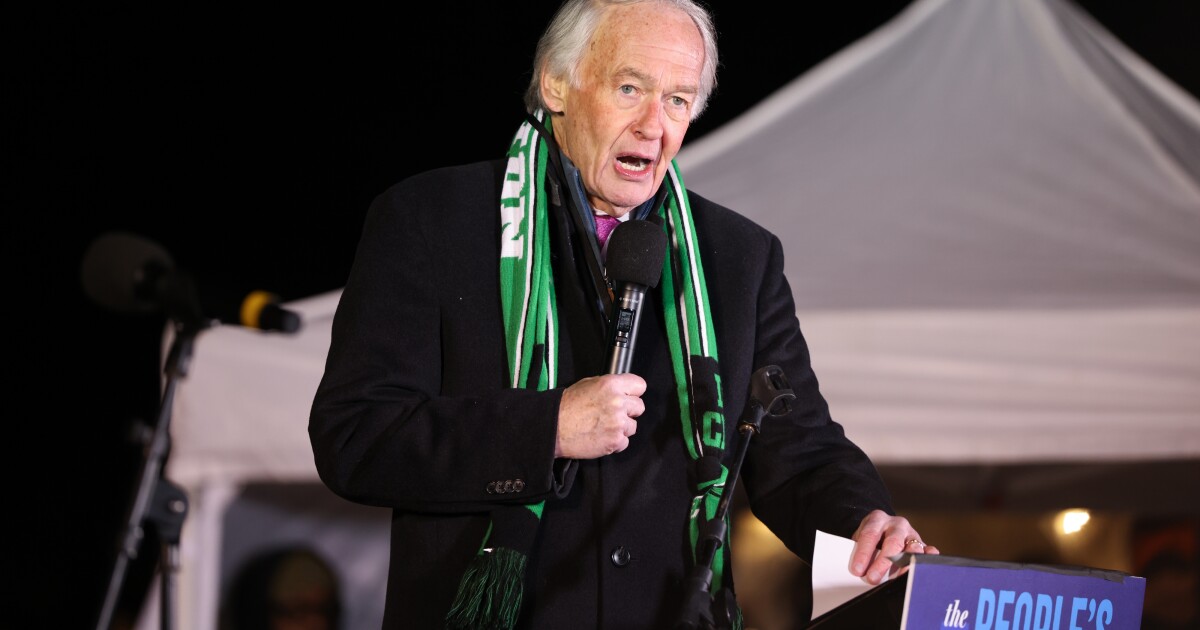
In a letter made public on Friday, Sens. Ed Markey, D-Mass., and Ron Wyden, D -Ore., accused the SBA of leaving businesses vulnerable to merchant cash advances, which they likened to payday loans for businesses.
The two Democrats said they wonder whether “the administration’s tariff policy and gaps in small business funding may be inadvertently funneling businesses into predatory financing arrangements without an exit path.”
After the Trump administration’s
“In many cases, the automatic withdrawals drain operating accounts so quickly that businesses are forced to take out additional MCAs simply to stay afloat, creating a debt-stacking spiral that is widely recognized as a leading driver of small-business insolvency,” the senators wrote.
Markey and Wyden are far from alone in their skeptical view of merchant cash advances. The financing option is well known to be highly expensive, with hefty fees and de facto interest rates that often reach
In January 2025, New York Attorney General Letitia James
“Even the most expensive traditional business loans rarely approach the cost of an average merchant cash advance,” Leslie Tayne, a New York debt-relief attorney,
According to Markey and Wyden, the SBA failed to protect businesses from these products in two ways: First, it neglected to adequately warn them of the dangers of merchant cash advances. Secondly, a
“This closes an essential escape route for small businesses trapped in spiraling MCA debt,” Markey and Wyden wrote.
Eda Henries, a broker-dealer who advises small businesses, lamented the same rule change earlier this year in an op-ed for American Banker.
“That decision eliminated the only viable path for owners to escape predatory financing,”
The SBA did not respond to a request for comment by the time of this article’s publication.
According to Markey and Wyden, many businesses were not just pushed into merchant cash advances by tariffs, but also lured in by a wave of aggressive advertising.
“Recent accounts detail how importers were inundated with offers for MCAs,” the senators wrote. “Import-reliant firms report nonstop calls, texts, and WhatsApp pitches promising same-day cash, as MCAs have engaged in aggressive and largely unregulated marketing feeding on tariff-driven urgency.”
With little to no guidance from the SBA to do otherwise, the senators wrote, many businesses fell for these sales pitches.
The two Democrats are now demanding to know what efforts the SBA made, if any, to protect businesses from tariff-induced price shocks; to warn businesses about the risks of merchant cash advances; and to explain whether the agency is planning to allow the refinancing of MCA debt. They also asked for any documents “explaining the rationale” behind the June 2025 rule change.