


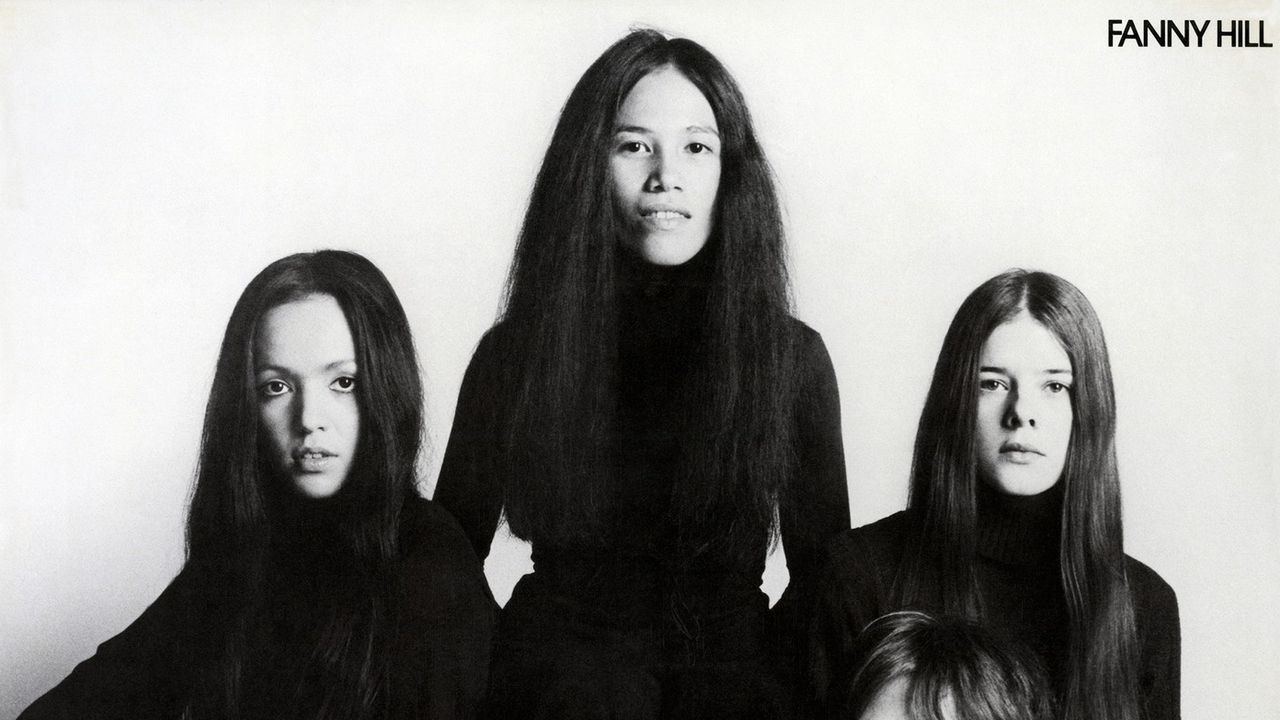
Before they were the denizens of Fanny Hill, the Millington sisters were young girls growing up in the Philippines, born to a white American naval officer and a Filipina socialite. When the girls were teenagers, the family moved to California. Both sisters learned how to play the ukulele—“It was totally natural, like eating or breathing,” as June once explained it—by playing pop songs from the radio. Soon enough, they started a band: June on guitar, Jean on bass, plus a couple other Filipina-American girls they knew. They called themselves the Svelts. They toured around, covering the Beatles and the Beach Boys, plus Motown tracks that all-boy bands couldn’t handle. In 1969, after breaking up and reforming as Wild Honey—now joined by de Buhr on drums—the band went to LA with an ultimatum: They’d get a record deal or call it quits.
At an open mic at The Troubadour, they were spotted by the secretary for producer Richard Perry. He was fresh off the success of novelty act Tiny Tim and looking for another score; later, he’d go on to produce records for Barbra Streisand, Harry Nilsson, Carly Simon, Ringo Starr, and many other ’70s stars. After seeing Fanny at the Troubadour, Perry’s secretary convinced her boss to check them out. Impressed, he got them a deal with Reprise—home to stars like Neil Young, Joni Mitchell, and Jimi Hendrix.
For their debut album, the band rechristened themselves Fanny. “We loved the idea that it could be an anatomical part of your body,” June once said of the name, “and the name of your favorite great-aunt from Iowa.” They also added another member: Barclay, on keys, who also wrote about half the songs on their debut. Fanny introduced the four women as skilled musicians (evidenced by June’s masterful 12-string playing on “Come and Hold Me,” or Jean’s melodic bassline on “Bitter Wine”) with great taste (take, for example, their jammy cover of Cream’s “Badge”) and an eye towards the social issues (as on the authority-skeptical “Conversation with a Cop”). Less than a year later, they followed it with 1971’s Charity Ball—the title track earned them their first top 40 hit.
Fanny was particularly well-received in the United Kingdom, despite—or maybe because of—their name representing a different anatomical part of one’s body overseas. For their next record, they booked some shows in England and booked some time at Apple Studios, the famed studio built by and for the Beatles. Fanny’s next record would be engineered by the Beatles’ engineer, Geoff Emerick.
Capturing the intensity of Fanny’s live shows in the studio had always been a struggle for the band, but Fanny Hill comes closest. The opening track, a cover of Marvin Gaye’s “Ain’t That Peculiar,” is all bluesy swagger, June’s slide guitar whipping through like a roller coaster careening around its tracks. The mix of fury and defiance in June and Barclay’s voices on “Borrowed Time” and “Blind Alley” could give Robert Plant a run for his money; on the latter, June plays a scorched-earth guitar solo and de Buhr drums like she’s settling a score with every patronizing dude she’s ever met. To beef up the energy, they introduced new instruments to the mix: saxophone, trumpet, trombone. String players from the London Philharmonic show up on “Hey Bulldog,” and their presence is perhaps the second-most interesting addition to the Beatles cover: Fanny felt the song was too short, and got the guys’ permission to write an additional verse to add to their heavier, grittier version.