


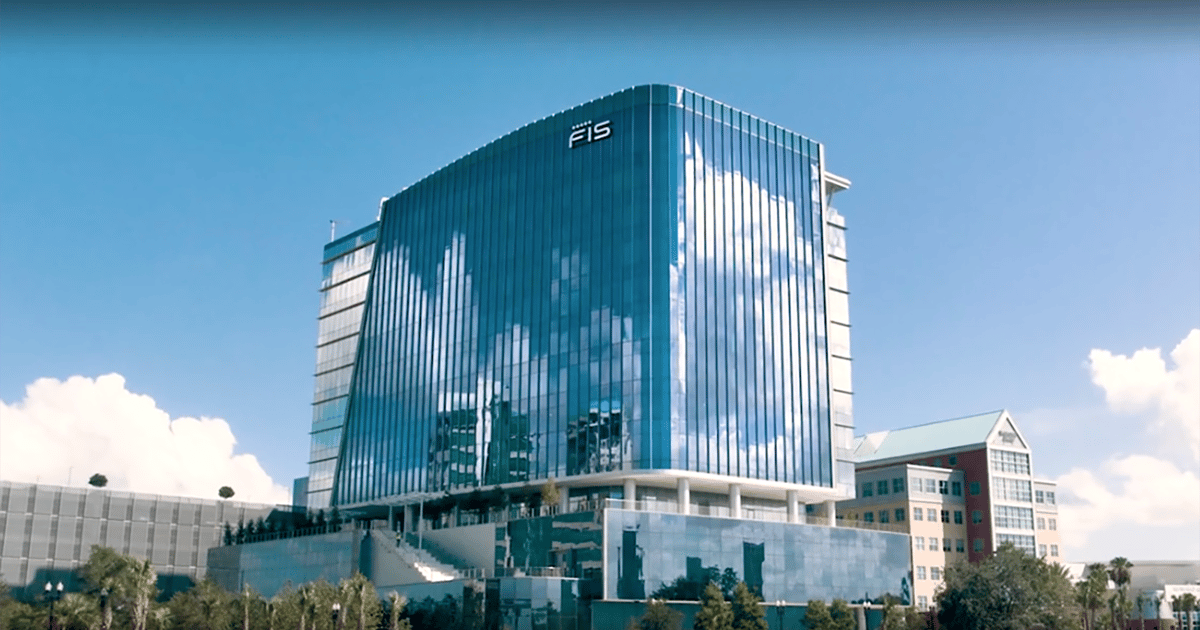
As the defined contribution industry emerges from the shadows of the financial services sector, no longer a niche market at $14.2 trillion plus $19.2 trillion in IRAs for a total of $49.1 trillion in retirement savings as of the fourth quarter of 2025, according to ICI, the technology that supports the over 100 million participants must keep pace. There are many more small accounts with daily microtransactions than in the wealth industry, with much lower fees. Participants have numerous 401(k)/403(b) and IRA accounts that are hard to consolidate as they switch jobs an average of 12 times over their careers, most without a personal advisor.
The backbone of the DC industry is the underlying recordkeeping software with FIS Global Retirement, which supports Omni and Relius, the clear leader with 650 clients supporting 68 million participants. A rigid spine restricts movement and functionality, while a flexible one opens a myriad of possibilities, which is why so many people practice yoga, especially as they age—a flexible spine is most important.
That backbone created in COBOL over 30 years ago has limited innovation, making it hard, if not impossible, to incorporate new technologies and third-party services. But FIS Global Retirement, now led by Will Hicks, who took over leadership in early 2025 and has been with the firm for over 20 years, is launching a new cloud-based record-keeping system due out in July, which will bring together Omni and Relius, heavily relying on AI and allowing clients to more easily incorporate third-party applications.
“We started the project four years ago,” said Hicks. “One goal was to consolidate platforms. Larger clients that use Omni and smaller ones that use Relius were asking for the same things. An integrated platform would bring much of the functionality that Omni users enjoy to everyone.”
FIS Retirement is part of a much larger banking fintech company, which facilitates the movement of $9 trillion and 75 billion transactions annually. Essentially, FIS acts as a third-party vendor that enables financial institutions and merchants to handle banking, payments, and investments without creating in-house infrastructure while acting as a cybersecurity shield.
“We focus on the chassis rather than the bells and whistles,” stated Hicks. “We are the Switzerland of the operating system.”
Rather than inhibiting innovation, the new FIS cloud-based system promises to facilitate it by incorporating the applications that most of their clients use, eliminating costs and allowing for additional services. Though FIS also acts as an outsourcer to firms like T. Rowe Price, it does not interact with the end user.
A fundamental issue with DC plans and IRAs is the disparate accounts that most participants have, something UCLA Professor Shlomo Benartzi pointed out in a Wall Street Journal column. RCH took the lead, creating the Auto Portability Network with six of the largest record keepers focused on automatically transferring smaller accounts from one provider to another. They recently released a white paper calling for a centralized institutionalized clearinghouse. The white paper recommended:
“A digital rollover framework built on a clearinghouse model would convert what is now a decentralized, DIY process into a standardized, automated transaction flow. Accountholder consent and instructions would be captured digitally, data would be validated in near real time, and funds would be moved electronically as instructed by the clearinghouse, between plans and between plans and IRAs, without the use of paper checks.”
While a brilliant idea and something blockchain, which relies on decentralized databases, could facilitate, FIS, with its dominant and entrenched position and now with its cloud-based system, is most likely to serve as this clearinghouse, unlocking the vast potential of workplace savings platforms.
For example, as the interest and need for in-plan retirement income grows, a firm like FIS could act as an enabler working with third-party middleware providers to allow for transferability, something SS&C has been working for decades with limited success.
Convergence of wealth and retirement is the only way most DC record keepers and advisors can thrive or even survive. Not only does FIS have access to 68 million participants, but it also knows when an event occurs, such as an employee separation, a loan or a hardship withdrawal. Though FIS cannot provide this data to advisors without the permission of their clients, it can facilitate, acting as a global cybersecurity shield as it does for the banking industry. It could coordinate APIs to allow clients to grant selected customers to safely access and use data. The parent company could eventually integrate some of the banking data from clients they serve, again, with permission.
The DC industry has historically had moats that kept outsiders at bay. One of those moats has been outdated and rigid underlying technology. Let’s hope that the July 2026 launch of the cloud-based versions of Relius and Omni turns the tables and, rather than restricting innovation, facilitates it while helping their clients to safely, timely and efficiently provide data to their partners and create a real clearinghouse, which will unleash the potential of DC plans.