


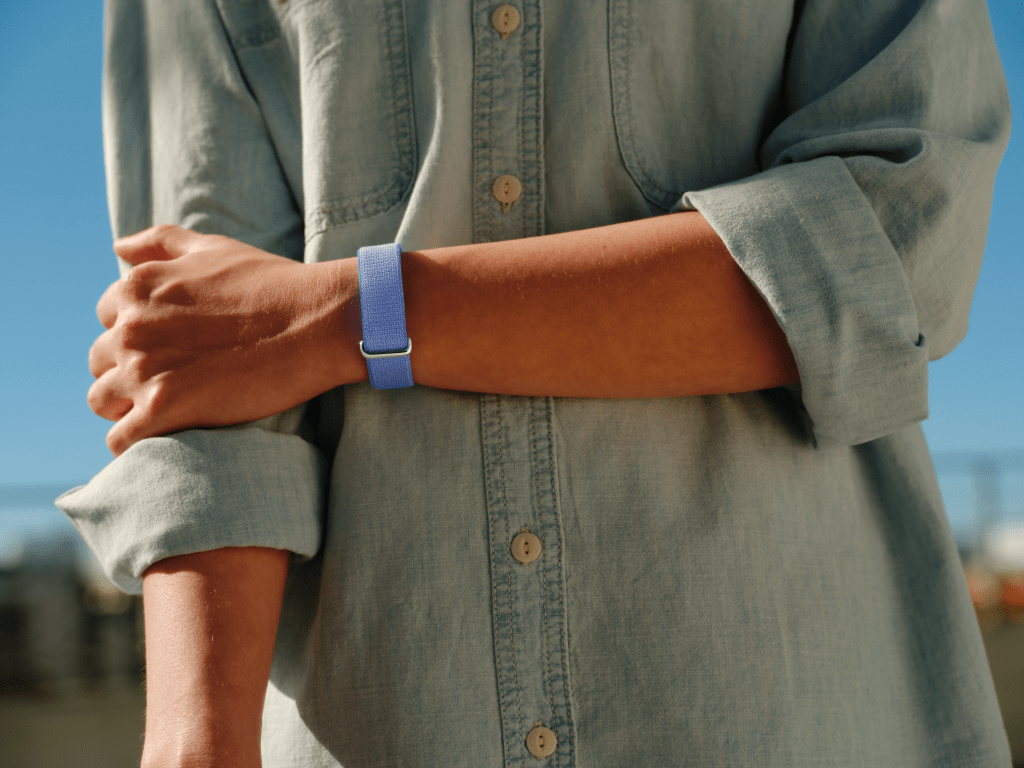
For many people, fitness trackers are a practical way to keep an eye on their activity and health data in everyday life without having to resort to a full-featured smartwatch. Simple, unobtrusive models in particular appeal to users who prefer discreet tracking and don’t want constant notifications on their wrist.
The new Google Fitbit Air is now launching as such a model and represents an alternative to Whoop and soon Garmin, too. According to Amazon, the official launch date is 26 May, and the tracker is currently available for pre-order. The bundle with an additional Active Band currently costs just £84.99 instead of the bundle’s RRP of £119.98. That equates to a saving of 29%.
At the same time, the set costs exactly the same as the Fitbit Air on its own if you buy it from the official store. So the second wristband is effectively included at no extra cost. All colours are available to choose from, such as Berry, Fog and Lavender and it comes in sizes S and L. Some are listed as a ‘Limited Time Deal’ ending on the Air’s launch date.
What the Google Fitbit Air has to offer
Google unveiled the Fitbit Air just a few days ago; it is aimed at users looking for a wearable that is as unobtrusive as possible and has no display. Instead of notifications or displays directly on the wrist, the device focuses entirely on health and fitness data, which you can then analyse via the Google Health app on a compatible iPhone or Android phone.
The wearable measures your heart rate around the clock, helping you to better assess your general state of health. It also features continuous activity tracking and personalised goals for your weekly cardio training. According to the manufacturer, the system adapts to your individual needs and is designed to provide personalised recommendations over the long term.
Credit: Google
Google is also placing a strong focus on the new Google Health Coach. Users receive three months’ access to personalised coaching. This analyses the collected data and is designed to provide specific advice on training and health.
The compact design is particularly appealing for everyday use. Fitbit describes the Air as the company’s smallest tracker to date. The slim, lightweight device is designed to be comfortable to wear even at night. This is a particular advantage for sleep tracking compared to larger smartwatches, which many users tend to take off at night – especially to charge them.
The Fitbit Air’s battery is said to last up to a week. Google states that a quick five-minute charge should provide enough power for another day. This can be handy in everyday life when there’s little time to charge between work, training and sleep.
The additional sports wristband is made of silicone, is sweat-resistant and waterproof. It is therefore equally suitable for workouts and everyday use. If you want to change the look, you can remove the module and swap the wristband. Amazon offers various colour options such as Obsidian, Berry, Fog and Lavender.
Why this offer is worth it – and for whom it might not be
The current pre-order offer is particularly interesting because the additional sports wristband is included at no extra cost. Anyone who is already torn between several colours or a replacement strap effectively saves on the additional costs here.
The fact that the device has only just been launched and is being offered at a lower price even before its market launch makes the bundle even more attractive.
However, the Fitbit Air isn’t for everyone. Anyone expecting a classic smartwatch experience with a display, notifications and direct control on the wrist is likely to be disappointed. The concept is clearly aimed at users who want to track health data without constantly looking at a display.
As the device isn’t due to be released until 26 May, there are currently no reviews available. It is therefore not yet possible to assess its suitability for everyday use or the accuracy of its measurements.
Tech Advisor’s review sample is on the way so we’ll have a review for you very soon.
This article originally appeared on our sister publication PC-WELT and was translated and adapted from German.