


Welcome back to Foreign Policy’s Latin America Brief.
The highlights this week: Chinese firm BYD reshapes Brazil’s auto industry, Argentine health officials race to find the origins of the hantavirus outbreak on a cruise ship, and the United States indicts a Mexican governor.
BYD’s Brazil Breakthrough
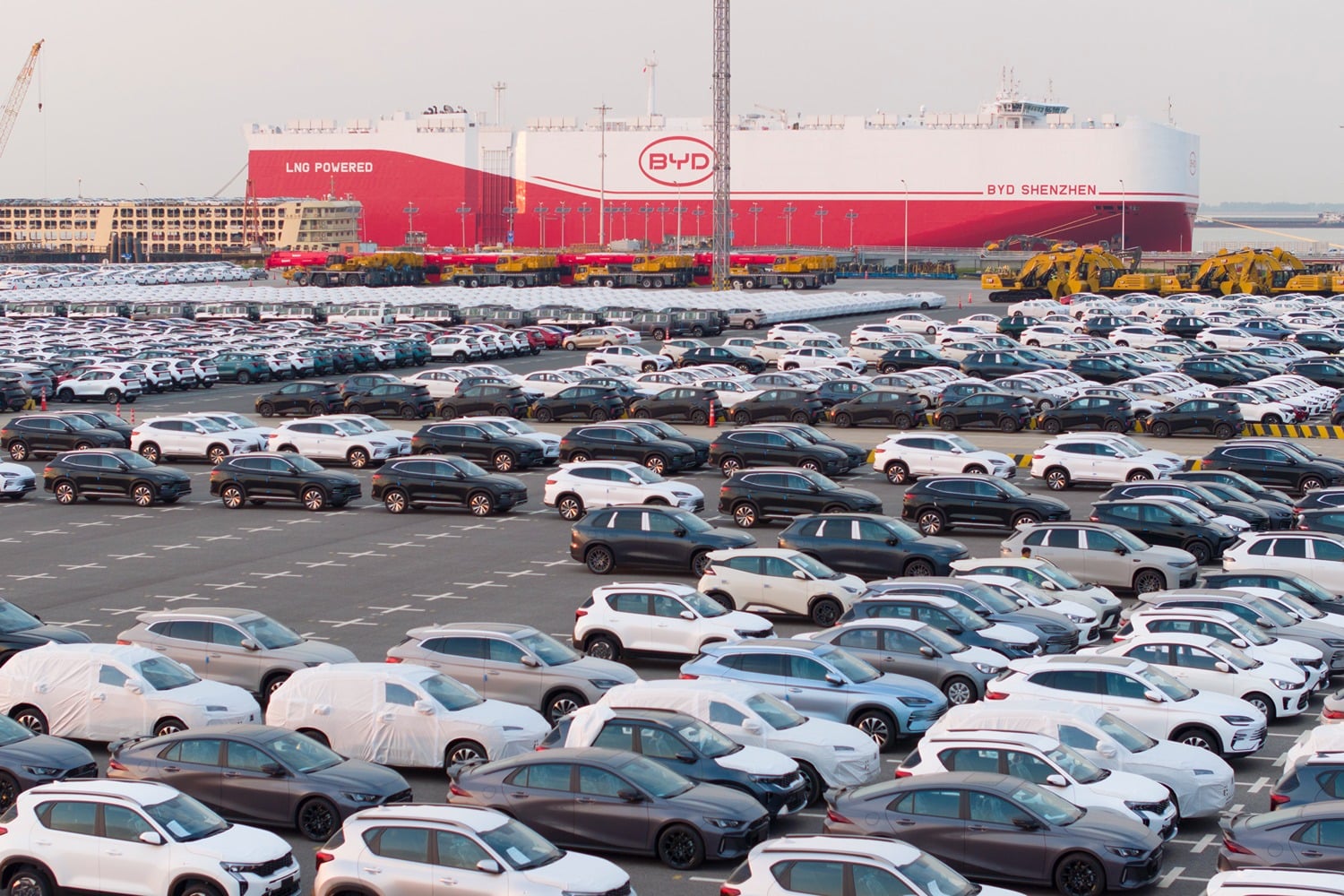
Last year, in one of Brazil’s most popular soap operas, a billionaire gifted her boyfriend a car: the BYD Song Pro. Her chauffeur drove a more affordable BYD model. This was not a coincidence, but the result of a product placement campaign to reshape perceptions of the Chinese automaker.
Chinese cars used to have a negative reputation in Brazil, and electric cars were often met with skepticism, BYD Senior Vice President for Brazil Alexandre Baldy said on a podcast this year. The company’s extensive publicity campaign aimed to change that.
It appears to be working: In April, BYD became the best-selling car brand in Brazil’s retail market for the first time. Though the company has yet to lead in annual sales, these figures point to a broader trend in both Brazil’s auto market and China’s industrial footprint in Latin America.
Chinese investment in Brazil’s auto sector reached nearly $1 billion last year, according to the Brazil-China Business Council. This influx has supported BYD’s new manufacturing hub in the state of Bahia, which the company says has already received orders to export 50,000 cars each to Argentina and Mexico.
China’s growing economic presence in Latin America has drawn concern from successive U.S. administrations, and U.S. President Donald Trump has urged countries in the region to reject closer ties with Beijing.
Brazil, by contrast, has largely treated Chinese engagement as an opportunity. “China is Brazil’s best partner today,” Brazilian President Luiz Inácio Lula da Silva said while discussing trade in March, even as he has sought to maintain positive relations with the United States. That balancing act was on display when he met with Trump at the White House on Thursday.
Yet Brazil’s debate over ties with China is not black and white; it increasingly centers around the terms of that relationship. In the auto sector, government officials, unions, and industry associations have varying priorities regarding local hiring requirements and working conditions.
BYD’s expansion in Brazil has generated controversy. In late 2024, Brazilian labor inspectors found that Chinese workers were being held in conditions similar to “slavery” at the BYD construction site in Bahia. Brazil sued the company and its contractors, construction was temporarily halted, and the defendants agreed that the contractors would pay $7.5 million in damages.
Tensions resurfaced in April, when a Brazilian labor official was fired after placing BYD on a government blacklist of companies accused of slave labor. The Labor Ministry has removed BYD from the list while the company challenges the designation in court; BYD blames one of its contractors for the abuses.
Two associations of labor inspectors said the official’s firing was political retaliation for blacklisting BYD, an allegation that Brazilian Labor Minister Luiz Marinho denies.
Another source of friction is the question of whether BYD is actually building up Brazil’s industrial sector or undercutting local jobs and technological capacity by importing partially or fully assembled cars from China. In January, pressure from a Brazilian auto association prompted the government to revoke tax breaks for partially assembled vehicle imports, incentivizing the use of locally sourced parts.
Baldy, the BYD official, said the company is already moving in that direction. By the end of this year, he said in February, half of the parts in its cars assembled in Brazil will come from Brazilian suppliers.
More than 3,000 Brazilians work at BYD’s Bahia factory, and the company has said that number will soon double. If so, the site would directly employ more workers than the Ford plant that operated there until 2021. The local metalworkers’ union has negotiated a higher base salary than what Ford paid, though their contract lacks the same expectation of future wage increases.
“Many countries are dealing with a similar kind of policy dilemma that Brazil has been dealing with,” said Benjamin Bradlow, a Princeton University professor researching green industrial transformations in the global south. “When do you switch off the encouragement to imports so that you can start getting local production?”
Not every country has a large enough consumer market to persuade foreign firms to set up shop locally, Bradlow said. But Brazil is starting to experience “a meaningful localization process.”
Friday, May 8: Laura Fernández is sworn in as president of Costa Rica.
Tuesday, May 12: The Bahamas holds a general election.
Sunday, May 31: Colombia holds a presidential election.
Antigua and Barbuda Prime Minister Gaston Browne waves in Caracas on Jan. 10, 2025.Federico Parra/AFP via Getty Images
Antigua and Barbuda election. Last week, Antigua and Barbuda elected Prime Minister Gaston Browne to a fourth term, expanding his Labor Party’s legislative majority to 15 of 17 seats. The election was dominated by concerns over the cost of living and recently imposed U.S. travel restrictions. Browne said his government is in talks with the United States to address the concerns that prompted those restrictions.
Though the prime minister remains the same, Tuesday’s swearing-in ceremony for Browne’s cabinet marked a symbolic shift in the small Caribbean country. After a constitutional amendment passed last year, cabinet members no longer had to swear loyalty to the king of England. Instead, they pledged allegiance to Antigua and Barbuda and its laws.
The Iran war’s economic impact. Though the energy shock of the Iran war has hurt Latin American energy importers, the region has fared better than many others on the whole. The Brazilian real ranks among the best-performing emerging market currencies this year. That is due in part to Latin America’s growing role as an energy exporter.
According to consultancy Rystad Energy, an estimated 44 percent of global growth in crude oil supply between 2025 and 2030 is expected to come from Argentina, Brazil, Guyana, and Venezuela.
Former Panamanian Foreign Minister Erika Mouynes offered another explanation in the Financial Times: Many of Latin America’s major economies have moved to get their macroeconomic houses in order since past oil shocks, when debt crises were more common.
Many countries now hold a larger share of their debt in local currencies rather than U.S. dollars, giving them more control over economic policy.
Hantavirus outbreak. At least three people have died from suspected hantavirus infections contracted aboard a cruise ship that set sail from Argentina, causing a scramble among Argentine health experts to understand the origins of the outbreak. Officials said Tuesday that Argentina had recorded 101 infections since last June, roughly twice as many as during the same period the year before.
Hantavirus is typically transmitted via rodents, but human-to-human transmission has been observed in the Andes virus, a rare variant found in South America. To aid detection efforts, Argentine health officials have sent Andes virus samples and testing equipment to countries where some of the cruise ship’s passengers have disembarked.
The epidemiological investigation comes as Argentine President Javier Milei’s administration has carried out deep cuts to the country’s public health budget.
What year did Antigua and Barbuda become independent from the United Kingdom?
1961
1971
1981
1991
The British colony became an associated state of the United Kingdom in 1967 but was not fully independent until 1981. Its loyalty pledge to the British crown, however, lived on.

Mexican President Claudia Sheinbaum looks on at a press conference in Mexico City on April 30.Yuri Cortez/AFP via Getty Images
U.S. actions targeting high-profile individuals in Costa Rica and Mexico have heightened tensions and signaled a more assertive posture from Washington toward both countries.
On Monday, Costa Rica’s leading newspaper, La Nación, accused the Trump administration of revoking visas for several of its directors because of the paper’s editorial stance. In 2022, La Nación reported extensively on sexual harassment allegations against Trump’s close ally Rodrigo Chaves. After Chaves took office, the paper also covered corruption scandals in his government.
The U.S. State Department did not comment on the allegations. La Nación said the visa revocations would not affect its reporting.
In Mexico, meanwhile, the U.S. Justice Department unsealed a bombshell indictment against Sinaloa Gov. Rubén Rocha Moya and other officials last Wednesday, accusing them of aiding a drug-trafficking scheme. Rocha is a member of Mexican President Claudia Sheinbaum’s party, Morena.
Sheinbaum said she has not yet seen robust evidence against Rocha, and her administration has no plans to extradite him to the United States. Mexican officials are investigating the charges; though Rocha denies the allegations, he temporarily stepped down from his post last week.
As president, Sheinbaum has stepped up Mexico’s own efforts against drug trafficking as well as its security cooperation with the United States. How strongly and transparently Rocha is investigated will be a test of both strategies.