


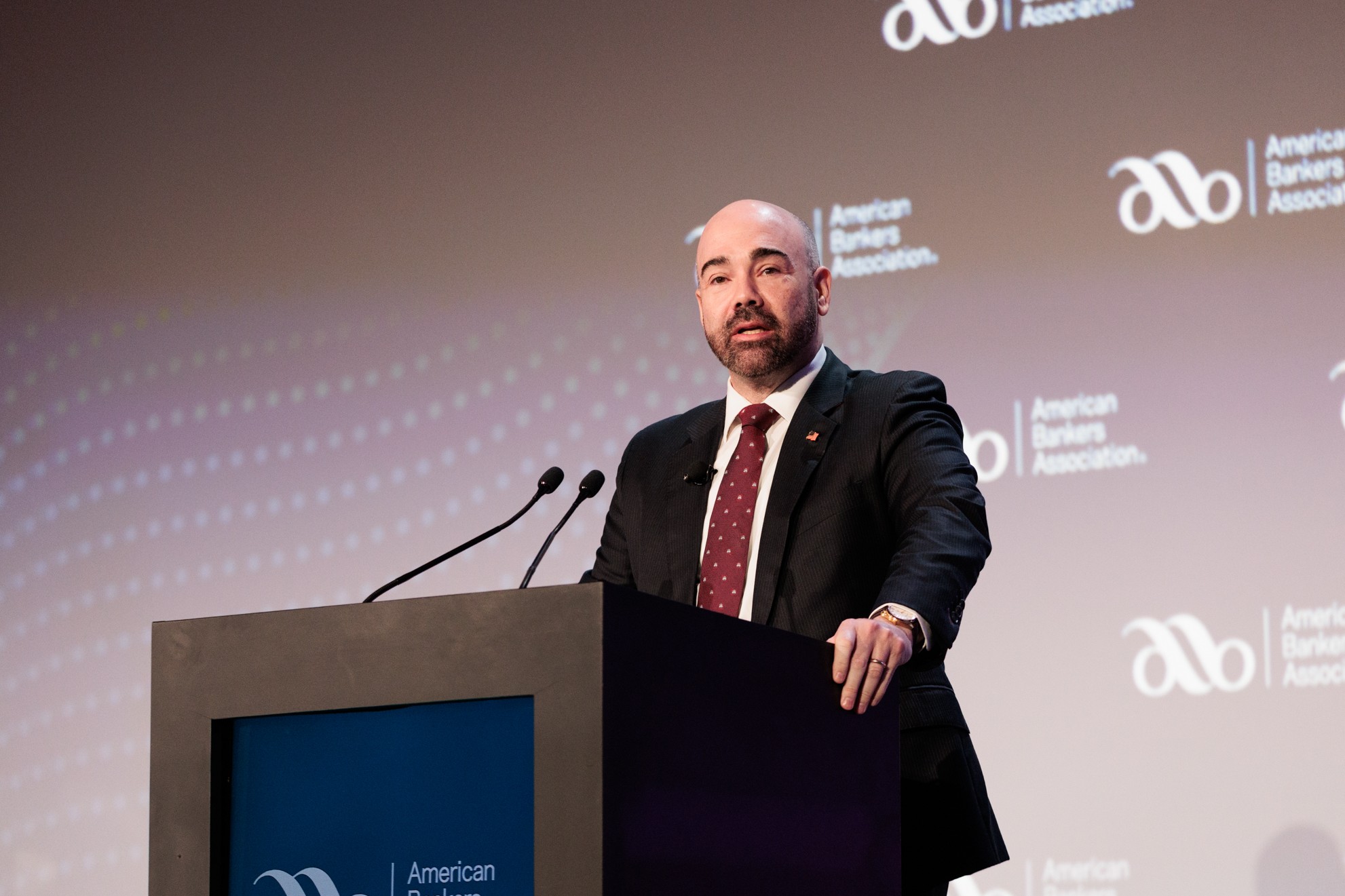
The Trump administration is committed to pursuing only cases of intentional discrimination in enforcement of the Fair Housing Act, which includes increased scrutiny of lenders that participate in special purpose credit programs, a top fair housing enforcement official said today at the American Bankers Association’s Risk and Compliance Conference in Charlotte, North Carolina.
Craig Trainor, assistant secretary of the Office of Fair Housing and Equal Opportunity at the U.S. Department of Housing and Urban Development, said that the previous administration took an expansive view of fair lending enforcement in pursuit of “dubious ideological adventures.” His office will instead focus on “real harm suffered by real people,” he said.
“Under my leadership, [HUD’s fair housing office] is returning to the beating heart of the Fair Housing Act’s enforcement regime protecting individuals from intentional discrimination based on race, color, national origin, religion, sex, disability or familial status,” he said. “We are prioritizing cases with strong evidence of disparate treatment – that is, real people harmed by real discriminatory conduct. We will no longer chase phantom discrimination based upon statistical disparities without evidence of intentional unlawful treatment.”
Trainor also said his office will monitor special purpose credit programs like one in Washington state, which was created to address disparities resulting from past discrimination against racial groups. The office has launched an investigation into Washington’s program.
“Lenders need to be aware that special purpose credit programs that do not comply with the statutory text of the Fair Housing Act continue to be subject to enforcement by my department, and those institutions found engaging in illegal discrimination will be held accountable,” he said.
“We urge those lenders whose prior conduct may have violated the Fair Housing Act to take immediate remedial actions to address this conduct,” Trainor said about the programs. “In cases where an entity meaningfully engages in remedial conduct, HUD will view this conduct favorably, along with other relevant factors in assessing whether and in what manner to pursue redress for violations of the law.”