


The West Coast of the United States lies on the Pacific ring of fire, the most seismically active region in the world. It’s home to two major faults, the San Andreas in California and the Cascadia Subduction Zone in the Pacific Northwest, that are capable of producing catastrophic earthquakes. Both are long overdue for one.
The last time a major quake struck the San Andreas was 120 years ago, and now scientists say stresses along this fault are the highest they’ve been in the last 1,000 years. The Cascadia Subduction Zone hasn’t produced one since 1700, when a magnitude 9 quake—one of the largest in recorded history—triggered a tsunami that decimated the coast of Japan.
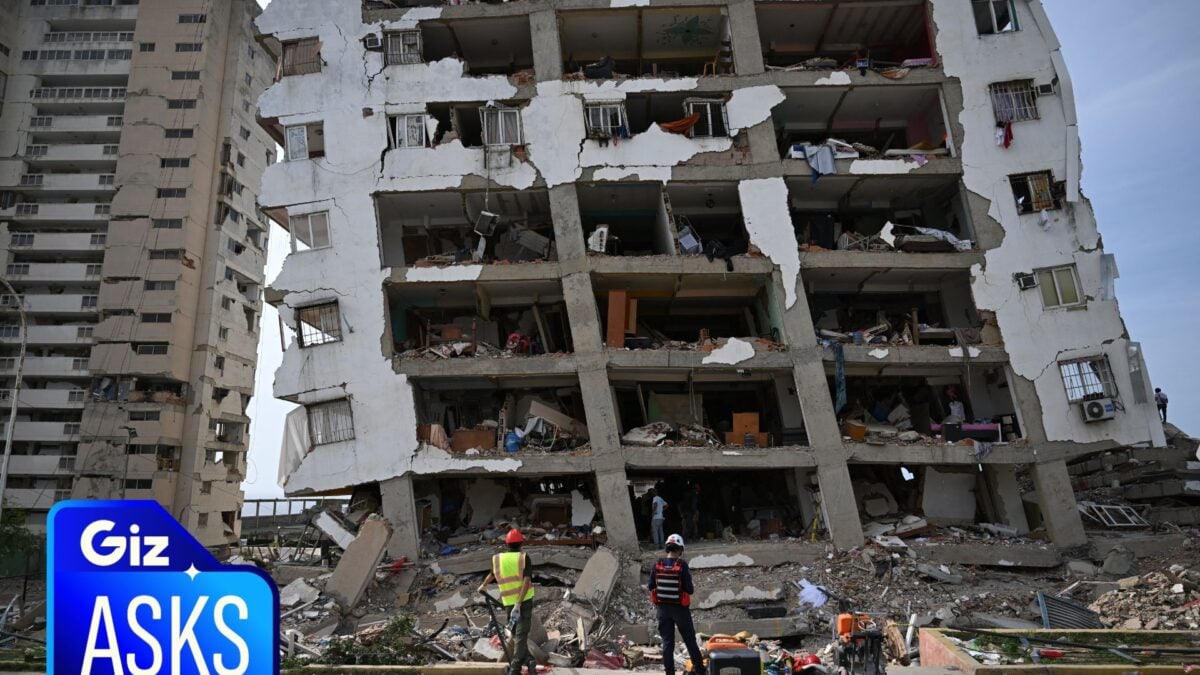
Scientists say it’s not a matter of if, but when, the next disaster strikes. Commonly called “the big one,” this hypothetical but inevitable quake could come at any time, so communities need to be ready. Recent events have served as tragic reminders of just how devastating these natural disasters can be. In June, a pair of earthquakes killed more than 6,500 people in Venezuela, and other large quakes in the Philippines, Indonesia, and Columbia have killed hundreds over the summer.
For this Giz Asks, we asked experts what gaps remain in the West Coast’s preparedness. They highlight vulnerabilities in critical infrastructure that could hinder recovery from a catastrophic earthquake and exacerbate its toll.
The following responses may have been lightly edited for length and clarity.
Yumei Wang
Affiliate faculty and senior advisor on infrastructure resilience and risk at Portland State University’s Maseeh College of Engineering & Computer Science. Wang’s research focuses on the transformation of communities from vulnerability to resilience in the face of disasters, including Cascadia earthquakes and tsunamis. She also has extensive experience with post-earthquake investigations around the world.
When children go to school, they should be in buildings that are reliably safe. When someone in need calls 911, they should reach help. Critical infrastructure is essential not only for normal societal functioning but also for public safety. However, much critical infrastructure remains vulnerable to extensive damage from earthquakes.
As evidenced by recent earthquakes and numerous engineering risk studies, services provided by critical infrastructure after earthquakes are often severely compromised. Water services may be unavailable for months.
To assure effective response and timely recovery after earthquakes, it is imperative that the reliability and resilience of critical infrastructure be substantially improved. Civic infrastructure—schools and emergency response facilities, such as hospitals and fire stations—are important community assets that serve as safety nets during emergencies. Lifeline systems—water, wastewater, electricity, natural gas, liquid fuels, communications, and transportation—provide basic societal services that are needed for earthquake response and recovery.
The Pacific Northwest is threatened by a future megaquake on the Cascadia Subduction Zone. A magnitude 9 earthquake and tsunami would likely produce an unprecedented catastrophe. Citizens should expect a regionwide electrical blackout, widespread bridge losses impacting transportation mobility, prolonged gasoline shortages associated with damaged pipelines, extended natural gas service outages, damages exceeding $100 billion, and tens of thousands of casualties.
In Oregon, we took an innovative approach to evaluate seismic safety deficiencies of schools and emergency response facilities and have statewide policies and grant programs to help mitigate deficiencies. Furthermore, Oregon has systematically identified and quantified expected post-earthquake delays in resumption of basic lifeline services, which are reflected in the Oregon Resilience Plan.
Although many impressive efforts to strengthen lifeline systems have been and continue to be made, Oregon is only in its early stages of needed earthquake preparations. With the expected destruction, citizens are urged to prepare to be “on your own” for at least two weeks.
Currently, significant vulnerabilities in critical infrastructure exist, particularly the reliability of lifeline services after earthquakes. Lifeline system interdependencies, lack of coordination among systems, and the absence of regulatory oversight on service deliveries underpin the lack of readiness in earthquake prone regions. To improve earthquake preparedness, society must make it a top priority to remedy the deficiencies in our critical infrastructure, especially within lifeline systems.
Greg Beroza
Wayne Loel Professor of Earth Science at Stanford University’s Doerr School of Sustainability. Beroza’s research interest is in analyzing seismograms to understand how earthquakes work and to quantify the hazards they pose, and his group works to improve earthquake monitoring in all settings by applying data mining and machine learning techniques to large volumes of continuous seismic waveform data.
It’s been 120 years since the last large urban earthquake in the U.S. (1906 San Francisco). Recent earthquakes in Türkiye and Venezuela, where the geology is not that different from California, offer a glimpse of what could be in store. I don’t think we’re prepared for what’s coming.
The infrastructure of civilization—internet, cellular coverage, electricity, gas, water, sewage, hospitals, roads, railroads, bridges, ports—are all susceptible to earthquake damage. These are critical to effective post-earthquake response. Following the big one, the degree to which they are damaged will compromise response, so we need to harden them.
Building codes will help protect us, but the earthquake-resistant provisions in them are similar to those in other countries. They are also intended to ensure survivability of occupants, not the continuing viability of most buildings. If the occupants escape, but buildings are a total loss, that would be considered a success. That might not feel like success, and I don’t think we’re prepared for the economic fall out that would result from the concentrated loss of many buildings and infrastructure.
There are secondary effects as well. A large earthquake in Cascadia would generate a tsunami that would compound the damage by striking the coast soon after the earthquake. A large earthquake in California would rupture gas lines and start fires at dozens of widely dispersed points. Fighting those fires would be difficult because communications, water supply, and transportation would all be impacted. This happened in 1906 when fires started, merged, and raged for three days, burning most of San Francisco to the ground. If an earthquake strikes during a period of high winds, it’s difficult to comprehend what might follow.
Earthquakes and their effects are inevitable and pose an acute threat. They are rare, fortunately, but that rarity makes them difficult to study. It also makes them tempting to ignore relative to more commonly encountered threats. Their onset is sudden, however, so we need to act now to understand them and to build structures, cities, and systems to withstand them. Once the big one begins it will be too late.
Jonathan Stewart
The Sabol-Scott Term Chair in Civil and Environmental Engineering and a professor of civil and environmental engineering at UCLA’s Samueli School of Engineering. Stewart’s research interests are in geotechnical earthquake engineering and engineering seismology. His group works to learn from past earthquakes to improve understanding of seismic events and apply that understanding to the development of practical models.
Let’s begin by reviewing positive developments. Since the 1994 Northridge earthquake, the California Department of Transportation has made significant advances in how to effectively retrofit bridges and has implemented those improvements. State legislation has mandated seismic assessments of hospitals, which has led to many retrofits and some hospital structure replacements. Mandatory retrofit ordinances have been implemented in some municipalities, including Los Angeles and San Francisco. We should celebrate these advancements.
While progress has been made, California continues to face substantial earthquake risk, which is influenced by our location on a plate boundary but is also affected by the political will to confront vulnerabilities.
Urban centers receive essential fresh water from aqueducts that cross major faults. For example, in Los Angeles, we receive more than half our water from three systems (Los Angeles Aqueduct, California Water Project, Colorado River Aqueduct), which cross the San Andreas Fault and could be ruptured by a single earthquake. Emergency reservoirs west of the fault are in place but are a temporary fix. We will be in a race against time to repair the aqueducts as the emergency reservoirs are depleted. Will this occur fast enough?
Even if regional water supply is intact, breaks in water distribution systems and sewer systems from ground failure (i.e., liquefaction and landslides) are likely to lower water pressures, potentially rendering delivered water as non-potable. This will significantly impact daily life for earthquake survivors.
While relatively modern, code-designed structures in strongly shaken areas are likely to survive the earthquake, some may be damaged to an extent that re-occupancy is not possible. This will lead to significant household and business displacement, potentially leading to de-population and impacting local economies. Whether that impact is short-term or long-term will depend on the pace of recovery, which is uncertain.
Some structures, mainly older vulnerable buildings that have not been retrofitted, will collapse, costing lives. It is a tragedy waiting to happen. The severity of these impacts will depend on earthquake location relative to the locations of vulnerable buildings.
Giz Asks is a recurring Gizmodo series in which experts answer big questions in their own words, offering a range of perspectives on the ideas, discoveries, and debates that affect our lives and shape our understanding of the world.