


The 2026 local election results are all in, bringing what is set to be an historic slate of results to the United Kingdom’s political landscape.
It was a disastrous night for the Labour Party, which has suffered one of its worst-ever election performance across England, Scotland and Wales.
With most of the results in, Sir Keir Starmer’s party has lost almost over half of the councils it was defending going into the contests, breaking the record it set at the last round of local elections only a year ago.
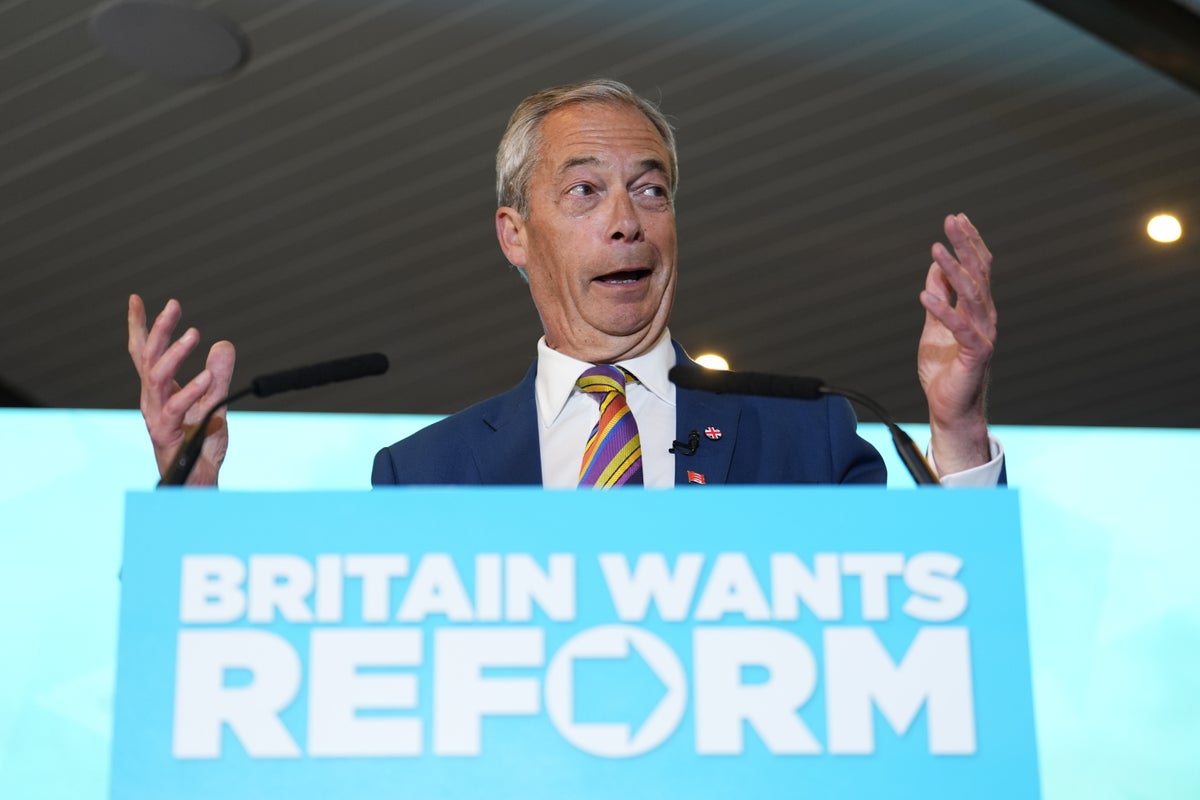
Standing in stark contrast is Reform UK – once again the big winner from the night – which has now secured 1,431 seats after entering the competition having to defend only three.
Nigel Farage’s party builds on the success it found last year, marking back-to-back record-breaking victories. In 2025, Reform won 677 council seats, taking nearly exactly double at this week’s competition.
The scale of Labour’s losses was perhaps inevitable, defending around 2,000 more seats at this year’s elections and against a backdrop of plunging popularity polling. These were concentrated in mainly metropolitan areas, including the whole of London, where Labour’s base has historically been much stronger.
This scenario saw Labour and the Conservatives somewhat swap places from last year, with the official opposition party still seeing substantial but more moderate losses than last year.
The Green party also capitalised on collapsing support for the ‘big two’ political parties, taking hundreds of new councillors focused especially in the capital and other metropolitan areas.
Ed Davey’s Liberal Democrats, meanwhile, will likely be contented with their result having obtained 143 councillors.
Labour loses control
On a council-level, Labour’s disastrous results translated into the party losing control of 36 local authorities across the UK, dropping its nationwide total to 28.
In most cases, these councils transitioned to no overall control, though Labour often remained the largest party. However, this survival was due less any current popularity and more to mathematics – because many councils only elect by thirds, Labour could often not lose enough seats to lose its foundation.
Reform picked up 14 councils across England, including Havering, Newcastle-under-Lyme, and Essex, the home county of Conservative leader Kemi Badenoch. This brings Mr Farage’s party to a total of 24 in 2026, having controlled none before May 2025.
The Greens also made a relatively substantial four gains, taking control of London’s Hackney, Waltham Forest, as well as Norwich and Hastings.
The impact of these rising ‘alternative’ parties can be best be understood through their gains in traditional Labour heartlands like Manchester, Birmingham and London.
In the capital, Labour’s vote share dropped to an estimated 32 per cent, down 11 points from 2022, while the Tories’ dropped from 26 to 22. Meanwhile, the Green vote surged 10 points to 18 per cent, and Reform up from just 1 per cent to 9.
In Birmingham, Reform’s share rose to 26 (up 25), Labour’s to 23 (down 28), and the Green’s were on 15 (up 10).
In Manchester, the Green vote share grew to 37 (up 20), Labour’s shrunk to 31 (down 22), and Reform’s rose to 18 (up 17).
Vote share new five party norm
Experts have said this set of election results reflects a wider trend of UK politics becoming more fragmented, pushing the country into “unprecedented territory”.
Many councils including Peterborough, Dudley, and West Oxfordshire are now split between five or more parties, which could make it harder for council leaders to establish a direction.
In March, expert pollster Sir John Curtice warned: “We have never had five-party politics before. We’re in unprecedented territory and none of us know exactly where this will go.”
In Scotland, Labour suffered as the Scottish National party capitalised on a divided vote. As Reform made gains, largely at the expense of the Conservatives, Labour failed to translate discontent with the SNP into gains.
Labour’s collapse in the Senedd seemed even more existential, having lost power for the first time since the Welsh parliament was created in 1999. The party’s vote share fell by more than half, enough to push it into third place, with Plaid Cymru surging to become the largest party and Reform in second.
It is unclear whether Sir Keir will survive this mauling at the polls to lead Labour into the next general election. Calls for his resignation are mounting one MP has already said she will offer a leadership challenge if nobody from the cabinet does.