


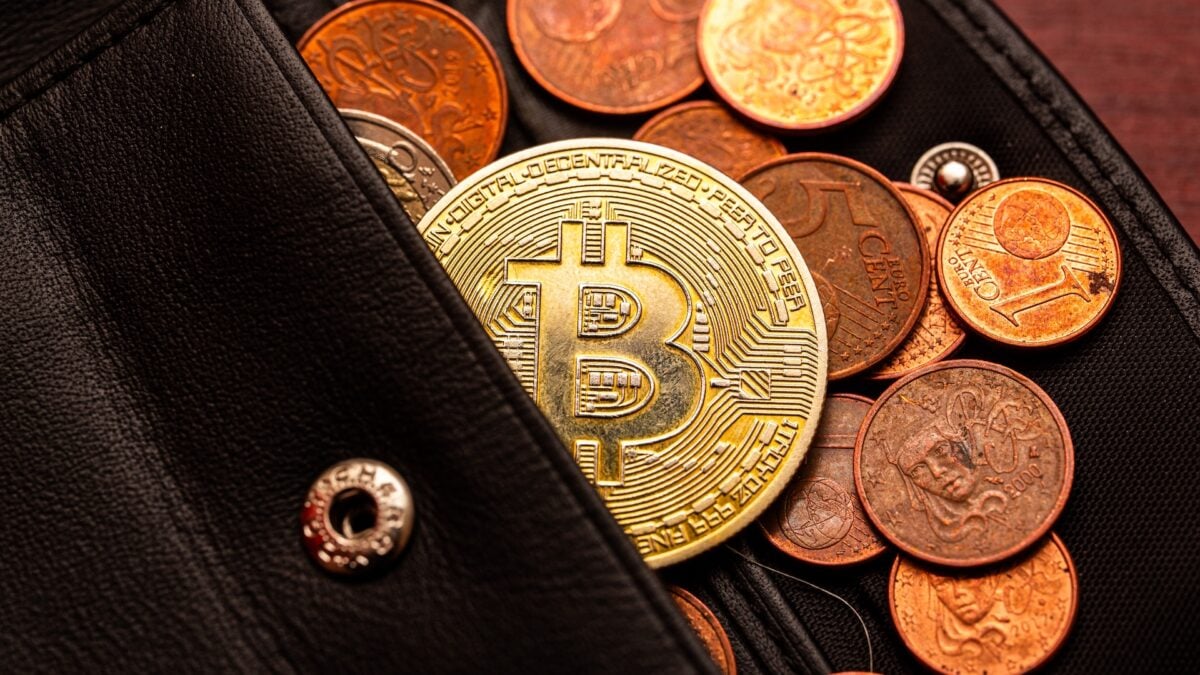
A pseudonymous user on X claims he regained access to 5 bitcoin he had lost for more than a decade after forgetting the password—and it was Anthropic’s Claude chatbot that put all the pieces of the puzzle together for him. After feeding the model files from an old college laptop and attempting to guess trillions of passwords with the assistance of a few different tools, Claude delivered the final breakthrough that unlocked the wallet.
According to an interview with MTS, the man who posts on X as @cprkrn bought the 5 bitcoin from someone via the now-defunct trading platform LocalBitcoins while sitting in a Starbucks in 2015. Each coin cost about $250 at the time. He stored them in a Blockchain.com wallet and backed up the account with a mnemonic phrase. Soon afterward, while stoned, he changed the password to “lol420fuckthePOLICE!*:)” and promptly forgot it. He remembered two of the three password components but could never locate the third.
https://x.com/cprkrn/status/2054586810475364536
For the next 11 years, the bitcoin sat untouched. The user tried everything he could think of to recover the funds. He brute-forced roughly 3.5 trillion password combinations using the btcrecover tool on rented GPU power that cost him around $15. He drove to his parents’ house, dug through old college notebooks, and typed in every scrap of text that looked like a password or seed phrase. A few weeks before the final breakthrough, he rediscovered the original mnemonic phrase in one of those notebooks, but it still did not work with the current wallet file.
In April, he decided on one last strategy. He uploaded the entire contents of his old college computer to Claude. Over the next eight weeks, the AI scanned the files and located an encrypted wallet backup that dated back to December 2019. That older backup decrypted cleanly with the rediscovered mnemonic phrase and revealed the private keys. Public blockchain records show a user transferred 5 Bitcoin out of the dormant wallet on Wednesday. At the time, they were worth just under $400,000, with bitcoin trading near $79,000. He immediately moved the funds to a new address.
Although the viral X post by @cprkrn described the event as Claude having “cracked” the wallet, the process involved no breach of Bitcoin’s encryption. The AI simply matched two pieces of information the user already had: the old password and an earlier wallet file where that password would still work. The private keys had never changed, and no cryptography was broken. The recovery was a matter of locating the right backup file on a cluttered hard drive. (The user uploaded a summary of the Claude chat for those who are curious.)
SITUATION EXPLAINED: Claude recovered Bitcoin worth about $397K after trillions of password guesses failed.
X anon @cprkrn bought 5 BTC for $200 in cash at a Starbucks in 2013, lost the password, and accidentally turned it into a decade-long forced hold.
After brute forcing… https://t.co/sSUBXS04Fp pic.twitter.com/l9Mndj7sZu
— MTS (@MTSlive) May 14, 2026
Even so, artificial intelligence is increasingly viewed as a useful tool in hacking operations aimed at blockchain-based smart contracts and decentralized finance protocols, as indicated by Anthropic’s own internal testing late last year. These real-world security incidents, whether executed by North Korean agents or assisted by AI, have grown into a major problem for the industry. April set a new record, with 29 separate hacks totaling $651 million according to tracking by DefiLlama and Certik.
Two of the largest attacks, on Drift Protocol and Kelp DAO, drained a combined $579 million. The Drift exploit followed a six-month social engineering campaign by alleged North Korean actors that began with in-person meetings at a crypto conference in the fall of 2025 and ended with $285 million stolen in 12 minutes. A report from blockchain analysis firm TRM Labs found that North Korean-linked groups accounted for 76% of all crypto value stolen from January through April of this year and have extracted more than $6 billion since 2017.
Responses to these hacks have also repeatedly exposed centralized decision-making inside these supposedly decentralized crypto systems. After the Kelp DAO attack, Arbitrum’s 12-member Security Council used emergency powers to freeze more than 30,000 ether, worth about $71 million, that the attackers had moved. In a separate case, stablecoin issuer Tether froze $344 million in USDT on the Tron blockchain after U.S. authorities flagged the wallets for ties to sanctioned Iranian entities. These moves relied on small groups of insiders or direct cooperation with regulators, which illustrates how quickly centralized controls reappear when something goes wrong and large sums are at stake.
It appears that the user who recovered the 5 Bitcoin intends to hold on to at least a portion of his newly recovered funds. In one X post, he wrote, “Cheers y’all. See you @ $250k.” He added that this was the best day of his life, but he never wants to go viral again and has no interest in building a platform around the story.