


I
’m fishing with Noah Kahan, and things are looking pretty bleak. We’re at a farm an hour west of Nashville, standing in front of a pond, casting our respective rods and waiting patiently. It’s a perfect day for fishing — an afternoon in early April, not too windy, the sky so clear and blue its reflection bounces off the water. But so far, nothing’s biting. Still, Kahan remains hopeful, as a camera crew looks on. “If we catch tilapia,” the 29-year-old songwriter says, “we’ll go viral as fuck.”
As the minutes tick by, that seems less and less likely. Kahan works the line firmly, wearing faded blue Levi’s, a button-down flannel, and suede boots. “I feel like my team’s been dressing me more and more in cowboy-looking stuff, and they’re eventually going to have to accept that I’m not even close to a cowboy,” he says. His shoulder-length brown hair matches his rugged beard. If you were thinking about poking fun of Kahan’s look on social media, rest assured he’s beat you to it. “Jesus Christ,” “Depressed Keanu Reeves,” and “Jewish Capaldi” are just some of the nicknames he’s given himself over the years. (Kahan took a break from Twitter, but recently returned, which he likens to “LeBron coming back to Cleveland.”)
This self-deprecating charm is part of Kahan’s appeal, and one reason among many that millions of listeners fell hard for the Vermont-raised songwriter back in 2022. That’s when he broke through, seemingly out of nowhere, with “Stick Season,” written after he’d moved back home to his parents’ property in Strafford during the pandemic (he now splits his time between Vermont and Nashville). The highly addictive folk-pop song — which grapples with heartbreak amid that grim, lifeless in-between period in the Northeast, after the fall foliage and before the first snowfall — blew up on TikTok.
“Stick Season,” and the album of the same name, earned Kahan a Best New Artist Grammy nomination and a musical guest spot on Saturday Night Live. Soon, he started selling out arenas, where fans would shout and sob along to his songs — deceptively simple melodies with intricate lyrics that are simultaneously ultra-specific and highly relatable, often about love, mental-health struggles, and the joys and frustrations of growing up in a small town.
“It’s refreshing to me that someone like Noah has become a superstar, because he’s the anti-idol,” says producer (and co-founder of the National) Aaron Dessner, who’s worked with Kahan. “He’s not seeking it. He’s far more gifted than anyone might really know unless you’ve been up close to hear him sing. He’s one of the most brilliant songwriters we have today, and we should make a lot of records.”
“Stick Season” helped turn Kahan into a big name and a hero throughout New England (in addition to his native Vermont, he’s also lived in New Hampshire and, later, Massachusetts, and even has a collaboration with L.L. Bean). But he’s a different kind of superstar — a down-to-earth and delightful human who exudes everyman energy, and whose idea of a good time is hanging out with his two German shepherds and smoking weed. It’s almost as if your sweet, stoner neighbor accidentally got famous but still invites you over for Taco Bell on Tuesday nights (specifically to consume the Crunch Wrap Supreme, Kahan’s favorite). So it’s not totally surprising that Kahan found that fame took some getting used to, and that success doesn’t fix everything. “Every cliché about music has proven so true for me,” he says. “Like, ‘You can get everything you want, and it’s still not going to do it!’”
It was here, on the 183 acres that make up Fire Tower Farm, that Kahan recorded a portion of his new album, The Great Divide, which just debuted at Number One on the Billboard 200 chart. The record — produced by Dessner, Kahan, and Kahan’s Stick Season collaborator Gabe Simon — shows off his knack for visceral storytelling, while offering a front-row seat to Kahan’s inner monologues about, among other topics, his relationships, from childhood and now, and his forever ties to his home state. The time he spent making the album wasn’t entirely tranquil; it was, in fact, a bit terrifying.
But before we get to any of that, Kahan wants to reel one in. It doesn’t help that the first two rods I used were dysfunctional, or that an island of moss is barricading us from the vertebrates (each time I reel in soggy greens, Kahan says something reassuring like, “You do the salad, I’ll do the protein!” or “It’s called fishing, not catching!”). Kahan has been fishing for most of his life, but he got more into it during the pandemic, when his brother Richard bought “a shitty old boat.” Drinking beers and catching fish with family and friends, Kahan was able to do something he finds more and more difficult these days: relax.
After nearly an hour, we concede that it’s just not going to happen. The crew stops filming, preparing to relocate to another area on the farm. But Kahan lingers behind at the pond, determined to win. “Forget the interview,” he says. “I want to see you catch a fish.”

TO BE WELL-VERSED in Kahanology, you should know that it’s pronounced Kahn, not Ka-han. “I just say one of the A’s is silent,” Kahan says. “You can choose which one.” Secondly, you should get acquainted with some of the imagery in his songs. Kahan loves to write about porches (“Porch Light,” “American Cars,” “We Go Way Back,” “All Them Horses”), ghosts (“Halloween,” “Your Needs, My Needs,” “The Great Divide”) and drinking (too many to name).
On The Great Divide, bugs creep into everything. Kahan teased the record back in December 2025, with the TikTok account The Last of the Bugs, which is a line from his 2022 song “The View Between Villages.” The Last of the Bugs almost became the title of the new album, but Kahan felt it was a little too esoteric (he did use it to title the expanded edition). The insects appear as a motif in the new songs, particularly the slow-burning opener, “End of August,” and the tender finale, “Dan,” a bookend for the 17-track journey.
Bugs have always been a good omen for Kahan. His mom, Lauri, used to call him her “little bug,” and he kept finding ladybugs around Fire Tower Farm while making The Great Divide, which reaffirmed his belief that he was in the right place after some rough patches early in the process for The Great Divide. “Bugs represent these things that go away but return,” he says. “In the winter, I was in that cold feeling, where there’s nothing around and nothing’s alive. And when I started feeling happier and creative again, I felt like I could hear the beetles and the crickets. They started to return for the spring, so I see them as a metaphor for what I’m going through in my life.” (As we’re having this conversation, a ladybug appears on my shoulder.)
Bugs also appear on “Downfall,” a devastating, soulful plea for a loved one to fail so they return home. “Tell me when you miss the climb from a hole that has no bottom” is a line that resonates with Dessner. “There’s these phrases that he says which capture human suffering in a way that is so relatable and also clever, [but] feels uncontrived,” he says. “You can just tell it just comes out of him.”
“I was sick of it. This thing that’s supposed to be so fun is making you anxious all the time.”
One of Kahan’s musical heroes, Bon Iver’s Justin Vernon, contributes backing vocals and banjo on the track, and plays electric guitar and more on several others. They met at a music festival in Iowa in 2023, but Vernon sent his contributions remotely. “He’s such a mythical figure in my head that it’s cool to have him just float into my songs,” Kahan says. “It’s like a mysterious wood person will lay down guitar and I won’t see it, but it’ll come through email and I’ll be like, ‘Oh, my God, this is him.’”
Vernon famously made Bon Iver’s 2007 indie classic For Emma, Forever Ago while secluded in a cabin outside his hometown of Eau Claire, Wisconsin. After “Stick Season” changed his life, Kahan craved that kind of isolation and focus for himself. “It felt like the way I’ve always wanted to make music,” he says. “Having him be a part of this process made me feel more connected. [Because] there were more eyes on all of it, and more pressure.”
This pressure nearly prevented a new Noah Kahan album from happening at all. Ever since his tour wrapped in September 2024, the idea of following up Stick Season consumed him. “Right after the tour, I was just sick of it,” he says. “This thing that’s supposed to be so fun and so rewarding is becoming tiring and making you anxious all the time.”
Kahan started to rethink his career, searching for other ways to spend his next few years while he figured things out. He thought about enrolling in psychology classes at a community college, and even got fingerprinted to be a substitute teacher. At one point, he considered becoming a groundskeeper at a golf course, repairing divots. “I thought that would be such a therapeutic thing,” he says.
In late 2024, Kahan made the first of four visits to Dessner’s Long Pond Studio. Located in upstate New York, it’s a woodsy, cozy spot that Dessner describes as “a weird combination of a church and garage.” Dessner’s résumé, which includes co-founding one of the most prominent indie bands of this century and production credits for several A-list stars, made Kahan nervous. “I was Wikipedia-ing it before I got there,” he says. “I was like, ‘Oh, my God, this guy’s such a legend. He’s done Bon Iver and Taylor and Gracie and all these artists that I really admire. But Aaron is the coolest dude ever. He understood where I was at, and how I was struggling and feeling burnt out. He was really receptive to that.”

The sessions were productive, even if Kahan wasn’t necessarily expecting them to be. “There’s something about the energy [at Long Pond],” Dessner says. “And maybe it’s because I’ve been in the band forever and made a lot of other records with other people [who] have been struggling, but when he came, I felt that he was where he needed to be.… The first thing he said when he walked in was like, ‘Hey, I’m excited to hang out, but I really don’t think we’re going to make any songs because I don’t know what I could possibly say. I’ve just been so burnt out and kind of lost.’ But within less than an hour, we’d written ‘Porch Light.’ It felt instantaneous in that way — this river of ideas.”
But everything came to a halt in March 2025, when Kahan headed out West, to Joshua Tree, California, to write. He’s taken to calling the trip “my infamous Joshua Tree OCD meltdown.” Kahan found himself in an Airbnb completely made of glass, lonely as hell. “Joshua Tree was horrible,” he says, now sitting beside a fire in the farmhouse’s backyard. “I can’t even tell you how not better I felt after going there. I was trying to live in a romantic comedy, where I would find myself ingratiated in a small town and I could just disappear, Dave Chappelle-style. Not at all how it happened.”
Kahan struggled to get through each day, let alone write any new material. He had what he describes as a “pretty severe episode” of terrifying intrusive thoughts. “I was convinced something was happening that was not happening, or that I had said something that I just didn’t say,” he says. “I could convince myself that I ran somebody over, knowing for a fact that I didn’t see another person on the road.”
Kahan found the thoughts even too horrifying to Google, for fear that his searches would ring alarm bells. And he didn’t vocalize them to anyone. “The stigma of even saying, ‘Oh, I think I might have run somebody over last night,’” he says. “The first response would be like, ‘Oh, my God, maybe you did!’ It was a really tricky feeling and really isolating, because I didn’t want to sound crazy.… I couldn’t remember conversations and days of my life, because I had been so caught in this tangle of thoughts.”
During a virtual session with his therapist, Kahan was diagnosed with OCD. I tell him that I’ve suffered with this for most of my life, and that being diagnosed with it can be jarring at first. Kahan says his “strain” consists mostly of intrusive thoughts rather than physical compulsions. “It was surprising,” he says. “I was under the influence of the idea that OCD was like, ‘I need to wash my hands a hundred times.’ But I didn’t realize how much more there was to it. I started putting all these pieces together from my childhood, and these different rituals I’ve had my whole life. It wasn’t just anxiety or being stressed. It was this real insidious disorder that I was struggling with.”

Still out in Joshua Tree, Kahan called his manager, Drew Simmons. “I was like, ‘Dude, I just don’t know if I can do this,’” he remembers saying. “He had just signed Chappell Roan. So he was very familiar [with artists facing pressure] and really kind in that moment.”
Looking back, Kahan acknowledges that the Joshua trees themselves — many over a century old — are pretty cool. But he knew he had to get home. “Wherever you go, there you are,” he says. “You cannot leave behind what’s going on in your head no matter how far away you travel, or how beautiful your surroundings are. I felt more trapped in those settings because I was searching so desperately, instead of just allowing life to happen.”
Gabe Simon has a memory from 2022, when he and Kahan were tracking “The View Between Villages,” the closer on Stick Season. “He was depressed and stressed out and OCD on TikTok about getting ‘Stick Season’ to go viral.” Simon had to resort to drastic measures, especially when Kahan wanted to go into the control room. “He wanted to delete everything,” the producer/co-writer says. “I told my engineer, ‘I need you to lock that room right now.’ I wasn’t trying to be a dick — I’m doing my job. And my job is to help him be the best version of himself.”
It’s unsurprising that Kahan’s OCD also showed up while making The Great Divide. He worried his new album would suck, and that his fans were starting to forget about him. (He was wrong on both counts, thankfully.) He’d ask his wife, Brenna Nolan, and his mom for reassurance that he was on the right path. Golfing, once a peaceful hobby for Kahan, had become what he describes as a “sadistic thing” he began to do compulsively.
But following his disastrous trip to Joshua Tree, Kahan got back on medication. “Prozac and I did not have a good relationship,” he says. “Zoloft and I had an OK relationship. But Lexapro and I fell in love.” He felt instantly happier, and he was able to finally put aside his longtime fear that meds would blunt his creativity. “I was like, ‘Music aside, I just need help,’” he says. “And I felt more creative than ever before, and had new energy.”
“You can’t leave behind what’s going on in your head, no matter how far you travel.”
“He’s in the healthiest place he’s ever been,” Simon says. “And all these mental-health challenges, they’re his superpowers. It’s what connects him to people in the world. Not that he’s perfect, but because he’s so absolutely fucked in many ways.”
With more trips to Long Pond and Fire Tower Farm throughout 2025, The Great Divide began to take shape. At Fire Tower he could fish, ride dirt bikes, hike, and visit the animals — a Great Pyrenees dog named Buttermilk, two Scottish Highlander cows called Bessie and Clarabelle, and three donkeys — and get in a good headspace to create. It wasn’t exactly like his parents’ property in Vermont, where he grew up with his three siblings and wrote “Stick Season,” but it would do just fine. (Kahan noted the serendipity in the fact that the dirt bike he rode at the farm happened to have the number plate 802, Vermont’s area code.) “Coming here made it seem like I was making music as a hobby again, which was how I always did it,” he says. “I couldn’t get back to myself in the same exact way. I knew that that was over. But this allowed me that middle ground.”

You can feel Kahan finding himself again on uptempo rockers like “American Cars,” a standout he wrote for his sister, Sasha, about how she’s the problem solver in the family. It’s Kahan dipping his toes into heartland rock, like John Mellencamp and Bruce Springsteen. (It’s not crazy to envision a future in which Kahan plays Farm Aid.) “Headlights, your plates/4CB3A/Didn’t know you drove American cars,” he sings. “Ray-Bans on your face/You’ve been drivin’ all day/But you’re here, and we’re so grateful you are.”
For Simon, it highlights Kahan’s strengths as a songwriter. “Everybody knows what a license plate is, but not everybody needs to call out all the numbers on it,” he says. “But he does. He feels the need to give you those details. It’s like listening to an audiobook. I don’t know how he does it.”
Later that afternoon, we’re walking around Fire Tower, feeding the donkeys — “Mr. and Mrs. Donkey, but I think they’re both men,” Kahan offers, referring to two of them — and petting Buttermilk. Kahan wrote “We Go Way Back,” one of the album’s most stunning moments, here. It’s an ode to Nolan, as he sings about their love over delicate acoustic guitar, with harmonies inspired by Paul Simon: “Saw the world from up close, it ain’t much to look at/Compared to you in your work clothes, waving hello from the driveway.” It’s not often Kahan writes a love song, but he’s learning to lean into the good stuff, while being intentional about what he keeps private.
“Once I’ve given everything to everybody,” he says, “I was like, ‘Who am I actually behind all of it, when I log off or when I step offstage?’ I understand people want to go deeper, and they want to know who [my songs] are about. I just have to create some boundaries. My wife is very private and really desires that privacy, and doesn’t like having her life become something that everyone can look at or talk about. That’s something that I’ve always respected about her, and it’s something I try really hard to maintain. It’s a work in progress of finding how much I want to share.”
Nolan appeared in Kahan’s recent Netflix documentary, Noah Kahan: Out of Body, directed by Nick Sweeney. The film captures Kahan’s rise to fame with “Stick Season” and its aftermath, from how it affected his loved ones to his realization that he was suffering from body dysmorphia. He’s still trying to navigate it. He recently saw a brutal comment online that read “We’re here for Chubby Noah.” In the past, he might have responded with another joke about himself, but self-deprecating humor can only go so far. “They just cut me so deep,” he confesses.

The documentary captures Kahan in some vulnerable moments — trying to work out (“Afterwards, I’m always like, ‘Why don’t I have abs yet?’ And it was, like, 10 minutes ago,” he tells me) and pointing out a section of his closet with clothes that no longer fit. Watching himself onscreen was hard enough, but then he had to discuss it in interviews promoting the film. “I worry so much that people are just going to be like, ‘Now, it’s time for the body-dysmorphia section of our interview!’” he says. “I can barely even watch the documentary. It’s complicated for me to think about those things, and I really have to be in the right space to talk about them.”
Kahan’s struggles with mental health make him question whether he wants children. “Someday,” he says. “I’m just so worried about passing all these problems onto somebody else. But all my siblings struggled with that, and they’re all such funny, kind, smart people. Those harder experiences did shape them as well. And knowing I could be there for a kid who was going through that, it’s an exciting idea.” Whenever it happens, he wants to be as present as possible: “I don’t want to be the dad that’s bouncing in and out all the time.”
In 2023, Kahan started the Busyhead Project, an organization that promotes mental-health awareness and provides resources in local communities. Named after his 2019 debut, Busyhead, it has so far raised more than $6.6 million, and has even provided mental-health care for his touring band and crew. His biggest dream is to do the same for people in the state of Vermont.
“Sometimes I would write music and I’m like, ‘Am I just glorifying this? Am I just dangling this care of therapy over people’s heads without actually helping make a difference in that space at all?’” Kahan says. “I hope people don’t think that I have this solved, just because I raise money and sing about mental health. I see these people out there, and they’re like, ‘I finally quit drinking,’ or, ‘I finally confronted my parents.’ And I feel genuinely jealous of these people. Because I can’t do it for myself.”
These days, Kahan prefers weed to alcohol. He jokes that he’s “smoked every day for 15 years and never once enjoyed it,” but admits it’s good for his creativity. We both acknowledge how drinking only increases symptoms of OCD, and that as you age, the hangovers just last longer. “I almost prefer the first day, where I’m just in pain,” he says. “And not the second day, where I can’t fucking count to 10. Ultimately, I think drinking is just a negative for me. It’s just stealing joy from the next day.”
“I understand people want to go deeper. I just have to create some boundaries.”
Though Kahan says he’s “in a really good place with substances overall,” drinking has always found its way into his music. That’s not just because of his own history with it, but because of where he grew up. “Drinking was a big part of the culture,” he says. “The amount of drinking I was around, the amount of people I know that drank, the amount of drinking I’ve done in my life. These are things that I put into characters, because of how toxic it can be.”
In the documentary and during our conversations, Kahan wrestles with his relationship with Vermont. He sometimes feels like he exploited his home state with “Stick Season,” and felt guilt for leaving. “Sometimes I feel like a tourist,” he says. “I come home and I’m like, ‘Did I adulterate this place? Did I misrepresent it? Did I change my relationship with it because I’ve shown it to everybody now?’”
One person who thinks Kahan has done his home state proud: Bernie Sanders. “Noah’s impressive talents have gained national and global recognition, but he’s never forgotten his roots in Vermont,” says the senator, who spoke onstage at Kahan’s benefit concert in September 2024. “Amid the major crises facing our country, it is very easy to fall into despair and helplessness. That’s exactly why we need musicians like Noah to bring people together. He’s made Vermonters proud.”
Vermont comes up frequently on The Great Divide, as in the magnificent barn burner “All Them Horses,” about Kahan’s inability to be home when devastating floods hit in the summer of 2023. “This ain’t mine anymore,” he sings. “I made too much goddamn noise.” He doubles down on that viewpoint during the meditative “Spoiled”: “Where I’m from and what I’m worth have gotten too damn intertwined.”
Kahan isn’t the kind of superstar to buy luxurious items — it’s hard to imagine him splurging on a yacht. But once he became successful, he joined a golf course and bought property in Vermont. “I am so intent on spending the rest of my life quietly in Vermont,” he says. “I could see myself in the future just waking up, going to play golf, going to get dinner at my parents’ house, and then going home for 50 years. I’d be happy to do that.”
“ARE YOU AFRAID of heights?” Kahan asks me. He wants to climb the farm’s 110-foot fire tower, but instead we opt to sit on the porch in rocking chairs. Kahan cracks a can of Celsius, and places it on the arm of the chair, next to a tin of Zyn nicotine pouches. “You should totally get addicted to these,” he says. “We’re in that grace period where doctors don’t know if it’s going to kill you yet.”

Kahan has a tattoo of a fire tower on his right forearm, in honor of his late friend Carlo. The last time they saw each other, before Carlo died from a sudden illness, was when they climbed up a fire tower in Norwich, Vermont. Smoking cigarettes and listening to music, they stared at the fall foliage of the Upper Valley region, not realizing it was their last hang. Kahan memorialized him on “Carlo’s Song” in 2019, and he sings about him again on The Great Divide closer, “Dan.” It’s a heartfelt, intricate portrayal of longtime friends who revisit dark memories. “Everybody’s asleep, let’s talk about him,” Kahan sings. “Let’s talk about high school, talk about death.”
“It was my first really good friend that I lost,” Kahan says of Carlo. “I didn’t handle it very well. I was spiraling, and a little bit self-destructive. I remember messaging him on Facebook for days and days afterwards. One of the last messages he sent me was to hang out, and we didn’t end up getting to. It changed something in me, and it made me remember that every moment is fleeting.”
From the beginning, Kahan knew he wanted to be a musician. He was born on Jan. 1, 1997, to Lauri Berkenkamp and Josh Kahan, the third of four kids. His dad was a musician and a triathlete, who made T-shirts of their family motto (“Have fun, try hard, be kind”); a brain injury he suffered when Noah was in eighth grade was a major trial for the family. His mom wrote parenting guides, from Talking to Your Kids About Sex to Teaching Your Children Good Manners. The family valued openness — about their feelings, and otherwise. “We were always very open about what’s going on with our bodies,” Kahan says of his upbringing. “There was nothing off limits. We loved to talk about our poop, about weird scabs we had.”
Kahan has a great relationship with both of his parents, who divorced during the pandemic. “It was really hard with my parents splitting up,” he says. “I feel like it was the first time in my life where the fairy tale crumbled a little bit. [But] they’re like superheroes. I feel like I’m in awe of them more than I used to be as I get older.”
Around nine, Kahan was given a red Stratocaster and began writing songs. He describes himself as a “weirdly anxious” child, obsessed with punk rock and Green Day. In the third grade, he started a band called Twisted Metal. “My first album was called Death to the Lord,” he says. “My family was like, ‘What the fuck is wrong with this kid?’”
When Kahan was 15, he began uploading his songs to SoundCloud, where Simmons first messaged him. Kahan was a senior in high school and had been accepted into Tulane, but Simmons convinced his parents that this was a real opportunity. “He talked my parents out of sending me to college,” he says. “They were so supportive the whole time.”
In 2015, Kahan signed to Republic Records (he transitioned to Mercury Records when it was relaunched in 2022). “I really did think it was going to be like the movies,” he says. “‘Go to L.A. and you’re going to be a famous musician.’ The truth is it took me a year to sign [the deal]. I was living at home, telling people this ambiguous career I was going to have. Everyone was like, ‘Sure, buddy, hopefully you’re doing OK.’”

In 2019, Kahan released Busyhead. It features the single “Hurt Somebody,” with Julia Michaels, which was a hit in Australia. The sugary pop duet feels like something you heard once in an Uber. If you think that’s a diss, Kahan would agree with me. “I really wasn’t the biggest fan of that song,” he says. “Having to play that over and over again was pretty torturous.… It was a song that was in the culture at that time. Everyone always says, ‘Oh, I remember that song.’ They’re never like, ‘That’s a Noah Kahan song.’”
Kahan describes Busyhead, and its follow-up, I Was/I Am, as “The Noah Kahan pop experiment.” “I was being guided by what I thought I was supposed to do and what I thought being an artist was,” he says. “Instead of what I wanted, which was just to go home and write about my dad.”
I Was/I Am arrived in 2021, but not before Kahan took a left turn that would dictate the rest of his career. In May 2020, after moving back to his parents’ home at the height of the pandemic, he dropped the bedroom EP Cape Elizabeth. Recorded in a week, with little else than Kahan’s voice and an acoustic guitar, it remains a fan favorite for its DIY minimalism, inspiring tattoos of lighthouses like the one on its cover. Six years later, his fans — the Busyheads — are still hoping for a sequel. Kahan says he’s just waiting for the right time: “It’s just a matter of finding ways to make sure it speaks to my current feeling, so I’m not making a concept record just for the sake of it.”
Following Cape Elizabeth, Kahan wrote “Stick Season” in 2020. When the song went viral, his sound was compared to the 2010s folk pop made famous by bands like Mumford & Sons and the Lumineers. The sound, often described as “stomp clap hey” or “folk stomp,” was massively successful. Later, many saw the music as dated, but not Kahan. “I always thought the millennial 2010s thing was brilliant, and I never stopped loving it,” he says. “I’ve always felt very defensive of their sound.” A lot of times people [hear my music] and are like, ‘This is just some Mumford & Sons shit.’ I’m like, ‘I love Mumford & Sons! Thank you for the compliment!’”
As the Lumineers’ Wesley Schultz tells Rolling Stone, “You try to ignore stuff and stay the course and believe what you’re doing matters to you, and the rest of it’s out of your hands. But, yeah, it’s really nice when it boomerangs and comes back. You’re like, ‘See? I wasn’t crazy.’”

Marcus Mumford reached out to Kahan while he was working on The Great Divide. “I was trying to make this process perfect and to be exactly like the last thing,” says Kahan, who’d met Mumford in 2023. “And he was like, ‘It’s not going to be. You’re in a new place, and it’s OK for it to be different.’” As Mumford tells it, “I remember seeing him in a photograph at the Grammys or something, and he didn’t look as happy as I know he can look. I was like, ‘What the fuck are you doing at the Grammys, man? Go and write some songs.’ I called him, in the same way that I’ve had people in my life a few years down the road from me call. I said, ‘You cool, bro?’ We talked it through in really helpful, intimate ways.”
Unlike “Hurt Somebody,” Kahan says he’ll never not love “Stick Season,” and he’s perfectly content to play it at every show for the rest of his life. “I’m here for the fans,” he says. “If they want to hear ‘Maine’ 50 times or ‘Stick Season’ 100 times or me doing a bunch of Jason Mraz covers, that’s what it’ll be.… I’m at peace with whatever that song means for me, for the rest of my career.”
Back at Fire Tower Farm, Kahan finally catches a fish — after the cameras stop rolling. “We’ll make them add an amendment,” he says joyfully. “‘They actually did catch a fish later on!’”
THE FOLLOWING DAY, I meet Kahan again at the farm. This time, he’s abandoned his cowboy look for his regular attire: hunter-green gym shorts, a white hoodie, black Birkenstocks with white socks, and a navy-blue Tecovas trucker hat. The Zyn pouches are back, along with an iced coffee.
This summer, Kahan will kick off a massive, sold-out stadium tour, including a stop at Rolling Stone’s Stateside Festival on July 4. He says he’ll continue to rock his Willie Nelson-style French braids from last tour, which his assistant does for him. “Weirdly enough, when I look at photos of myself in braids, I feel like that’s the look I was supposed to have,” he says. “Or maybe I’ll get a mullet, and get Country Central to post about me more.”
Kahan is content with where he is, and proud of the album he’s made — despite how difficult it was to get there. “You find out who you are in the moments when you’re alone,” he says. “In the moments things are quiet, and you don’t have 30,000 people screaming that they love you. I needed to be brought back down to earth, and I think the process, as hard as it was, really did bring me back.”
But he can’t just leave it at that. As we stand up to say goodbye, Kahan has one request. “Can you make sure to say that I’m six-two and jacked in the interview?” he says. “Because that’s the image that I’d like to project.”
Production and Clothing Credits
Hair and makeup by AMANDA WILSON for A-FRAME AGENCY using SAUVAGE SERUM. Styling by ELLIOTT TAYLOR. Tailoring by ANDREA LACEY. Produced by ROBERT H. DYAR JR & CREATIVE TEAM STUDIOS. Photographic assistance: ED SMITH, DAVID JOHNSON, MAX CLINCH. Digital Technician: ANDRES MARTINEZ. Styling assistance: SOPHIA VENTURELLA. Video DoP ERIC BROUSE. Cam Opps MINDY COOK, KAMREN KENNEDY. Motion portrait Cam Opp JAKE MOORE. Audio Engineer TONY DANCY. Production assistance CORBIN WM PEEK. Location FIRE TOWER FARM.
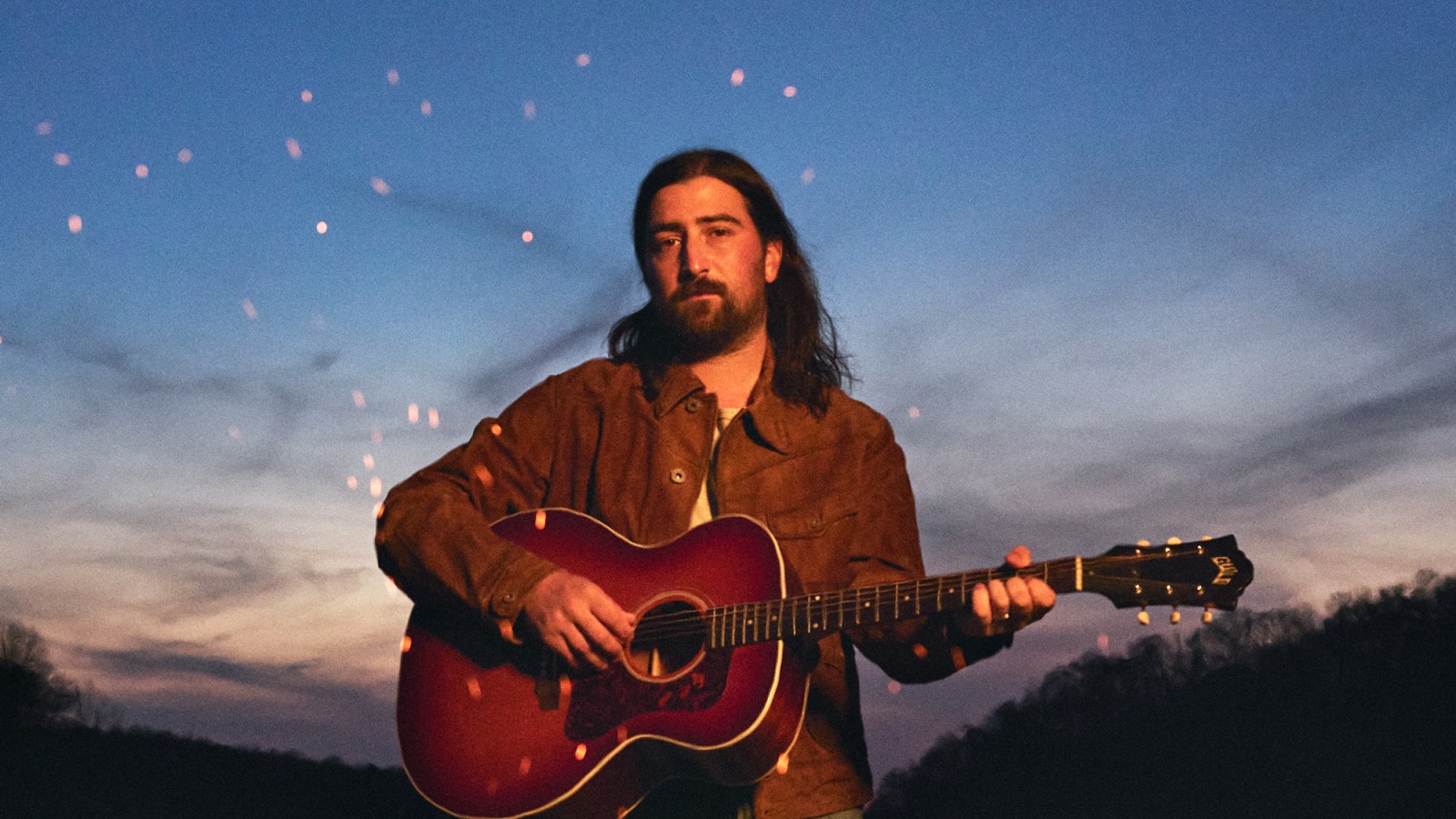
COVER AND LAKE Jacket by Stan. Shirt by Double RL. Jeans: vintage Levi’s. Boots by Allen Edmunds. Belt by Red Wing Heritage.
DIRT BIKE Outfit by Double RL. Tank top by Alex Crane. Boots by Allen Edmunds. Belt by Red Wing Heritage.
BLACK & WHITE PORTRAITS Jacket by Double RL
POSING WITH DONKEY Jacket by Stan. T-shirt by Alex Crane. Pants by Double RL.
FIRE PIT Outfit by Double RL. Shirt by Alex Crane.