


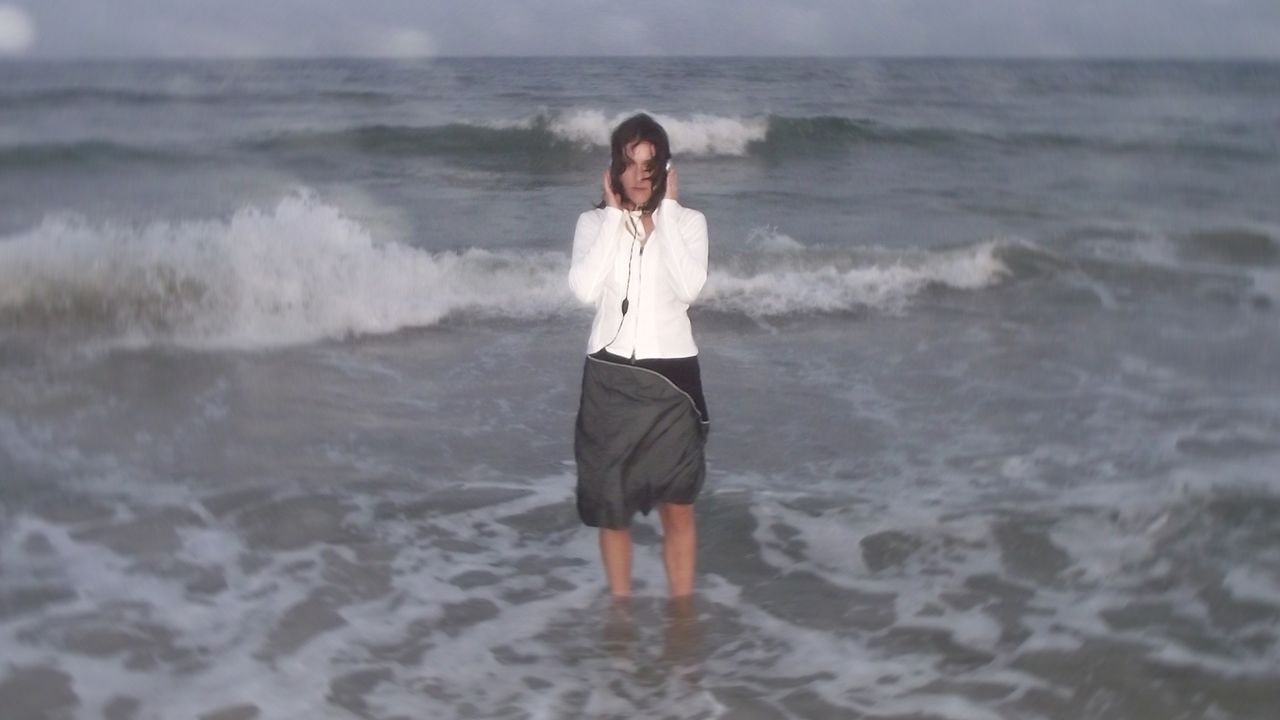
The music of sadie, the New York-based artist née Anna Schwab, finds common ground between the bedroom pop of early Clairo and Charli XCX’s rare straightforward ballads. The Auto-Tuned vocals and quirky drum programming of her early releases veered towards hyperpop territory, but her music isn’t interested in ambushing the listener with that genre’s frenetic sounds and fast BPMs; instead, it creates a cozy, emotionally vulnerable environment. For her debut album, which she made after leaving a decade-long relationship, sadie reached for an acoustic guitar to create a collection of songs that subtly fleshes out her sound with analog instrumentation.
Compared to peers boasting fancy Dave Fridmann mixes or recreating mainstream pop from first principles, Sadie finds her niche by embracing negative space and staying grounded. Her record feels like a bedroom variation on the moody, sparse pop of the late 2010s, incorporating the chorused guitars of recent hypnagogic pop and some early ’00s melodies. The octave-jumping outro on “Wash” and verse melody on “Salt” are so sweet, they evoke turn-of-the-millennium radio hits like Michelle Branch’s “Breathe” or Natasha Bedingfield’s “Unwritten”—but sadie’s distorted drum kits and disembodied guitars evolve the music past pure pastiche. This isn’t an album that pushes into the red often, and that’s to its benefit: the two-step beat on “Better Angels” lands because there’s room for the kick to properly hit. The lush mix of synths and cellos on “All Right” intriguingly suggests the potential for a wider scope, but still feels of a piece with the album’s intimate feel.
No score yet, be the first to add.
The lyrics are similarly minimal, often serving as texture until an emotion breaks through. On “Arms Wide,” sadie sings, “So what? I don’t really care that much” on the chorus—but the more she repeats it, the more she sounds like a narrator who actually does want to feel everything, but is afraid. There’s some unsettling dread beneath the shiny “Shelter,” about growing restless and losing a spark in a relationship; she adeptly calls it “overloading inertia.” Sometimes, though, her musings land awkwardly; when she sings, “Got your head to the .45” on “Better Angels,” the lyric feels out of place, implying something much darker than the album can sustain.
This record is definitely a product of its influences, some of them more expected than others: The chord progression, tempo, and hi-hats of “Hit & Run” are reminiscent of Kendrick Lamar and SZA’s R&B smash “Luther”; it’s hard to hear the chorus and not think, “If it was up to me, I wouldn’t give these nobodies no sympathy…” Still, the song includes some fun wordplay (“out of sight, out of mind” becomes “out of sight, I don’t mind”) and production touches of its own, like a harp and scratchy guitar filigree, that keep the reference from feeling like a distraction.
Toward the end of the record, everything drops away: A last-minute addition to the record drawing from sadie’s early classical piano background, “Red Sky” is the most direct song about the relationship that inspired the album. The way she pairs “candy-cane smile” and “tangerine aisle” is endearing, and it makes her musings about the mourning period after a breakup only resonate harder: “I still wait with the light on… Turn your key in the door/Throw your shirt on the floor.” Though the track comes in the form of a straightforward piano ballad, sadie makes it her own, adorning her heartbreak with melting Auto-Tune and the occasional synth riser. Sometimes in this style of music, the contrast of plaintive piano and heavy vocal processing is one of many pseudo-ironic-slash-sincere choices: Here, sadie embraces it as a method of genuine catharsis.