


Galaxy S27: In summary
- Samsung’s next flagship range of phones is expected early in 2027
- There may be a fourth phone in the line-up, with the Pro returning
- Samsung could bring back variable aperture to the camera
- The S27 Ultra’s main camera may get a big upgrade, but the 3x telephoto could be lost
- Big improvements possible for both Snapdragon and Exynos chipsets
- Magnetic Qi2 charging might finally be on the way
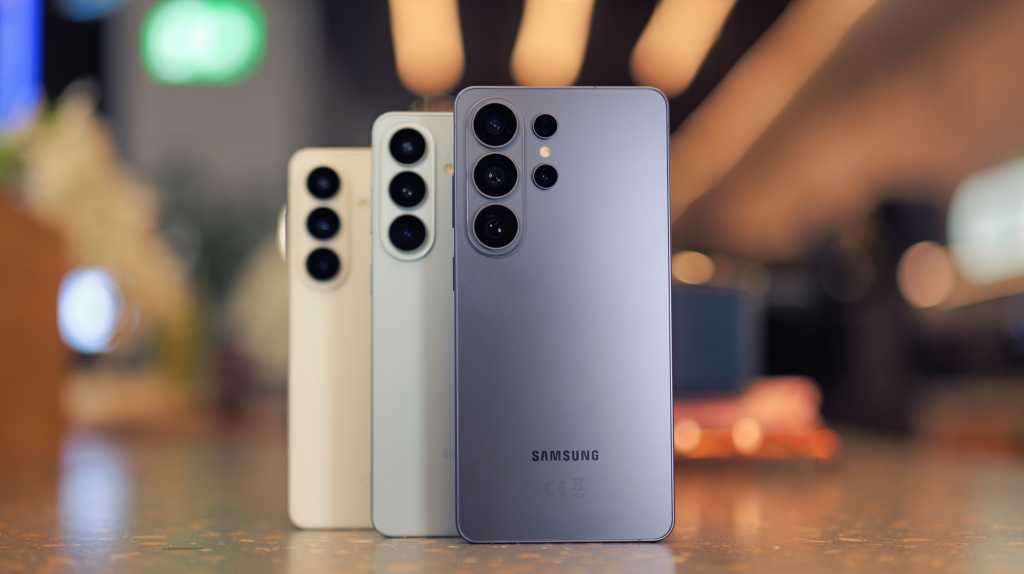
Even though the dust has barely settled on the Samsung Galaxy S26 range, the rumour mill has already started to churn over what next year’s crop of phones might bring. If you’ve decided to skip the S26 line-up and are curious about upgrading to the Samsung Galaxy S27 series instead, here’s all you need to know.
As has been the case for several years, the Galaxy S26 range unfortunately represented another iterative update to Samsung’s flagship phones. They’re by no means bad devices, with the Galaxy S26 a great compact phone, and the S26 Ultra a leader in terms of productivity, but they aren’t all that different from the phones that immediately preceded them.
Our hope is that things will change with the S27 line, not least because Samsung has conceded plenty of ground to its competitors, with the likes of the Oppo Find X9 Pro now our favourite camera phone, while the OnePlus 15 has shown what can be done when bringing a massive battery and a 165Hz display into the mix.
There’s a lot riding on the Galaxy S27 range so, as more information comes in about these phones, we’ll be updating this page. By the time they’re officially announced, you should already have a decent idea of whether or not they’re worth considering.
Luke Baker
When will the Samsung Galaxy S27 be released?
In summary
- Expect a launch in early 2027, likely in February or March
- Samsung could revert to its old launch schedule
As the Samsung Galaxy S26 phones are still so new to the market, we don’t yet have a concrete or even rumoured release date for the Galaxy S27 range.
However, there is a debate over whether or not Samsung will return to its usual release schedule after a delayed S26 launch.
With previous generations, Samsung has typically shown off its new range of flagship phones in January, before releasing them for general sale the following month. The S26 range ended up bucking that trend with a 26 February reveal, ahead of an 11 March launch.
Hopefully we’ll get more of an idea of what Samsung has in store as we move further from the S26 launch, and we’ll update this section the moment anything changes.
For context, here are the release dates of previous Samsung Galaxy phones:
- Samsung Galaxy S26 – March 2026
- Samsung Galaxy S25 – February 2025
- Samsung Galaxy S24 – January 2024
- Samsung Galaxy S23 – February 2023
- Samsung Galaxy S22 – February 2022
- Samsung Galaxy S21 – January 2021

Luke Baker
How much will the Samsung Galaxy S27 cost?
In summary
- Expect a minimum price of £879/$899
- The new phones might be more expensive, but it’s unlikely
It’s too early to tell what the starting price of the Galaxy S27 range will be but for our money, we’d be surprised if the S27 didn’t start at £879/$899. The reason is that we’ve already seen a price increase across the board with the Galaxy S26 handsets.
In response to the global economic turbulence and the rising cost of memory, fuelled by the AI race, all three of the Galaxy S26 devices launched at a higher price than their predecessors.
As an example, the standard S26 costs £80/$100 more than the S25, although that does come with a move to 256GB as starting storage, as brands move away from 128GB models. When consumers are trying to save as much money as possible, price increases like these are tough to negotiate, so it would be to Samsung’s detriment if it increased these rates further for next year’s phones.
Here’s the starting price for previous Samsung Galaxy handsets:
- Samsung Galaxy S26 – £879/$899
- Samsung Galaxy S25 – £799/$799
- Samsung Galaxy S24 – £799/$799
- Samsung Galaxy S23 – £769/$799
- Samsung Galaxy S22 – £769/$799
- Samsung Galaxy S21 – £769/$799

Luke Baker
What specs and features will the Samsung Galaxy S27 have?
In summary
- A Galaxy S27 Pro could be on the horizon
- Big overhauls to the Galaxy S27 Ultra’s camera set-up
- The new Exynos 2700 chipset promises even better performance
- The all-new Snapdragon 8 Elite Gen 6 Pro could vastly improve gaming
- Samsung might redesign the camera module for magnetic Qi2 charging
Time to go Pro
One of the biggest rumours of the Galaxy S26 range that came to nought was a supposed rebranding of Samsung’s entry-level flagship. At one stage, it seemed that Samsung would ditch the S26 entirely, in favour of a Galaxy S26 Pro. We knew well in advance of the eventual Samsung Unpacked event that the phone had been scrapped, but it now appears that Samsung is looking to revisit the idea, albeit with a new approach.
It’s expected that Samsung will add the Galaxy S27 Pro to the upcoming 2027 refresh, but as a model that sits between the eventual Galaxy S27+ and the Galaxy S27 Ultra. The Pro will be a slightly cheaper option than the Ultra, which could be achieved by ditching the S Pen – a move that makes a lot of sense.
Samsung is the only brand that has really stood by the stylus concept and, while the S Pen is handy for productivity users who appreciate being able to take handwritten notes on the go, it’s not for everyone. If this rumour ends up being true, it’ll give consumers the ability to enjoy the Ultra-level specs they want, including the zoom cameras and Privacy Display, without wasting money on a feature they don’t need.
Source: ETNews
Variable aperture and a new main sensor (S27 Ultra only)
Long-time Samsung fans may remember that the brand once dabbled in a variable aperture on its phones way back with the Galaxy S9 and the Galaxy S10, technology that allows a lens to actively widen or close to better adapt to low light. It’s a tricky thing to get right on a smartphone, but now that rumour has it Apple is looking to revitalise the idea with the upcoming iPhone 18 Pro, Samsung may want to follow suit for the S27 Ultra.
While there’s no word yet on what that might look like in a 2027 smartphone, the feature previously allowed the S9 and the S10 to flit between f/1.5 and f/2.4 apertures, depending on the scenario at hand.

Luke Baker
Even though it’s hard not to see the timing of the feature’s return as a knee-jerk reaction to Apple’s development plans, a variable aperture sensor would be great – particularly on the S27 Ultra – given that Samsung’s Ultra phones are already known for having some of the most versatile camera setups on the market. But this won’t be the only camera upgrade for Samsung’s next big flagship, as there’s also word of a new main sensor.
Admittedly, there’s conflicting information right now as to what kind of upgrade is in store for the main camera, but it’ll be an improvement over the S26 Ultra at least. One tipster has it that the S27 Ultra will use a larger 1/1.12-inch sensor that should be able to capture more light and detail than the 1/1.3-inch alternative currently used on the S26 Ultra.
However, another tipster explains that the 1/1.3-inch size will return but that the sensor itself will be one of Samsung’s new HP6 models, which should provide better performance across the board.
One aspect that doesn’t seem to be in dispute is that the Ultra will use LOFIC (Lateral Overflow Integration Capacitor) technology to improve the dynamic range of any photos captured. The Xiaomi 17 Ultra uses LOFIC and is widely acclaimed for its camera abilities.
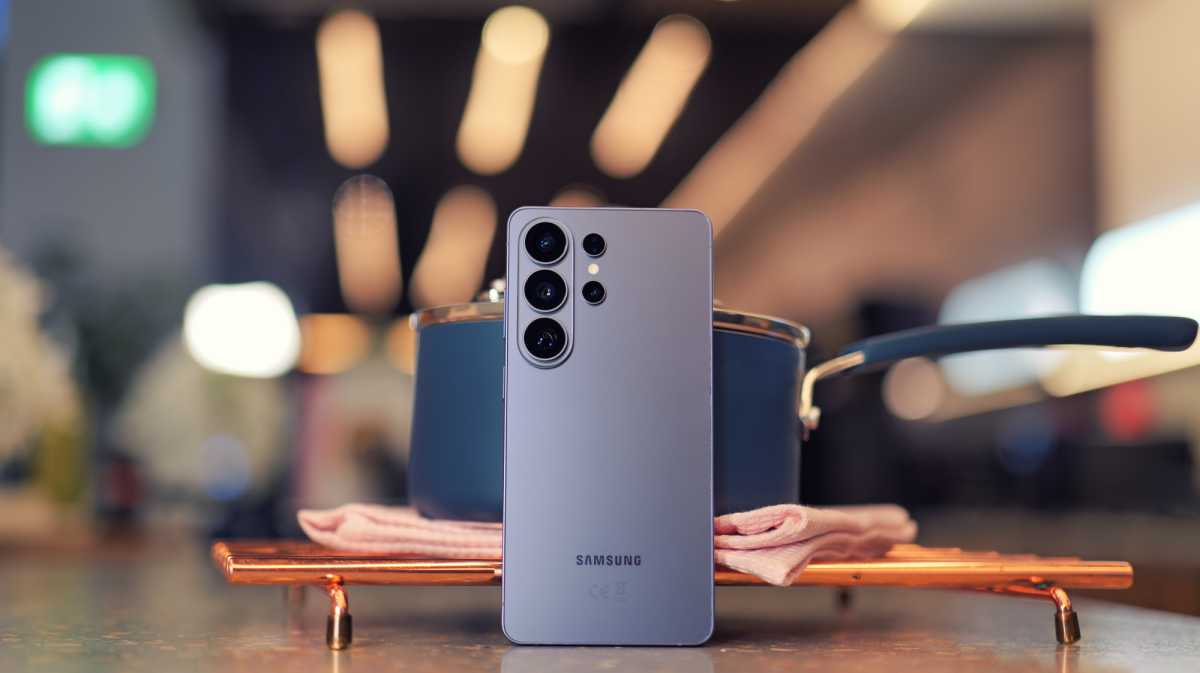
An interesting tidbit that surfaced after all the rumours regarding variable aperture and the new main lens, is that Samsung will actually look to have fewer cameras overall on the S27 Ultra. If the current rumours ring true, the S27 Ultra could have a triple camera array on the back, much like the iPhone 17 Pro or the OnePlus 15.
Luke Baker
It seems as though the 3x telephoto lens is the one on the chopping block, which might be good news to some fans as it did sometimes feel like the odd one out between the main 200Mp lens, the 50Mp ultra-wide and the other telephoto lens which boasts 5x optical zoom.
Of course, with the newer main lens likely to offer more versatility via the reported variable aperture, this probably won’t feel like much of a downgrade, but rather a revised approach. Given that we’re now starting to see phones like the Oppo Find X9 Ultra and the Leica Leitzphone powered by Xiaomi try to position themselves more as camera replacements than simply a phone upgrade, trying to mimic the aperture capabilities of a dedicated camera seems like a smart move from Samsung.
Once we have a better idea of which direction Samsung is heading, as well as any information regarding the regular Galaxy S27 and S27+, we’ll update.
Sources: ETNews | Digital Chat Station | Smart Pikachu | Ice Universe
Major leaps forward for both Snapdragon and Exynos
The dance between Exynos and Snapdragon chipsets is now expected whenever a new range of Samsung flagships appear, as the former typically powers the cheapest phone of the bunch (and its plus-sized sibling), while the latter is saved for the Ultra phone (unless you live in the US, where Snapdragon exists in all three handsets). Even though that dance is set to continue in the S27 range, it now seems there will be some serious upgrades in both types of chips.
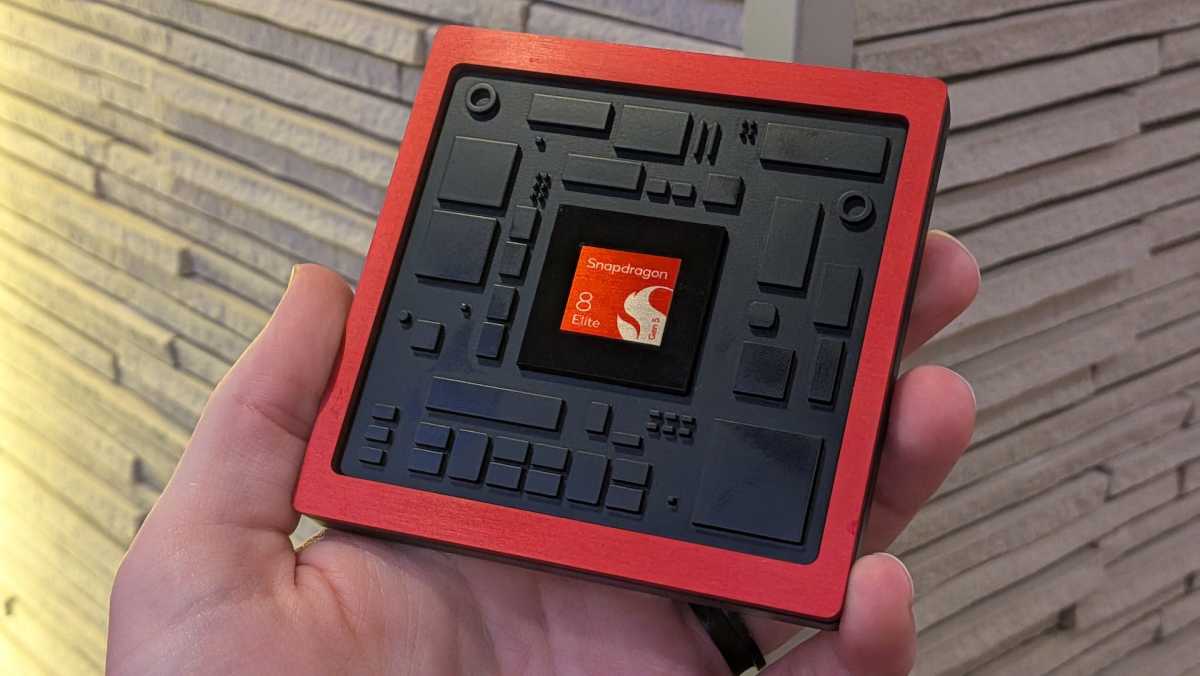
On the Snapdragon side of things, even though Qualcomm is working on the expected Snapdragon 8 Elite Gen 6 processor, there’s word that the company is also developing a more powerful ‘pro’ version designed for uber-flagship phones. Likely titled the Snapdragon 8 Elite Gen 6 Pro, this beefier chip appears to be using vastly superior LPDDR6 RAM, alongside a larger 18MB cache for the GPU. Behind all the jargon, this should pave the way for much better sustained gaming performance, which will then trickle down into a much faster user experience across the board.
Chris Martin / Foundry
Although it’s not yet confirmed that the Gen 6 Pro chip will be used for the S27 Ultra, it seems more than likely given Samsung and Qualcomm’s close relationship. At present, it seems as though one of the first phones set to use the chip will be the Xiaomi 18 Pro Max, which certainly fuels the idea of this chip being reserved for flagships such as the S27 Ultra that sit higher up the chain.
On the Exynos side of things, Samsung may be looking to bolster performance yet again by using side-by-side (SBS) architecture, which has the RAM and SoC laid out next to one another. The current Exynos 2600 uses a stacked design which isn’t ideal for heat dissipation, something that would be much better optimised by going down the SBS route.
It’s worth mentioning that the Exynos 2600 is as competent an Exynos chip as we’ve ever tested, with the overall performance putting it far more in line with the Snapdragon 8 Elite Gen 5, although still a touch behind in some areas. If this attempt to optimise the thermal regulation of the Exynos 2700 is successful, it could close the gap even further for the S27 and S27+.
Sources: SamMobile (2) | Digital Chat Station
Magnetic Qi2 charging could be on the way (finally)
One of the biggest omissions from the Galaxy S26 range was magnetic Qi2 charging, which was surprising given that it currently puts Samsung’s latest phones at a disadvantage to the Pixel 10 phones. It seems as though Samsung may have listened to feedback on this one, as there are rumblings of a redesign on the back of the S27 phones that could pave the way for the magnetic charging method.
As anyone who’s tried to use a MagSafe-compatible case with a recent S-series phone will know, the vertical camera bump makes it almost impossible to use certain accessories, which has no doubt played a part in why Samsung hasn’t yet adopted the feature.
According to recent rumours, however, Samsung may be looking to properly redesign that camera bump for the first time in years.
The render above is merely a speculative one, but it does give us an idea of what the S27 Ultra might look like, and the design language that could also carry across to the S27 and S27 Plus.
Longtime Samsung fans may remember that the company last employed a horizontal camera bump, like the one pictured, on the Galaxy S10 range. It was a short-lived idea as the S20 range moved the camera to the top-left corner of the back, where it has remained, but it would make sense to bring it back as means of facilitating Samsung’s own version of MagSafe.
There is always a chance that Samsung is only investigating such a redesign to create a more distinctive look for the S27 phones, but given the popularity of MagSafe and Pixelsnap, and how expensive it’s becoming to implement chip-related upgrades due to the rising costs of storage, it would be counterintuitive for Samsung not to seize the opportunity.
Source: Naver Blogs
That’s all we know about the upcoming Samsung Galaxy S27 range, but check back soon for new information.