


J
ulian Pratt, frontman for punk-rap bruisers Show Me the Body, has a simple request: Show us the pigeons.
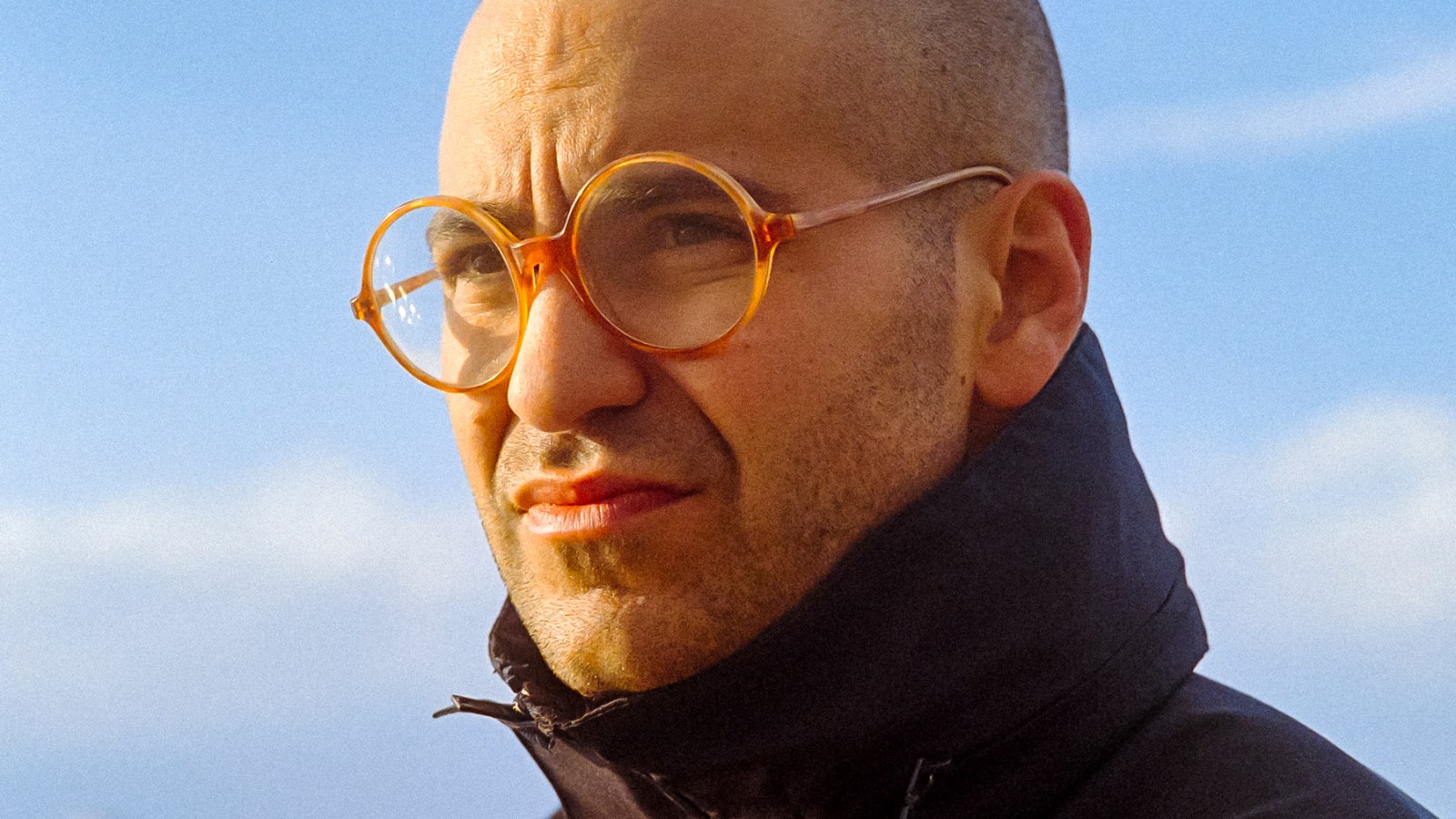
The shaven-headed 32-year-old vocalist and banjoist is tromping through Astoria Park, a verdant stretch of Queens along New York’s East River, with his two-year-old daughter, Surey, on the hunt for the city’s most famous wildlife. But since it’s an unusually chilly Friday, at least for May, the city’s famously ample winged rats seem scarce. Luckily, Pratt came prepared. Pratt runs deep with New York’s pigeon community; picture Marlon Brando traipsing through rooftop coops in On the Waterfront, and you’ll get the idea. So he knows where to buy 20 pounds of feed, and he brought a pound or two with him.
Pratt and Surey spot a couple of pigeons underneath the RFK Triborough Bridge, toss the seeds, and before long, dozens of birds are descending on them as they giggle and Surey attempts scattering maneuvers that resemble mosh-pit moves. The birds with white in their tails, he points out, are native to New York. When Show Me the Body released their last full-length, Trouble the Water, in 2022, a scene like this seemed unimaginable. Pratt was just another angry New Yorker hectoring calumnies against all forms of authority. Now, he’s another angry New Yorker who’s also a dad.
“A lot’s changed, dude,” Pratt says as he seats himself at a table of a nearby coffeeshop, his voice sounding as resonant and “Noo Yawk” as it does on record. “I used to be able to get by on just touring. Now everything is serious. The future is real.”
On the table before him is a pair of blistered blue work gloves, which show how greatly his life has changed since he wears them at the day job he had to get around the time of Surey’s birth: hoisting banners for the New York Stock Exchange. Pratt, whose lyrics have always been critical of capitalism, is aware of the irony. “The only cool part of my job is I get to climb a really old building,” he says. But once the gloves are off, he’s himself again, and the “N.Y.H.C.” tattoo, repping the New York Hardcore music he deals in, that he has across his left knuckles is visible once more, as is the chunky “Surey” ring he wears.
“I think my life has gotten better, because I often look back and I’m like, ‘Oh, fuck,’” he says. “I cringe. But a good friend always tells me, ‘Yo, if you don’t cringe at what you did a couple years ago, you’re not making hot shit now.’”
The hot shit Pratt has going now is Show Me the Body’s upcoming fourth full-length, Alone Together, due July 10. The album, which of course features flocks of pigeons on the cover, boasts a tighter, fuller sound than previous releases, thanks in part to production by Kenneth Blume (Geese, Idles) and Klas Åhlund (Iggy Pop, Katy Perry). “Kenny was like, ‘I want you to make the best Show Me the Body record yet,’” Pratt says, “and I believed him.” Åhlund, he says, pushed him to be more authentically himself.
Ultimately, the trio — Pratt, co-founding bandmate Harlan Steed, and recent addition to the drums, Nijol Benjamin — recorded an LP that continues the aggressive bent that made them a concert draw, but with more focus and unapologetic lyrics that support Pratt’s radical politics, which he still practices as part of Corpus, the youth crew he co-founded as a teen. Lead single “Dance in the U.S.A.” finds Pratt rapping about how living in America is a “fool’s game but I ain’t one to lose,” over thumping bass and banjo. Another single, “No God,” finds Pratt singing “Sometimes you’ve got to break to figure out what’s at stake” over grinding guitar. And on “See You Again,” he pays tribute to two friends he lost in the past couple of years, one whom he considered a mentor, and another whom he considered one of his best friends. He still tears up when speaking about them. The way Pratt sees it, his life has changed immensely in the past few years, but he’s the same person, only a better version of himself.
“I still train a lot,” he says. “I do less drugs, drink less. But I still enjoy life. And I like to think that having a daughter, too, is a creative practice. … Now we just have to think about every activity just a little bit more to accommodate a two-and-a-half–year old.”
Pratt with his daughter, Surey
Griffin Lotz for Rolling Stone
How intense was the whiplash of fatherhood?
It was pretty intense. My child was three months old, and Knocked Loose asked Show Me the Body to go on tour and, like, can’t say no.
Well, you can say no.
We can say no, but this is what we do.
Weren’t you questioning it?
Absolutely, 100 percent. But my mother was a filmmaker, and she hustled. I was on shoots as a kid with her. Anything worth doing is difficult.
The band formed when you were 16, and now, you’re 32. That’s half your life so far. What was the point of Show Me the Body in the beginning and what is the point now?
Dude, the point of Show Me the Body in the beginning was, I was in special-ed school. I couldn’t read good. Everyone told me I was dumb; I thought I was dumb. And I loved punk rock and hardcore music, going to [New York punk venue] ABC No Rio and hanging out.
When we started playing shows, I was like, “This is something I’m good at, and it makes me feel really good.” And I think that’s why I took it so seriously at first.
Nowadays, it’s become, like, my religion. I’m a Jewish person, and I think Show Me the Body is a form of offering, like a ceremony that has come to mean a lot to me now,
For me personally, it’s much less an expression of anguish and more a vehicle to bring together my friends and other folks who feel as silly and dumb as I felt as a young person and to give them a place where they can be a part of this larger thing that doesn’t judge them. I think the music that we make and the messages that we convey are often for folks who feel out of place in most situations.
You sing the words “radical love” on the album’s first song, “Eat for Peace.” How did that concept come to you?
My friend Trevor, who used to hang out at ABC No Rio, his dad was part of the R.A.S.H. movement: the Red and Anarchist Skinheads. And [Lord] Ezec [aka hardcore vocalist Danny Diablo] and Skam [Dust] — DMS [Doc Martens Skinheads] guys — looked out for us when we were kids. Seeing how all these groups operate had a large impact on me. Through the formation of Corpus, it’s transformed to stand for not only weirdos but against capitalism, imperialism, and gentrification and shit like that.
On our last tour, we were in Arizona, and we were talking about the liberation of the Middle East from Zionism. And security tried to jump me, and me and my friend had to fight security.
And the term “radical love,” the beginning of the record, is, “Radical love compels me to fight.” … Even though we’re in the middle of Arizona, we are engaging with and taking punches from 40-year-old ex-cops who are running security in solidarity with a moment that’s happening thousands of miles away. And it means a lot to us.
Now that you’re a 32-year-old dad, though, you have to engage with capitalism.
One hundred percent. I have to work at maybe the hub of capitalism. It’s just something that we all have to do unless we move off the grid and reject society, which I’m, at least, currently not ready to do yet. And kudos to anybody who is. [I offer] full support to all militants around the world who have left the grid. But I have a young daughter.
I was thinking about it with my homie the other day like, “Man, it would be easier if we just all were in a cave chilling by the fire.” But then I realized, “There’s no fucking amps, dude.” I don’t know if I’m man enough to forgo the rock & roll that our crushing Western society provides me.
What would 16-year-old Julian make of you now?
He maybe would call me a pussy. But honestly, I think he would be hyped because Corpus started as just some lost kids hanging out, going to shows, and writing graffiti. Now it’s a small network of real friends that’s like a real family. And that’s what I’m most proud of in my entire life.
Young Julian might also be surprised by how your Corpus crew, which started kind of like a renegade group of friends, now has real community impact.
We have a studio, and if you’re from New York and a young person, you get some free studio time. We do “Corpus self-defense,” where we teach kids how to defend themselves and the basics of Muay Thai and boxing in the summertime. So now, Corpus is a small community, youth-oriented organization that lives within New York identity, but also participates in music. We throw shows, and we’ve put out records in the past. But it really operates as a small community organization run by friends.
It sounds like you learned a lot from going to ABC No Rio shows, too.
One hundred percent. It was my first viewing of an anarchic organization structure. We’re still engaging in militantism, and we’re being organized about it; we can be organized and still be anti-society and improve our lives together. Seeing older folks than me do that through their organizations, whether it be at ABC No Rio or in the streets, had a huge impact on me.
What does anarchy mean to you now?
Honestly, it means doing things with your homies. Doing something with my friends, whether it’s a petty crime or an art project or participating in an operation that another organization’s running or trying to run an initiative with our community.
What is “Dance in the U.S.A.” about?
Getting through it. Also, I love “Born in the U.S.A.” It’s one of my favorite songs. I’m not a big “The Boss” guy, and I’ll put that song on, and I’m like, “Fuck yeah.” It’s so metal to me. And also the Suicide cover is awesome too. It’s deranged.
[Our song is] about going through it in this Western reality.
What’s the idea behind the album title, Alone Together?
I got the idea for the name on the record because we made this shirt that says “Anti-Zionist Jewish Pride,” which is how I feel. And the amount of hate mail that I got, the amount of people who showed hatred and ugliness, and other Jewish folks who called me a kapo, like, overseer in the [concentration] camp … being called these names by other Jewish folks, I was in tears, because I’m proud to be a Jewish person.
And I’m talking to Asha, my partner, the mother of my child, like, “Yo, why are my people talking to me like this?” She’s like, “Yo, those aren’t your people, man. You know that.” And that filled me with love and understanding.
Dude, we played Hellfest for 10,000 people and we spoke about the world being liberated from Zionism, and I watched 2,000 people go, “No,” and turn around. And I invited Zionists to come up and get in my face if they felt it, and nobody wanted to.
And my own community, being like, “Dawg, we have your back and thank you for speaking how you feel,” that made me feel very good. And made me feel like we’re part of this larger thing as individuals. … If you have unpopular opinions, there are other folks that are with you. Even though they’re not with you now, spiritually we’re all there. Feeling love and support from the rest of the anti-Zionist community made me think of that saying, “alone together.” In my mind, I was like, “We are alone, but together.” It was extremely literal to me.

Griffin Lotz for Rolling Stone
Showing love seems to be the album’s central theme. What made you want to put an exclamation point at the end of love?
I think that through the mistakes of my life, through leading with fear and hate [in the past], I have realized that love is the only thing to make sure there is an abundance of. Make sure that there’s a lot of love between you and your friends and your family, and those you call family, and you’ll lead a good life. Or at least you’ll not suffer as much as you would without it.
What inspired that epiphany?
I had three mentors in my life, and only one of them is alive now. My mentor who taught me kung fu lives in Italy now, and he’s the last mentor I have.
Right at the onset of writing this record, Mike Down, who played in Forced Down and Inside Out, got hit by a bus in 2024. He designed the “End Racism” shirt. I met him when he was, like, probably 40 years old and I was, like, 15, and I was going through it real bad. He gave me the self-confidence to really dive in to Show Me the Body.
And then the guy who taught me how to play guitar, Michael Pestalozzi — fucking 6’4″, beautiful skinhead man, legendary dude, friend of my mother’s — took his own life probably 10 years ago.
So losing those two gentlemen, and realizing my last mentor was so far away from me, made me realize that those men gave me so much love in a time that I really, really needed it. But also, going through those feelings and feeling like, “Life is just loss happening over and over again, and your friends just get smaller,” and then into the next month having my first child, realizing that this is not only my child but the whole crew’s child — this is the gang baby — and the amount of love that everybody feels for her, has changed my life.
Those feelings came through.
I think throughout Show Me the Body, I write about things that I feel and the things that I see. When I was younger, I was writing about the city. And now I’m feeling like love and loss constantly, but also trying as much as I can to believe in life, that the important part is guiding them into a way to enjoy life and to think that there’s a beautifulness to this crushing reality, rather than just losing of friends.
You also recently lost someone close to Show Me the Body, Noble Spell, who figured heavily into Corpus. He died in August. His words are featured on the new album, too. How are you handling that?
[Pratt grows quiet.] Not well. We were like babies together, sharing meals and beds for over 10 years. I miss him a lot. He recorded [his part of the album] two days before his accident. I thought it was his last gift to me, but I feel him all the time. Just out of respect for his family, I don’t want to talk about him too much, but I think also part of my turn to love, like you said, putting a period or an exclamation point on it, is because my friend has so much fucking love.
How are you taking care of your mental health as you mourn his loss?
I drink. I talk to my friends, try to call my mom. Try to do therapy sometimes, but it’s, like, $65 a week on Better Health and shit. Sometimes my card gets declined.
How do you stay grounded?
Discipline.
In the album’s intro you talk about “heavy discipline.”
Yeah, another quote from the record is the thing that my master said, “Train one day, you gain one day/Skip one day, lose three days.” So the idea of staying militant is a mindset, and it’s not just so you can fight, it’s to show yourself love and respect as well.
The way I stay grounded is I do martial arts; I train calisthenics with my friends. I spend a lot of time with my friends. I try to cook as much as I can, eat whole food. And I enjoy my life.
I still do drugs sometimes, I still drink, and I train every day. But my master said that if you train and take care of your body, take care of yourself and your family, you can smoke like a chimney, eat like a pig, fuck like a horse. It doesn’t matter.
After everything you’ve been through, are you ready to get back on the road?
Honestly, after losing my friends and losing my mentor, I’m really just scared to do anything now. And especially to be on the road without these folks that I had in my life previously, and felt so supported by, I’m really scared to be out there so much without them. But it’s also one of the only things that I enjoy doing.