

The following is the fintech, digital and wider economic development overview of the Caribbean nation of Cuba in 2026.
Cuba, an island nation shaped by revolution, state control, and decades of geopolitical tension, occupies a singular place in the global digital economy. Its troubled modern history, from post-revolution centralisation to the long shadow of the US embargo, has profoundly influenced the way its financial system has evolved. Historically, Cuba’s fintech ecosystem is not constrained by lack of need, but by structural isolation. By 2026, that reality still holds, though signs of cautious progress are increasingly visible.
History, pressure and economic constraint
Cuba’s current digital and financial trajectory cannot be separated from its past. For decades, the country’s economy has operated under a combination of central planning, limited market liberalisation, and external restrictions through the communist regime under Fidel Castro. The US embargo, first imposed in the early 1960s, has remained one of the defining features of Cuba’s economic reality.
More recently, policies under President Donald Trump reinforced restrictions on remittances, financial flows, and international banking access. Although later administrations adjusted some measures, the broader blockade remains in place, continuing to limit Cuba’s access to global finance and digital commerce.
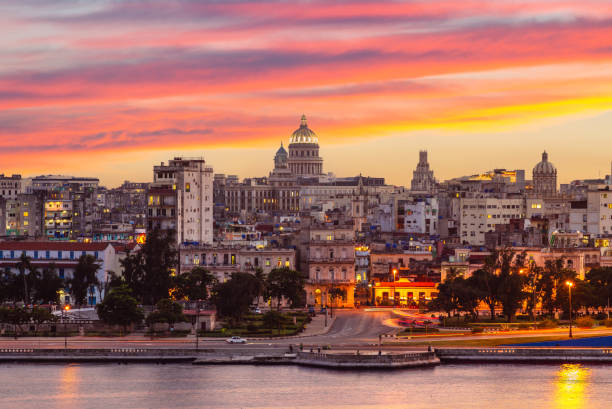
Against this backdrop, Cuba’s economy is estimated at approximately $120 billion, though official figures remain difficult to verify. The gross domestic product (GDP) per capita is in the range of $9,000-$10,000, according to the World Bank. The economic base still leans heavily on tourism, remittances, healthcare exports, and state-led services, according to the Organisation for Economic Co-operation and Development (OECD). Havana remains the country’s financial and administrative centre, with the financial system dominated by state institutions such as Banco Metropolitano.
A digital financial system built differently
Unlike many emerging markets where fintech growth has been startup-led, Cuba’s ecosystem has developed within a state-managed framework. There are fewer than 10 identifiable fintech-like initiatives, most of them linked directly to state banking or payments infrastructure rather than independent private ventures.
At the core of Cuba’s government is communism, which historically doesn’t allow for private ownership nor private enterprises. Despite reforms and a black market, limitations still apply. This further enforces the lack of any noticeable fintechs and wider technologies apart from state-owned enterprises.
That makes Cuba unusual. Innovation exists, but it exists within firm political and regulatory boundaries. Rather than disruption, the pattern has been one of controlled adaptation. Digital wallets, electronic payments, and online banking have expanded gradually, though always under close institutional oversight.
The clearest area of movement has been in payments. The past few years have seen platforms such as Transfermóvil and EnZona continuing to expand their reach. These services allow users to pay bills, transfer funds, and complete basic transactions through mobile devices, helping shift parts of the economy away from cash dependency.
This adoption has not been driven purely by innovation policy. It has also been accelerated by necessity. Cash shortages, inflationary pressure, and the broader effects of currency reform have encouraged both businesses and households to use digital channels where possible. Even so, internet access limitations and smartphone penetration remain structural constraints on wider adoption.
Regulation remains centralised and inclusion influenced by its centralised-controlled government
The Banco Central de Cuba (English: Central Bank of Cuba) continues to operate within a tightly controlled financial environment, where innovation is permitted only insofar as it aligns with state priorities. The last two years have seen policy efforts focused on expanding electronic payments, improving efficiency, and reducing dependence on physical cash.
There is little sign of the sort of liberalising agenda seen elsewhere. Open banking, fintech licensing reform, and broader market competition remain limited. While digital currency and blockchain have occasionally been discussed, practical progress remains modest. The state’s priority continues to be control and stability, not rapid experimentation.
Cuba presents an unusual financial inclusion profile. On paper, a large share of adults hold bank accounts due to the state-run nature of the financial system. By last year, more than 70 per cent of adults may have access to an account, according to the World Bank Findex. Yet account ownership does not necessarily mean full financial participation. Many services remain limited, especially access to credit, digital transactions, and international payments.
This gap is particularly visible in remittances. For years, remittances have acted as a vital financial lifeline for Cuban households. But US restrictions on remittance channels have disrupted formal flows and pushed activity into alternative and often informal networks. That dynamic complicates the development of a transparent and scalable formal fintech ecosystem.
A wider digital transition, but within limits
Cuba’s broader digital transformation is advancing, though unevenly. Mobile connectivity and internet access have improved over the past decade, with mobile penetration now above 65 per cent, according to the World Bank. Government efforts in digitising public services have also helped modernise certain aspects of daily administration.
Still, digital progress remains bounded by infrastructure shortfalls, limited foreign investment, and the country’s continued geopolitical isolation. The digital economy is growing, but only within clearly defined parameters.
Cuba does not yet have a conventional fintech association or startup ecosystem comparable to those in other emerging markets. Innovation is instead shaped by state entities, academic institutions, and a narrow set of public-private arrangements. International ecosystem support is also constrained, both by politics and by Cuba’s limited integration with global capital and innovation networks.
Cuba’s fintech development is not cyclical or simply underfunded; it is structurally shaped by the country’s political economy. Restricted global financial access, centralised regulation, infrastructure limitations, and the enduring impact of the blockade all define the pace and direction of change. Currency volatility and earlier monetary reforms have added further complexity to the financial environment, according to the International Monetary Fund (IMF).
The Cuban fintech ecosystem in 2026 is still limited in scale. Cuba’s fintech future remains bound to its wider geopolitical and economic reality. Progress is visible, but constrained by history, regulation, and the enduring impact of the blockade.