


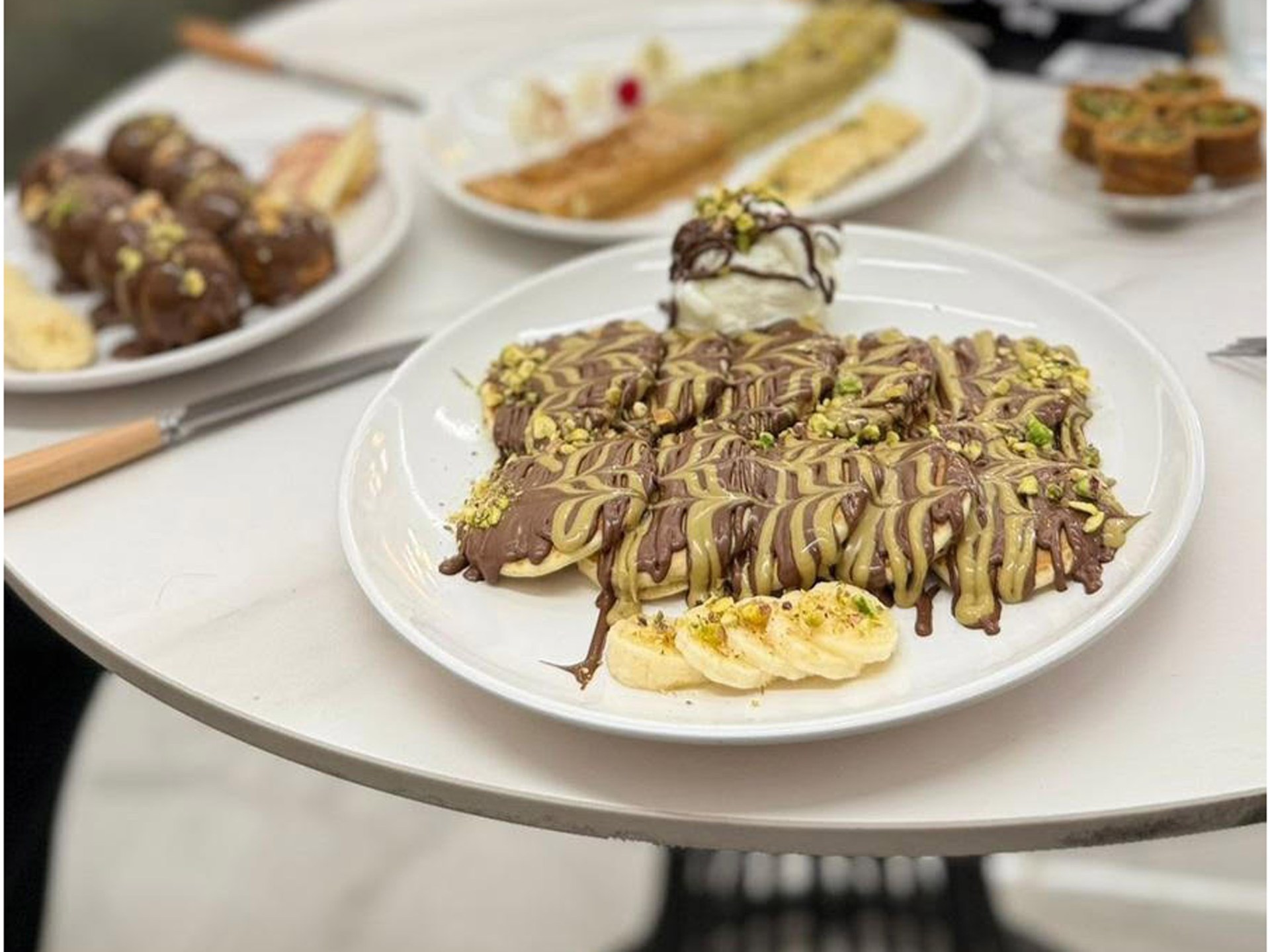
Social media is full of posts showing off photos and videos of fancy-looking cafes and restaurants in Gaza. Pro-Israeli accounts often use these images to claim that life is back to normal in Gaza, that people are not suffering and that no genocide ever took place.
These cafes and restaurants do exist. I have seen them myself.
In late March, I went on my first visit to Gaza City since the war started. I was shocked to see the destruction wrought on the city. There were piles of rubble at every corner. Unable to recognise the streets, I felt as if I were strolling through a maze. I soon arrived at an area nearby that shocked me even more. It was full of new cafes that did not exist before the war.
These were not makeshift or temporary places as one might expect; they were built with expensive materials, carefully painted, furnished with tables, sofas, and elegant chairs, with glass facades and shining lights. A luxury feel emanated from them. They looked so out of place amid the rubble and the half-collapsed buildings that it felt almost surreal to see them.
These new establishments do not prove that normality is coming back to Gaza. They are a testament to its continuing genocidal abnormality.
The war made some people in Gaza rich, especially those who engaged in illicit activities like smuggling, looting, and hoarding during acute shortages. This wealth is now coming out in various forms, including luxury cafes and restaurants.
In parallel, the vast majority of Gaza’s population has been thrown into abject poverty. While before the war, the average person was able to afford to sit at a cafe and have a drink and a bite to eat, today this is no longer the case.
Most people cannot even look at these new places, let alone enter them and order something. The vast majority of Gaza’s population lives in tents, has no electricity or potable water, and suffers from the loss of livelihoods. They are surviving on what little aid Israel is allowing through.
I am one of them. My family and I live in a tent pitched near the rubble of our home in the Nuseirat camp. We have lost our family livelihood. The comfortable life we used to have is now just a distant memory.
The expensive new establishments reflect the deeply unjust social order that has emerged in Gaza – one where war profiteering has elevated a new privileged class and collapsed the vast majority into misery with no access to proper education, healthcare and even food. The genocide did not just kill and maim people and destroy homes and schools; it eliminated the prospect of a normal life for most people in Gaza.
I could not afford the fancy cafes, so I continued down the street till I reached a more modest restaurant, which used to go to with friends before the war. Entering it felt like stepping back in time to the days before the war; the place was the same, with the same chairs and tables, and the familiar smells that filled the space.
I sat and observed, dwelling on fond memories of spending time there after university lectures. I ordered what I used to order: a chicken wrap, a soda and a small salad plate. The bill was 60 shekels ($20) – more than three times what I would pay before the war, when my family actually had a normal income.
The restaurant bill, together with the fare I paid for a shared ride to get to Gaza City (15 shekels or $5 one way), cost me a fortune. I felt guilty spending all this money to enjoy a glimpse of normalcy.
The few who are fortunate enough to be able to afford going to cafes and restaurants in Gaza may enjoy short moments of relief, a temporary escape from the horrors of reality. Yet these moments are limited, often accompanied by anxiety about returning to the destroyed streets, the bombed-out landscape and the trauma.
As I sat at Al-Taboon, I thought of the friends with whom I used to spend time: Rama, who was martyred and Ranan, who escaped to Belgium. I sat there alone, holding on to these memories amid the greyness of Gaza’s rubble and the lights of the generator-powered cafés.
The genocide has devasted everyone – even those who have profiteered from it. No amount of time spent in shiny cafes and restaurants will ever erase this reality.
The views expressed in this article are the author’s own and do not necessarily reflect Al Jazeera’s editorial stance.