


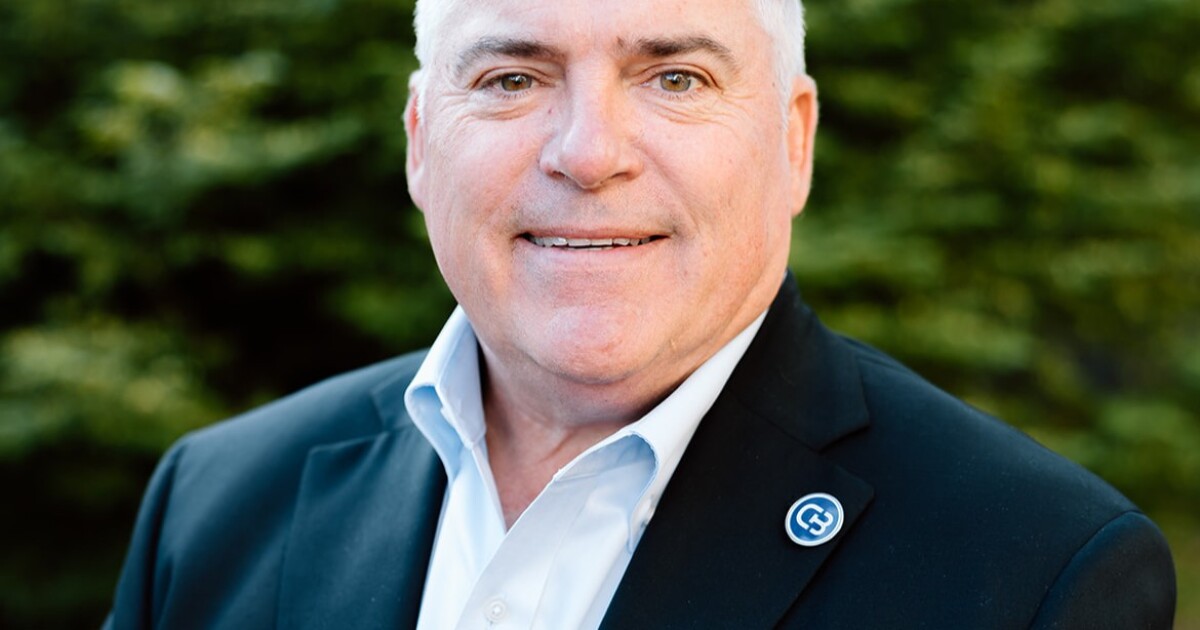
- Key takeaway: Carter Bankshares CEO Litz Van Dyke wants to position the company as a regional bank with a footprint stretching from Central Virginia down to South Carolina.
- Supporting data: Carter operates 13 branches in North Carolina, along with a loan production office in Greenville, South Carolina.
- Expert quote: “One of the keys for our continued growth and success is diversity and granularity in our loan portfolio.” — Litz Van Dyke
Martinsville, Virginia-based Carter Bankshares, which
Processing Content
“In Virginia, we currently have a presence in most of the markets we desire to be in, but we do feel the majority of our growth opportunities lie in the Carolinas,” Carter CEO Litz Van Dyke told American Banker.
The $4.8 billion-asset Carter, holding company for the 52-year-old Carter Bank, wants to deepen its presence in North Carolina, and to build on its nascent entry into South Carolina. It’s considering a deal to get bigger, especially in the Palmetto State, according to Van Dyke.
“Organically, building a franchise in a state like South Carolina that’s still got a few strong community banks would be a steep climb up soft sand,” the CEO said. “We really think ultimately we’ll need to find a partner down there.”
Carter opened a loan production office in Greenville, South Carolina, in November, after hiring a team of veteran local bankers. Carter has 13 branches and deposits of $600 million in North Carolina. It operates 50 branches with $3.7 billion of deposits in its legacy Virginia markets.
Loan sale advances M&A hopes
Carter spent much of the past decade trying to downsize its relationship with the Justice Companies, owned by the family of U.S. Sen. Jim Justice, R-W.Va.
At its height, the Justices owed Carter more than $740 million. Years of pressure by the bank had reduced the family’s indebtedness to just under $210 million, and Carter was able to fully exit the relationship last month by selling the remaining loans — which had been categorized as nonaccrual since the second quarter of 2023 — to an undisclosed third party.
Carter had discussed merger-and-acquisition deals with potential sellers in the past, but talks never advanced past the introductory phase due to the Justice issue. Now, with the controversy finally in the rearview mirror, Van Dyke is ready to redouble his M&A pursuit.
“I can hit the road, start talking, having conversations, creating relationships,” Van Dyke said. “That’s really how these things come together.”
Prior to the loan sale, which brought Carter proceeds of just under $289.5 million, “we had good conversations, but they all ended with ‘Call me when you get that large nonperforming loan resolved,'” Van Dyke said. “Nobody wanted to get involved with that headache.”
Game-changing event
Carter’s stock price has increased roughly 25% since the Justice loan sale was announced March 26. That’s a key trend, since an increased valuation will likely be a critical factor in striking a deal, according to Hovde analyst Feddie Strickland.
While Carter is expected to focus on growing loans in the near term, “expansion opportunities are a key focus, including branch acquisitions and M&A,” Strickland wrote last month in a research note.
Brean Capital analyst Christopher Marinac sounded a similarly optimistic note in another recent research note.
“We are hopeful that reduced noise from several years of Justice-loan headaches are behind the company with brighter and more profitable days ahead,” Marinac wrote.
Carter reported first-quarter net income totaling $85.8 million, powered by a $65 million loan-sale gain and an associated recovery of a $15 million charge-off. At the same time, Carter released an $18 million specific allowance-for-credit-losses reserve since the nonperforming Justice loans exited its balance sheet.
Carter bolstered its capital even more last week. On Friday, it disclosed the sale of its interest in the Bearing Insurance Group in a transaction that netted a pre-tax gain of approximately $35.8 million.
Carter also resumed its dividend after a long absence, a step that Van Dyke said ranked among the most satisfying aspects of the loan sale.
“Our retail shareholders, the ones who have stuck it out with us and hung on to their stock, have been 10 years without a dividend,” Van Dyke said. “It was very gratifying for us to announce the reinstatement of our quarterly dividend.”
The resolution of the Justice issue touches almost every aspect of the bank’s operations, according to Van Dyke. The ratio of nonperforming loans to portfolio loans fell to 0.64% on March 31, down from 7.09% a year earlier. Similarly, the Common Equity Tier 1 capital ratio increased to 13.52% at quarter end, compared with 11.01% a year earlier.
Carter also paid down $172 million in higher-cost Federal Home Loan Bank borrowings and expects to see significant savings in legal fees and its Federal Deposit Insurance Corp. premium expenses. Carter deployed much of the proceeds by purchasing short-term floating bonds, “but it won’t take long to grow the loan book and put that money to work,” Van Dyke said.
Time dividend
One of the biggest benefits from the Justice resolution can’t be quantified: the time savings for Van Dyke and his team. The CEO, who went to work on the issue almost immediately after joining Carter as executive vice president in 2016, said he has spent “endless hours” in search of a solution.
Years of tense interactions between the bank and borrower culminated in a
Given that context, it’s not surprising then that Van Dyke described the loan sale as “freeing.”
“My time can now be focused on growth opportunities and overall corporate strategy,” Van Dyke told American Banker. “Before the sale, there were very few days where I did not spend at least a little time on the phone talking with our attorneys and dealing with the [non-performing loan].”
Carter’s late founder, Worth Harris Carter, started the company with a single branch in Rocky Mount, Virginia. Carter reported assets totaling $4.4 billion at the time of
Van Dyke, who was the last employee Carter hired, maintains a deep respect for his predecessor. But he implemented a key strategic change when he joined the company.
“Our legal lending limit is about $75 million,” Van Dyke said. “The bank historically, before this team got here, didn’t shy away from loaning that much money. We don’t do that. We have an in-house relationship exposure limit of about $40 million and a transaction limit of $25 million.”
“One of the keys for our continued growth and success is diversity and granularity in our loan portfolio,” Van Dyke added.