


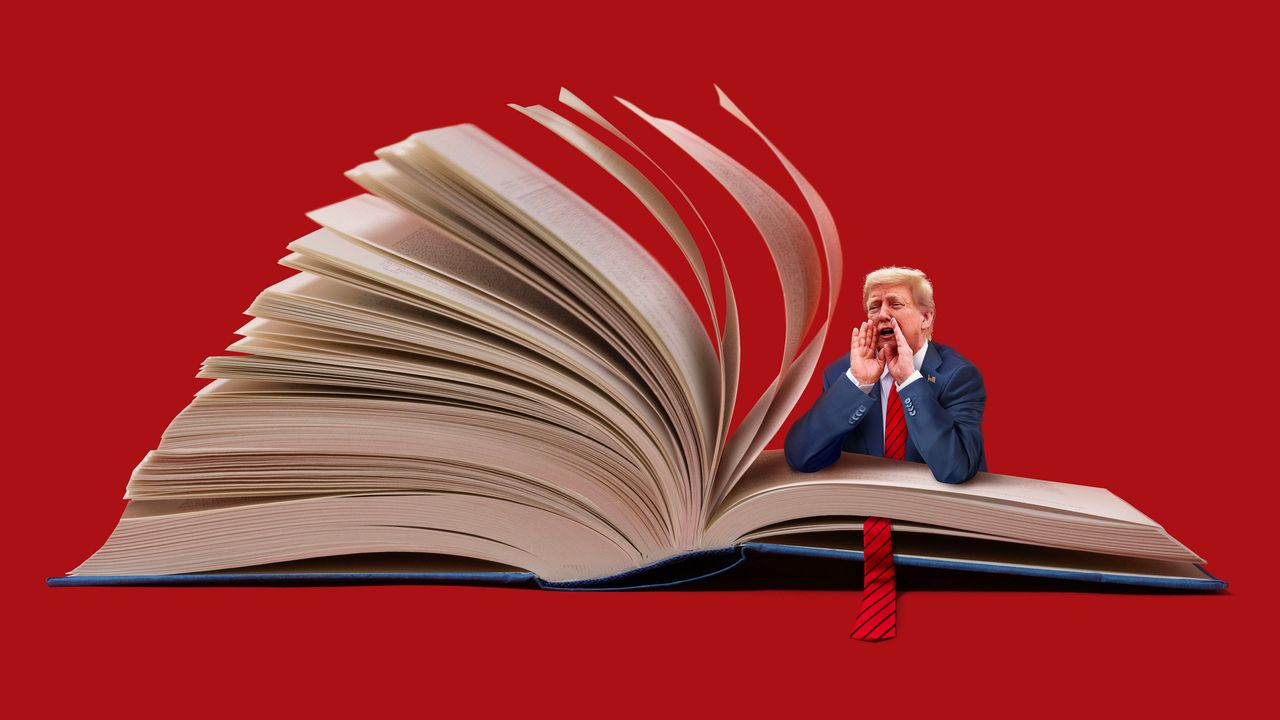
“All the King’s Men,” the best American political novel ever written, is generally read as a cautionary tale about how power poisons slowly, like arsenic, or cynicism. But it’s also a fable about history, and why, like poetry, it’s so hard to write it fast.
Robert Penn Warren’s 1946 novel is the story of the rise and fall of a Southern populist, the Louisiana governor Willie Stark—a fictional Huey Long (even if Warren downplayed the likeness)—as told by Stark’s wisecracking, anguished, Hamlet-y henchman, Jack Burden. Warren is the only writer to have won a Pulitzer Prize for fiction, for “All the King’s Men,” and another, or, rather, another two, for poetry. But he could have equally won a Pulitzer for history, not least because the American-history prizes are so often arbitrarily awarded. (After all, no one remembers James Phinney Baxter III’s “Scientists Against Time,” which won the Pulitzer for history the year of “All the King’s Men.”)
In the strange and mostly forgotten middle of Warren’s novel—a plot entirely left out of the 1949 film adaptation, which won three Academy Awards—Burden recounts his journey “into the enchantments of the past.” As a boy, he’d “read American history, not for school, not because I had to, but because I had, by accident, stepped through the thin, crackly crust of the present, and felt the first pull of the quicksand about my ankles.” Tripping into that quicksand is how Burden would one day end up doing Stark’s dreadful bidding: using his formidable research skills to discover the darkest deeds in the deepest past of Stark’s political enemies. But, as Warren insisted, “the story of Willie Stark and the story of Jack Burden are, in one sense, one story.” They’re in that quicksand together, up to their gizzards.
I’ve been stuck in that quicksand, too, for what feels like forever. But I first felt myself to be really sinking in dangerously deep only last year, when I tried to write a history of the age of Donald Trump. About ten years ago, I was trying to finish writing a very long book, “These Truths: A History of the United States.” I read and wrote chronologically. On my office floor I kept three stacks of books, each stack a different height, like a set of stairs, but always moving, like an escalator: books I’d read for the chapter I’d just finished writing, books I was reading for the chapter I was in the middle of writing, and books I’d need to read for the chapter I planned to write next. I got into a rhythm, a quick-footed three-step: read a stack of books, write a chapter, return a stack to the library, fetch the next stack; read a stack, write a chapter, return a stack to the library, fetch the next stack.