


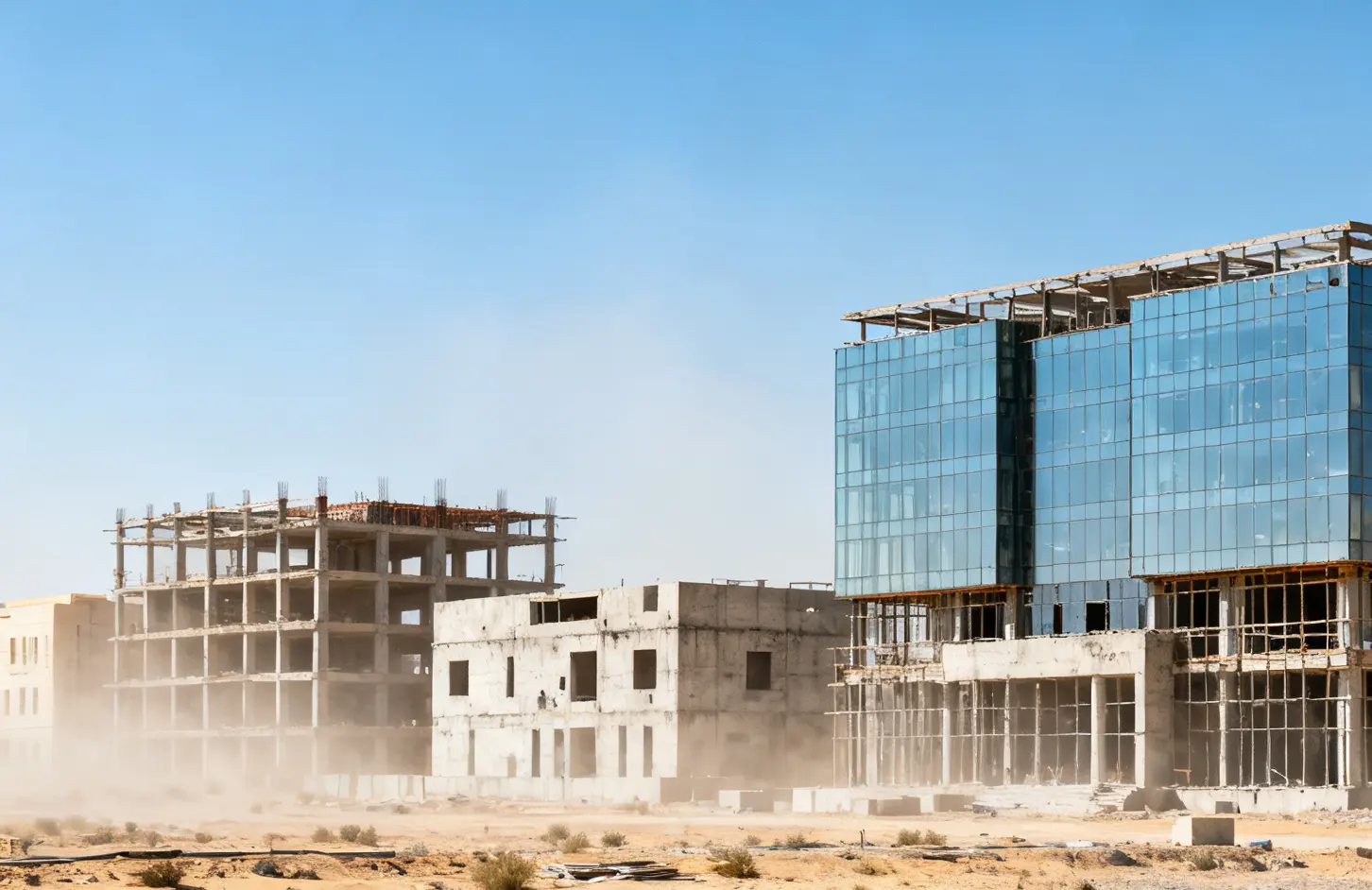
Saudi Arabia’s Vision 2030 initiative is channelling over $900 billion through the Public Investment Fund into real estate and infrastructure projects, marking one of the largest state-backed property development programmes globally.
The economic diversification strategy, launched to reduce the Kingdom’s dependence on oil revenues, has positioned real estate as a central pillar across residential, tourism, and industrial sectors. Projects span from NEOM’s 26,000 square kilometre development zone to urban regeneration in Riyadh and Jeddah.
Major developments underway
NEOM, the flagship project on the Red Sea coast, encompasses The Line—a proposed 170-kilometre linear city designed to house nine million residents—alongside Oxagon, a floating industrial complex, and Trojena, a mountain resort development. The project represents a test case for zero-carbon urban planning at scale.
In Riyadh, the Diriyah Gate Development involves a SAR 190 billion investment to transform the historic district into a cultural and residential quarter. The project includes luxury residential plots, hotels, and heritage sites designed in traditional Najdi architectural style.
Qiddiya City, located 45 kilometres from Riyadh, is being developed as an entertainment and sports destination targeting 40 million annual visitors. The mixed-use project combines theme parks, stadiums, and residential zones.
The Red Sea Project covers 28,000 square kilometres of coastline with plans for 50 resorts, 8,000 hotel rooms, and 1,300 residential units by 2030. The first phase opened in 2025 with properties operated by St. Regis and Ritz-Carlton Reserve, emphasising renewable energy and coral conservation measures.
Regulatory changes attract foreign capital
Legislative reforms under Vision 2030 have opened property ownership to foreign investors in designated zones. Buyers must register with the Ministry of Investment (MISA) and can acquire freehold or leasehold properties in approved developments.
The Premium Residency programme grants long-term or permanent residence to investors spending above SAR 4 million, providing property ownership rights, business registration, and family sponsorship. The Real Estate Transaction Tax was standardised at 5% in 2023, replacing multiple levies.
The Real Estate General Authority (REGA) and Wafi platform oversee developer licensing and escrow protections. Foreign investment inflows increased 30% year-on-year in 2026, according to Ministry of Investment data.
Mid-market housing expansion
ROSHN, a Public Investment Fund subsidiary, focuses on middle-income residential communities. Flagship projects include Sedra in Riyadh, Alarous in Jeddah, and developments in other urban centres. The company aims to support the government’s target of 70% homeownership among Saudi nationals by 2030.
The mid-segment market expansion addresses structural housing demand as economic diversification drives internal migration. ROSHN’s master-planned communities integrate schools, healthcare facilities, and retail centres.
Market projections and risks
Residential property values in Riyadh and Jeddah recorded 6-8% annual growth in 2026, with rental yields on serviced residences ranging between 4-6%. Analysts project prime coastal and capital locations could appreciate 25-35% from 2026 levels by 2030, coinciding with Expo 2030 Riyadh.
However, execution timelines for mega-projects remain uncertain. Secondary market liquidity is limited compared to established markets, and foreign investor education on regulatory frameworks is ongoing. Currency stability is maintained through the US dollar peg, though global capital flow shifts present external risks.
International hotel operators have signed management contracts across Vision 2030 projects, while warehouse and logistics developments are expanding near ports and economic zones. PropTech startups are entering the market to provide digital leasing platforms and property management systems.
Sustainability mandates
Vision 2030 requires ESG-compliant construction standards across government-backed projects. The Red Sea Project operates on 100% renewable energy, while NEOM incorporates hydrogen energy infrastructure. ROSHN developments employ solar shading and smart irrigation systems.
These sustainability requirements align with international investment fund criteria and are intended to enhance long-term asset values, according to government statements.
Regional comparison
Saudi Arabia’s property market development follows a trajectory similar to Dubai’s expansion in the 2000s, though at larger scale and with greater state coordination. The Kingdom’s central location between Africa, Europe, and Asia positions it as a potential logistics and corporate hub, while the absence of personal income and capital gains taxes provides fiscal advantages for investors.
By 2030, the government projects 100 million annual visitors and the creation of millions of jobs through the real estate sector. Market maturation, including the development of REITs and pension fund participation, is anticipated between 2031 and 2035 as international property technology firms expand into the region.
The success of Vision 2030’s real estate component will determine whether Saudi Arabia can establish itself as a diversified economy beyond energy exports, with property investment serving as both a funding mechanism and a measure of economic transformation.