


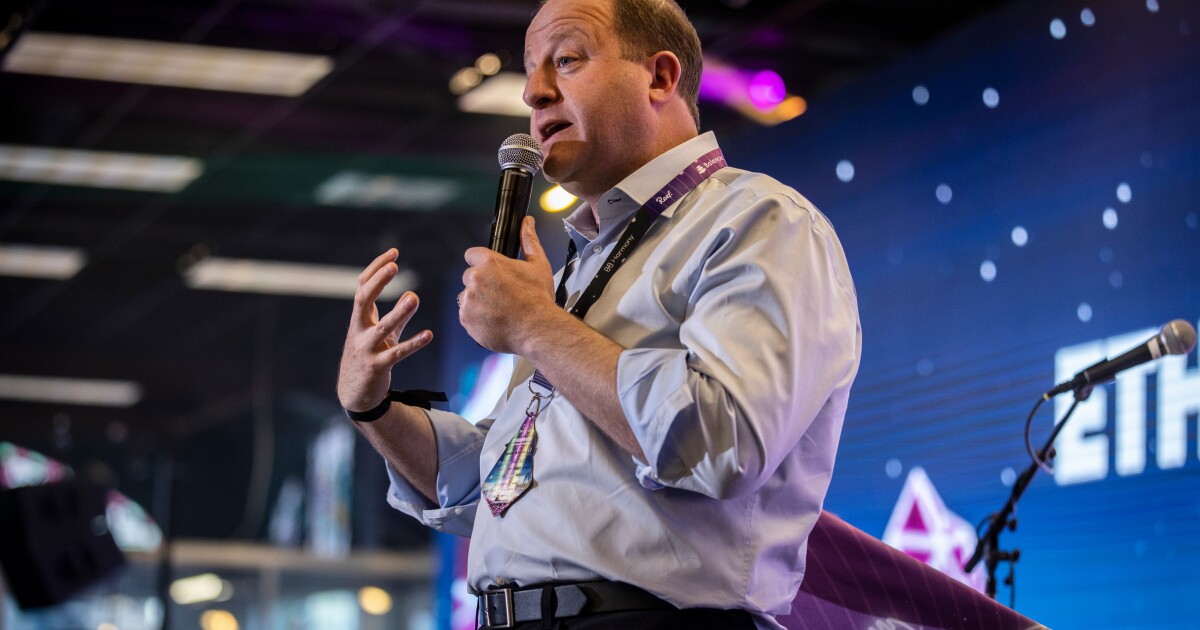
- Key insight: Colorado lawmakers approved a law that would ban the collection of swipe fees on taxes. If the law is signed by Democratic Gov. Jared Polis, the law would be the second passed by a state banning interchange on portions of transactions
- Supporting data: The measure passed by a 45 to 19 vote; a legal ruling on an Illinois law is expected in late June.
- Forward look: The measure could complicate banks’ ongoing legal fight over swipe fees in Illinois, as well as other states that move to pass such measures.
The Colorado House of Representatives passed a measure Wednesday banning banks from charging interchange fees on the sales tax component of transactions, sending the bill to Governor Jared Polis for his consideration.
Processing Content
The Colorado House passed the bill 45 to 19. A trade group for retailers celebrated the bipartisan bill’s passage and called for the governor to swiftly sign it into law. If enacted, it would be the second such law to be enacted in recent years, following a
“Legislators should be applauded for protecting Colorado consumers from some of the outrageous inflationary impacts of credit card swipe fees,” Merchants Payments Coalition Executive Committee member and National Association of Convenience Stores General Counsel Doug Kantor said. “There is no reason credit card companies should stomp on Colorado’s tax collectors by penalizing them with price-fixed swipe fees.”
“Other states should take notice and give their consumers and small businesses a break from the unaffordable swipe fees that are driving up the prices of nearly everything we buy,” Kantor continued.
An ongoing legal and regulatory battle over swipe fees, which merchants pay banks on every transaction involving a credit card, is quickly being complicated as a growing number of states concoct bans on interchange for certain portions of transactions like taxes and tips.
The Illinois Interchange Fee Prohibition Act, signed into law by Governor J.B. Pritzker in 2024, bars banks and their affiliated card networks from levying such fees on the state sales tax and gratuity portions of transactions, with state officials saying merchants should not be charged for processing nonrevenue.
Shortly after the law’s passage in 2024, the American Bankers Association, America’s Credit Unions, Illinois Bankers Association and Illinois Credit Union League sued Illinois Attorney General Kwame Raoul to block the measure, saying the rule is technically unworkable, acts as a price control and could cost issuers millions. The state has subsequently
Suspense has been growing over whether such state level bans will stand after the Office of the Comptroller of the Currency
“These fees, which include interchange fees, compensate these institutions for the costs of their participation, incentivize their provision of services and continued participation in the network, and enable enhancements, such as fraud detection and prevention, rewards programs, and technology upgrades,” the interim final
The Colorado law awaiting signature was crafted in a way that makes an OCC preemption harder to apply, merchant advocates say. The Colorado law, known as the “Swipe Fee Fairness and Consumer Safeguards Act” would prevent payment card networks from “conspiring to fix” interchange fees in coordination with credit card issuing banks, establishing predictable fee schedules and removing taxes from the portion of a transaction subject to swipe fees. The measure establishes regulations on card networks themselves, over which OCC has no jurisdiction.
“The structure of the Colorado legislation makes the OCC rules irrelevant,” Kantor said. “The OCC’s interpretation of federal banking law is wrong on law and policy. It’s time to stand up for Main Street and its consumers rather than giant credit card companies and Wall Street banks.”
Supporters of bans, including trade groups representing merchants, say lowering vendors’ interchange liability prevents networks from profiting off local taxes, keeps more money in the real economy and lowers costs for consumers. Opponents of the law
Plaintiffs in the challenge to the Illinois law, including the American Bankers Association, on Wednesday filed a supplementary brief with the 7th Circuit, arguing the OCC’s preemption determination reinforces their stance. Even without the OCC’s move last month, the banking groups say the Illinois law meets the standard for preemption because it “significantly interferes with” federal banking powers under the National Bank Act.
“National banks cannot exercise that power if card networks and other payment‑system participants face prohibitive penalties for their role,” they wrote. “The statute gives national banks the powers to take deposits and extend credit on personal security, which carry with them the powers to issue payment cards, process transactions, and receive interchange fees.”