


In their ongoing quest to crack down on tax avoidance by ultra-high-net-worth individuals, Democratic senators last week unveiled the Fair Trusts for Fiscal Responsibility Act of 2026 to close tax loopholes used by the wealthiest Americans to avoid paying taxes through complicated trust arrangements.
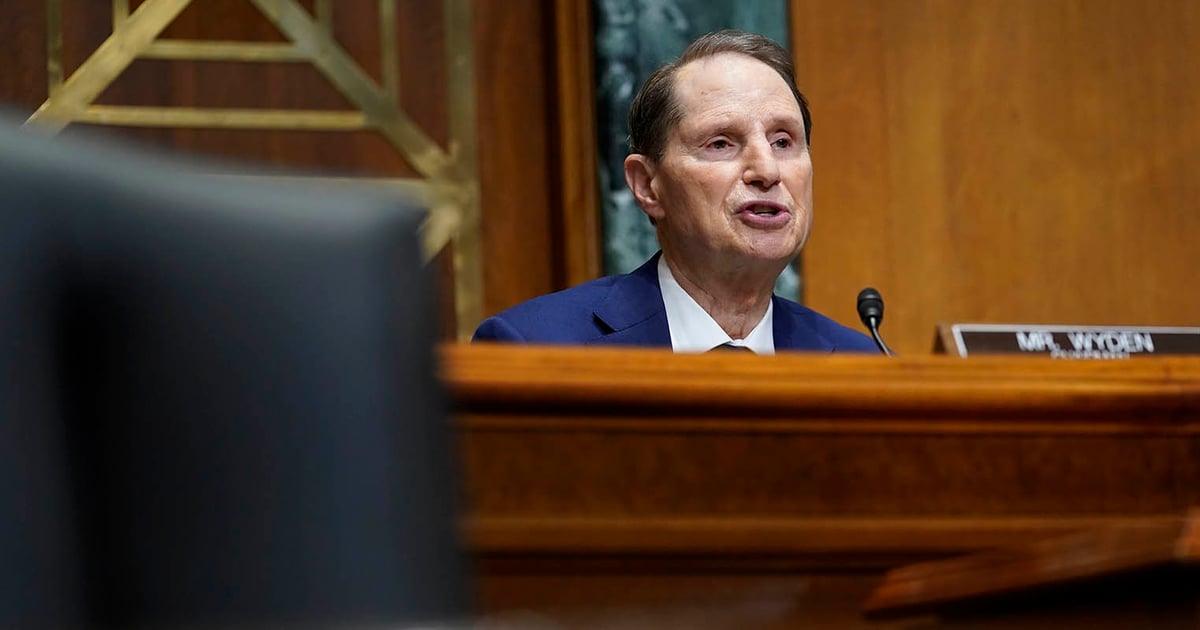
Democrats believe that, if passed, the bill could help the federal government raise revenue to be used for deficit reduction, as well as for other initiatives, including funding for health care and schools. “We cannot allow there to be ultra-wealthy dynasties in this country hoarding all the money and power for generations on end, and we cannot have a tax system that encourages it,” said U.S. Sen. Ron Wyden (D-Ore.).
A conservative estimate of a similar proposal indicates that the proposed bill could generate $675 billion over 10 years.
Is the bill essentially an antithesis to the large tax cuts for the wealthy that have been enacted by the current administration?
The Act
Proposed by U.S. Senator Patty Murray (D-Wa.) and co-led by Wyden, the act is designed to curb the use of large trusts by UHNW families to defer or avoid transfer taxes across generations. The bill doesn’t operate as a standalone “wealth tax.” Instead, it creates a new, progressive annual withholding on very large trust assets and then credits those withholdings against any estate tax ultimately due. The act targets the very purpose for which taxpayers use dynasty-style structures—to defer estate taxation indefinitely. In effect, for taxpayers who owe estate tax, it’s a timing shift—moving some tax payments forward.
Who Would Be Affected?
The practical reach of this legislation is to UHNW individuals who hold $50 million or more inside trust structures, including dynasty trusts, complex grantor trusts (such as grantor retained annuity trusts) and other vehicles associated with long-horizon transfer-tax strategies. This effectively targets the tools and strategies that estate planners have historically used in sophisticated trust planning to minimize or eliminate transfer taxes across multiple generations.
Charitable entities and ERISA-qualified benefit trusts are explicitly excluded from the withholding regime.
The bill establishes progressive annual rates on covered trust assets. Trusts will pay:
-
1% on assets between $50 million and $100 million,
-
1.5% on assets between $100 million and $250 million,
-
2% on assets between $250 million and $1 billion, and
-
3% on assets above $1 billion.
This tiered structure means that larger trusts face proportionally higher annual costs.
Under the act, annual withholding is fully creditable against future estate tax liability and is capped so that cumulative withholding can’t exceed the estate tax ultimately owed. The logic ensures that only taxpayers using trusts to avoid paying the estate tax are targeted. They simply prepay some of what they would owe later. The bill also adds reporting requirements for covered trusts and penalties for noncompliance.
A Sea Change
If passed, this bill would change the very nature of estate planning for UHNW individuals as we know it. Sophisticated estate plans often rely on long-duration trusts, sometimes in jurisdictions that allow perpetual or near-perpetual trusts, to keep appreciating assets outside the estate tax base across multiple generations. The core benefit being the ability to defer or avoid estate and generation-skipping transfer taxes for decades, allowing wealth to compound within trusts free from transfer tax “tollbooths” at generational transitions. These commonly used structures also enable individuals to use valuation discounts and other planning tools that lower the effective transfer-tax base.
Constitutional Challenges?
The proposal is framed as a withholding against future estate tax, not as a separate tax on wealth. The presence of a credit and cap is the key differentiator from a pure wealth tax. Unlike proposals for standalone annual wealth taxes on net worth, this legislation operates within the existing estate tax framework and is designed to accelerate the timing of payments rather than create an entirely new tax base.
While this approach may face fewer constitutional challenges than a pure wealth tax, legal questions about retroactive application to existing trusts and valuation methodologies will likely arise.