


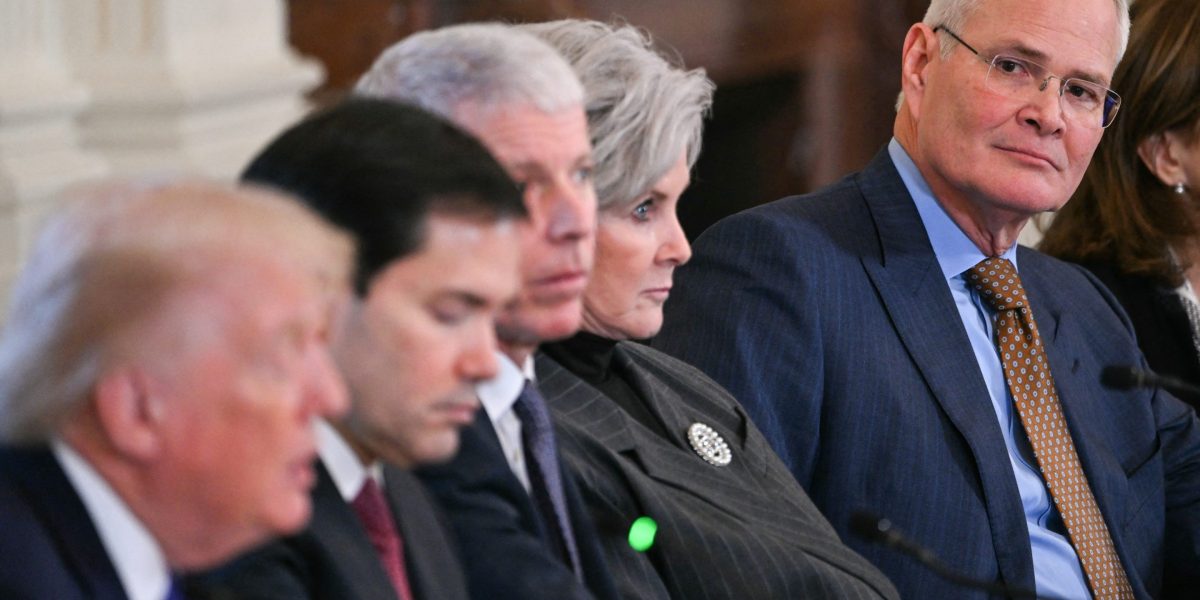
Exxon Mobil CEO Darren Woods predicted that crude oil and fuel prices will continue to surge higher in the weeks ahead if the Strait of Hormuz remains blockaded. Both Exxon and Chevron are projecting big profit gains in the ongoing second quarter because of higher prices, even with some of their Middle Eastern operations remaining disrupted.
Exxon and Chevron reported first-quarter profits on Friday that beat market expectations, but they both saw their net incomes dip precipitously year-over-year because of lower oil prices early in the year, poorly timed financial hedges, and operational woes in the Middle East and beyond. Chevron, for instance, had to recover from a major fire in January at its massive Kazakhstan operations.
Exxon CEO Woods said that oil prices—even above $100 per barrel—don’t come close to matching the “historically unprecedented disruption” of almost 20% of the world’s oil and liquefied natural gas (LNG) which flows through the Strait of Hormuz from the ongoing war in Iran.
“If you look at the unprecedented disruption in the world’s supply of oil and natural gas, the market hasn’t seen the full impact of that yet,” Woods said. “So there’s more to come if the strait remains closed.”
There were lots of waterborne deliveries already on their way during the first month or so of the war, so those volumes temporarily kept supplies coming. But those are gone now, and commercial and national inventories are being drawn down each day, Woods said.
Exxon and Chevron are not hiking spending plans and drilling activity to ramp up oil and gas production any further than planned—despite the White House’s pleas to pump more oil—but they are increasing the utilization of their oil refineries and petrochemical plants—including delaying planned maintenance—to take advantage of global supply shortages.
Chevron CEO Mike Wirth said it doesn’t make sense to enact long-term spending changes when so many question marks from the war remain.
“It’s early to have firm conclusions about how the energy system will change in the long term. I do think there will be changes,” Wirth said. “But we have to see how things play out over the coming weeks—hopefully not longer than that.”
Whenever the strait is fully reopened, Woods said it will take a couple of months to resume normal flows, excluding longer-term repairs needed to Qatar’s LNG operations, which are partially owned by Exxon.
“Whether or not a risk premium gets put into the market, I think, is a question that is yet to be answered,” Woods said of longer-term price hikes. A lot of that depends on how much control Iran has over the strait after the war, and how “uninterrupted” the strait remains once opened.
Both Exxon and Chevron are heavily involved in the Middle East, but the region makes up less than 5% of their global operations. Exxon’s refining and petrochemicals in Saudi Arabia are disrupted, as well as LNG in Qatar, and so is its oil production in the United Arab Emirates. With the UAE announcing plans to exit OPEC in order to produce more oil after the war, Woods said Exxon would follow suit to ramp up its activities in coordination with the UAE.
Likewise, Chevron’s oil production in Saudi Arabia and Kuwait remains disrupted, as are its petrochemical operations in Saudi Arabia and Qatar. But Chevron’s natural gas production offshore of Israel already has resumed normal flows.
Exxon reported a $4.18 billion quarterly profit, but that’s down 46% year-over-year. Chevron posted a $2.21 billion profit, down 37% year-over-year.
Exxon’s and Chevron’s stocks both fell about 1% on Friday, although their market caps remains near all-time highs. That’s $635 billion for Exxon, and $380 billion for Chevron.
From the Permian to Venezuela
Chevron is the only U.S. company churning out oil in Venezuela, but Wirth said he is holding off before investing more.
While Chevron is making incremental production hikes using existing cash flows, Wirth said he’ll wait to see how Venezuela’s continues tweaking its laws and regulatory reforms first. Progress is being made, he acknowledged.
But “there are still questions,” Wirth said. “We need to see further progress before we would put more capital to work”
Exxon, which left Venezuela after having its assets expropriated almost 20 years ago, is considering re-entering the country while taking a wait-and-see approach on the reforms. Exxon’s experience with the heavier grades of Canadian oil sands should translate nicely to the extra heavy and thick crude oil from Venezuela, Woods said.
Where Exxon and Chevron are taking different approaches is the still-booming Permian Basin in West Texas where they rank first and second in total production.
Exxon is churning out more than 1.7 million barrels of oil equivalent per day from the Permian—its largest base of production globally—while aiming to grow to 2.5 million barrels by 2030.
“We’ve had the pedal to the metal here from the very beginning. We are running full speed, unlike many of our competitors,” Woods said in an apparent nod to Chevron.
Chevron grew its Permian volumes to more than 1 million barrels of oil equivalent daily, but has now chosen to cut costs and keep its production steady to turn the Permian into a cheaper cash flow machine.
More spending might “dilute that focus,” Wirth said.
“It’s really steady as she goes,” he added.