



Highlights
- In 2026Q1, the median asking rent in Los Angeles County fell to $2,520—down $97, or 3.7%, from a year earlier—marking the lowest level since early 2022.
- The median asking rent for 0-2 bedrooms in L.A. county was $2,241, reflecting a decline of $135 (-5.7%) from the previous year. Meanwhile, rent for 3+ bedroom units dropped by $103 (-2.8%) compared to 2025Q1, reaching $3,585.
- The countywide trend masks broad city-level variation:
- Premium markets retreated: Beverly Hills down 9.3%, Malibu down 3.6%, and Santa Monica down 2.6%;
- Walkable, transit-connected cities like Pasadena (+5.8%), Long Beach (+2.4%), and Culver City (+0.2%) held firm or gained.
- Rent relief with trade-offs:
- Los Angeles’ newly reformed Rent Stabilization Ordinance caps annual increases at 4% for approximately 650,000 units, which covers about 74% of rental units in the city.
- This will mean long-term savings for existing tenants while potentially deepening the lock-in effect that already keeps 86.5% of Los Angeles renters in the same unit year over year.
In the first quarter of 2026, the median asking rent for all rental properties listed on Realtor.com in Los Angeles County was $2,520, a decline of $97, or 3.7%, compared with a year ago. While the county experienced a temporary dip in rents during the COVID-19 pandemic, asking rents quickly rebounded to pre-pandemic levels and peaked in summer 2022. Since then, a surge in new multifamily construction has put sustained downward pressure on the rent. In the most recent quarter, the median asking rent in Los Angeles County reached a four-year low: $298, or 10.6%, below its 2022 peak.
In addition, Los Angeles County renters are overwhelmingly local. In the first quarter of 2026, nearly two-thirds (60.6%) of online traffic to L.A. County rental listings originated from within the county, with an additional 18.9% coming from elsewhere in California. Out-of-state shoppers accounted for 16.6% of traffic, while international users represented a modest 3.8%.
Breaking down by bedroom type, the median asking rent for 0-2 bedroom units in Los Angeles County was $2,241 in 2026Q1, a decline of $135, or 5.7%, from a year ago. Larger units with three or more bedrooms saw a comparatively modest softening, with a median asking rent of $3,585—down $103, or 2.8%, year over year. The steeper rent decline among smaller units suggests renters in that segment are experiencing greater pricing relief. This trend may be partly explained by the surge in ADUs across Los Angeles County between 2022 and 2024. As those permitted units complete construction—typically requiring 6 to 18 months from permit to occupancy—a growing wave of new small rental units has been entering the market, adding downward price pressure concentrated in the smaller unit segment.
Figure 1: Rents by Unit Size in L.A. County, 2026Q1
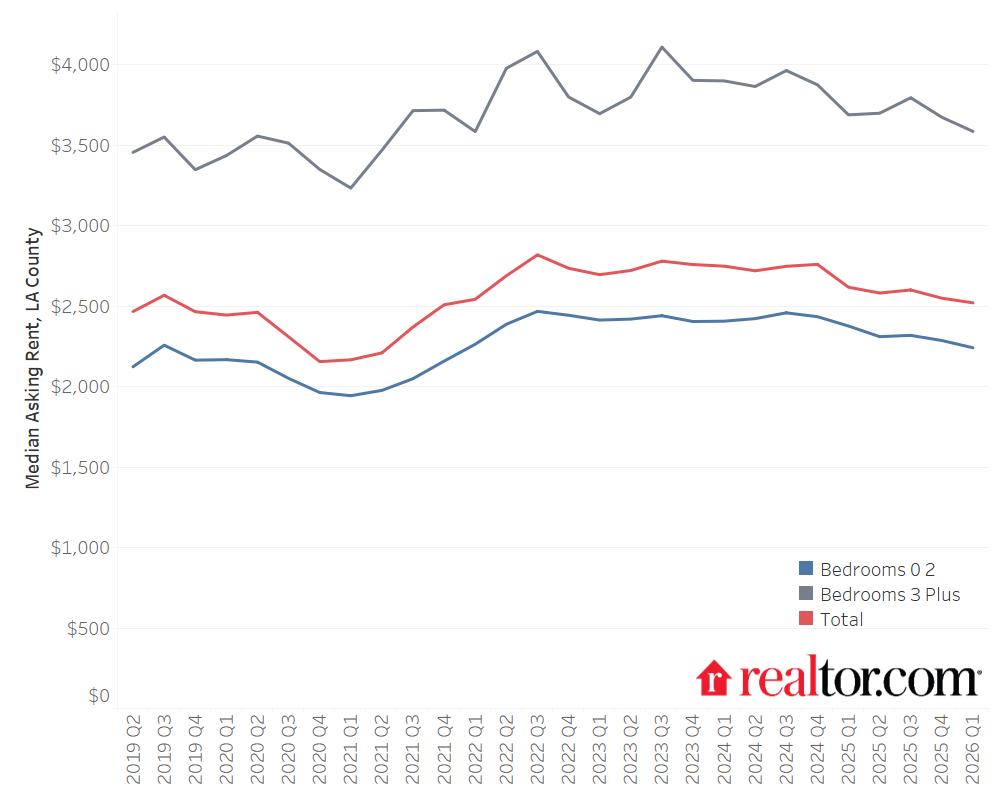
Table 1: L.A. County Rents by Unit Size, 2026Q1
| Unit Size | Median Asking Rent | Rent YoY | vs. Peak |
| Overall | $2,520 | -3.7% | -10.6% |
| 0-2 beds | $2,241 | -5.7% | -9.2% |
| 3+ beds | $3,585 | -2.8% | -12.2% |
City of Los Angeles: Relief from the peak, but still out of reach for many
In the first quarter of 2026, the median asking rent for rental properties listed on Realtor.com in the City of Los Angeles was $2,682, reflecting a decline of $96, or 3.5%, from a year earlier. Consistent with the broader L.A. County trend, city of Los Angeles rents have been on a downward trajectory since peaking in summer 2022. While the current median remains $117, or 4.6%, above pre-pandemic levels, renters today are saving $219 per month—or 7.5%—compared to the 2022 peak, translating to $2,628 in annual savings. Nevertheless, in order to afford a typical home in Los Angeles, a minimum annual income of $107,280 is required—20% higher than the city’s estimated median household income of $88,730.
In response to the city’s ongoing affordability challenges, Los Angeles enacted its most significant rent control reform in 40 years in December 2025, scheduled to take effect in July 2026. The updated Rent Stabilization Ordinance caps annual rent increases on approximately 650,000 rent-stabilized units at no more than 4%—down from a previous ceiling of 8%—covering roughly 74% of all rental units in the city. For the typical renter in an RSO-covered unit, the reform translates to meaningful long-term savings compared to what landlords could have charged under the old rules.
The financial benefit of existing rent controls is already evident. According to the American Community Survey, the median contract rent in Los Angeles was $1,804 in 2024—more than $1,000 below the median asking rent of $2,852 on Realtor.com. The gap reflects years of rent stabilization holding costs well below market rates for long-term tenants.
However, rent control involves a notable trade-off. Similar to the rent-freeze proposed in New York City, the protections that shield tenants from unaffordable rent increases can also reduce mobility—as households become reluctant to vacate below-market units, effectively locking them in place even when their housing needs change. According to the most recent American Community Survey, in 2024, 86.5% of renters in Los Angeles remained in the same unit they occupied one year ago, up from the 79% in 2010. For context, the national renter stay-in-place rate was 69.3% in 2010 and 78.4% in 2024.
With tenants staying put longer, fewer apartments would turn over, shrinking the already limited supply for new renters. This heightened scarcity is likely to push rents even higher for the rest of the rental market, fueling competition and bidding wars over an ever-smaller pool of available apartments. Over the longer term, the policy’s effect on new construction remains uncertain, particularly if expanded rent controls reduce developers’ incentives to build.
Premium markets retreat while transit-connected cities hold firm
Los Angeles County is home to some of the most coveted—and expensive—rental addresses in the country, anchored by a cluster of affluent independent cities along the Westside. Yet even these premium markets were not immune to the broader softening trend in the first quarter of 2026: Beverly Hills rents fell 9.3% year over year to $4,574, Malibu dropped 3.6% to $14,871, and Santa Monica declined 2.6% to $4,187.
In contrast, markets with walkable urban cores and strong transit access proved more resilient. Long Beach, Culver City, and Pasadena—all well-connected by Metro rail and anchored by major employers—posted gains or remained stable, with Pasadena leading at 5.8% to $2,823, Long Beach rising 2.4% to $2,624, and Culver City holding essentially flat at 0.2% to $2,821.
Methodology
L.A. rental data as of 2026Q1 for all units advertised for rent on Realtor.com®. Rental units include apartments as well as private rentals (condos, townhomes, single-family homes). We use rental sources that reliably report data each month within L.A. County. To calculate the median asking rent for each quarter, we first obtain the median asking rent for each month within that quarter and then take the average of the three months.