


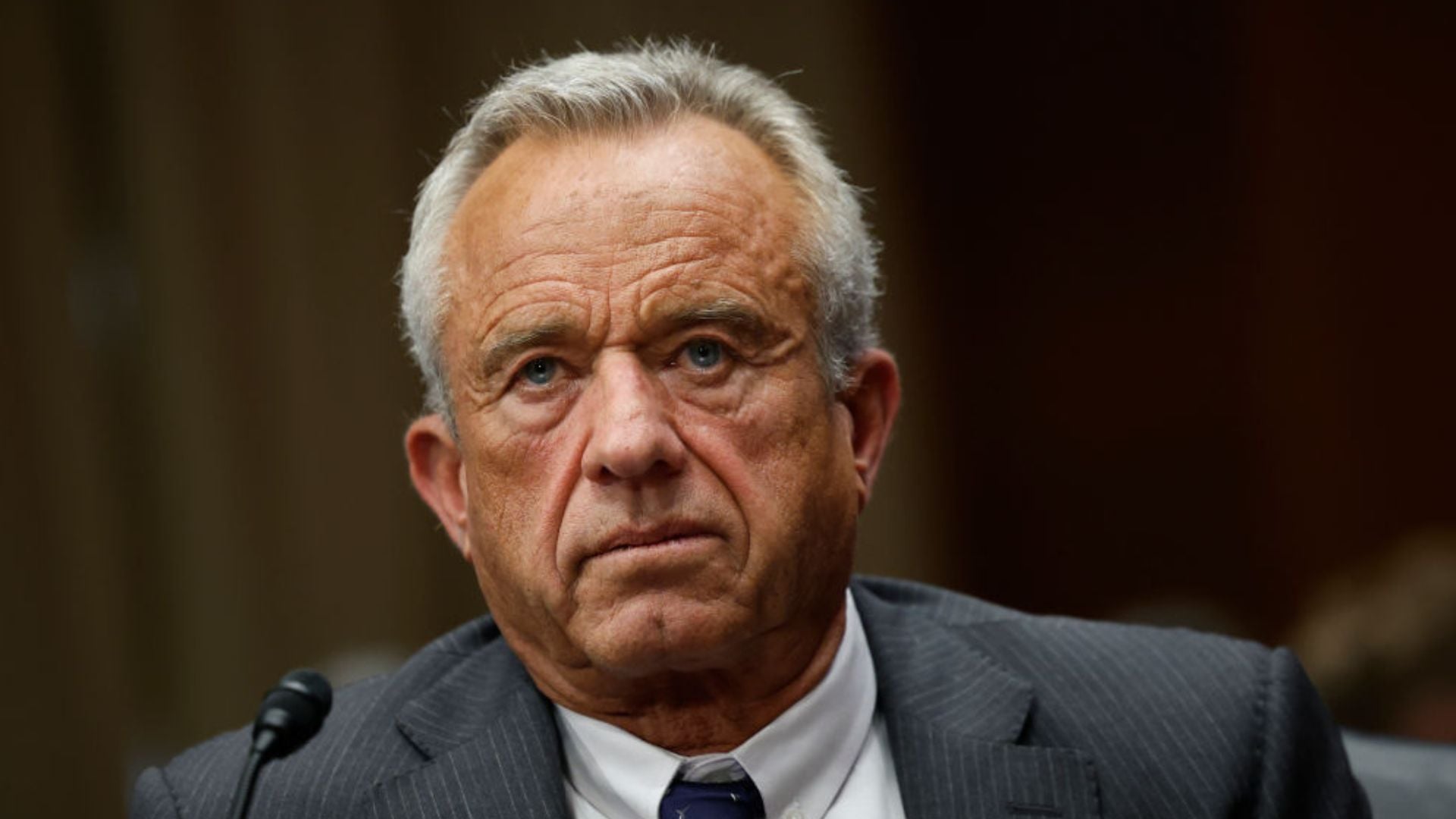
Editor’s note: See below for a timestamped breakdown of the Senate HELP committee’s questions for HHS Secretary Robert F. Kennedy Jr. during an April 21 hearing.
Updated 4:15 p.m.:
The Senate Committee on Health, Education Labor and Pensions committee hearing has adjourned.
It was the last in Kennedy’s hearing gauntlet this month.
Stick with Fierce Healthcare for future coverage on these congressional sessions.
Updated 4:06 p.m. ET:
Glyphosate became the topic of conversation again as Sen. Ed Markey, D-Mass., asked Kennedy whether he knew Bayer CEO Bill Anderson “met multiple times with the White House.” Bayer also owns Monsanto, which produces the Roundup, a brand of herbicide.
Kennedy denied knowing about the meetings.
“Well, you should have been aware. Mr. Secretary,” Markey said.
Markey went on to ask whether Kennedy was consulted before the administration filed a brief in support of Monsanto in the Monsanto Company v. Durnell case, which is set to go before the Supreme Court.
Kennedy said he was briefed and opposed it, to which Markey said whether he agrees with Trump in “trying to protect Monsanto” from lawsuits.
“I don’t think he’s trying to protect Monsanto,” Kennedy said. “I think he’s trying to protect the 80% of American farmers who are addicted to glyphosate and who will shut down the food supply if it suddenly disappears.”
Updated 3:55 p.m. ET:
Sen. John Hickenlooper, D-Colo., raised concerns about rising measles cases and the public health response. Colorado public officials have reported 13 cases of measles this year, and the state is on track to beat last year’s 36 cases, reported Colorado Public Radio.
Hickenlooper said responding to measles outbreaks and conducting contact tracing represents a significant cost to state and local public health departments.
“President Trump’s cuts to public health funding and health care coverage and research mean that there isn’t any money left. I think that we have to ask, where is the money going to come from to clean up all that cost to local government? As a former mayor, that’s something that concerns me. The healthcare system overall has seen about roughly $1 trillion in cuts and the budget next year shows further cuts. So how do you suggest that the local governments and state governments build back and find those resources?,” he asked Kennedy.
The HHS Secretary responded that the U.S. loses more people to chronic disease every year than measles. “We need to do two things at once, but we also need to do kind of adequate risk assessments. The big enemy of our country is chronic disease, killing 3 million of us a year,” Kennedy said.
Hickenlooper also questioned Kennedy about HHS’ decision to end mRNA vaccine work funded by the Biomedical Advanced Research and Development Authority (BARDA). That decision affects 22 projects valued at around $500 million collectively. Additionally, no new mRNA projects will be started.
A study found that an experimental, individualized therapeutic cancer vaccine that uses messenger RNA (mRNA) to treat pancreatic cancer showed promise, with lasting results in an early trial.
“This is exciting for the scientific research community and the promise of mRNA research,” Hickenlooper said about the study, “but we still feel hostility to mRNA technology and the termination of 22 projects with $500 million that had focused on mRNA. When you’re looking at cancer and canceling projects that are so promising for these certain types of cancer, aren’t you worried about throwing the baby out with the bath water?”
Kennedy responded that he thinks mRNA is promising technology for cancer vaccines. “I terminated the COVID vaccines because they didn’t make any sense. COVID is gone, and the mRNA vaccines have a limited efficacy against respiratory illnesses. With mRNA technology, it’s very, very promising in certain areas like pancreatic cancer.”
Updated 3:32 p.m. ET:
Sen. Alan Armstrong, R-Okla., asked Kennedy about the future in regards to drug approval and artificial intelligence.
“I just want to tell you, thanks for your commitment to bringing very significant reforms and a bold vision for the future,” Armstrong said. “…And to remind you how very important it is to make sure that we’re not forgetting about the rural areas and the tribal areas that so desperately need to be thought about when we think about health in our country.”
Kennedy said the U.S. Food and Drug Administration drives AI “into all of our functions,” citing a voluntary program that “90%” of people are using. “We’ve used it to dramatically shorten the approval time for drugs,” Kennedy said.
“AI is going to revolutionize medicine, and it may, at some day, at some point, make FDA even irrelevant,” Kennedy said.
Armstrong then touched on consolidation of departments and asked Kennedy about future operations.
“It was a target-rich environment for reorganization to streamline the agency and make it more efficient,” Kennedy said. “We’ve developed proposals for doing just that, and those proposals we are not going to do unilaterally. You’re going to submit them to Congress, and hopefully Congress will agree that’s a sensible way to reorganize.”
The committee then adjourned for a short recess.
Updated 3:20 p.m. ET:
Sen. Patty Murray, D-Wash., began by addressing a new Department of War policy announced April 21 that no longer mandates annual influenza vaccines.
Murray asked whether the CDC or any agency within HHS is planning to monitor localized flu outbreaks in the military as a result of the policy change.
Kennedy began by saying the military is fighting for Americans’ freedom and “they should have some freedom too” and began to touch on the flu shot being “often ineffective.” Murray said the question was in regards to whether flu outbreaks within the military will be monitored.
“I don’t know if there’s any program specifically for the military, but we definitely monitor flu outbreaks,” Kennedy said.
Murray then turned the attention to the administration canceling at least 17 maternal health grants, 58 grants for vaccine research, 59 grants for Alzheimer’s research and 108 cancer research grants.
“These are deadly issues,” Murray said. “They deserve serious research. I’m appalled that it was tossed in the shredder, and meanwhile, as I said, we’re shoveling money on war spending. So, I just want to be clear that the budget that was sent to us is not a MAGA budget, it’s not a MAHA budget. It is a war budget. No one can call it anything other than that.”
Updated 3:11 p.m. ET:
Sen. Tammy Baldwin, D-Wis., turned the conversation to healthcare affordability following the expiration of Affordable Care Act advanced subsidiaries.
Baldwin asked Kennedy how many Americans had lost health insurance through the ACA marketplace and what percentage of individuals were unable to afford premiums—citing Wall Street Journal reporting that 14% of enrollees lost or were unable to pay January premiums.
Baldwin also asked Kennedy how much overall enrollment is expected to decline.
“I know that the last time we looked at it, it was flat, except for the 1.5 million people who were cheating, 1.5 million who were committing fraud,” Kennedy said. “If you deduct that number, the enrollment was flat.”
Baldwin went on to ask how many Americans would lose coverage under HHS’ proposed changes to the ACA in 2027. “I can’t tell you the exact number,” Kennedy said.
“Two million Americans, Mr. Secretary,” Baldwin said.
Updated 3:03 p.m. EDT:
Sen. Lisa Blunt Rochester, D-Del., touched on the possibility of the U.S. losing its measles elimination status and asked if Kennedy had alerted Trump.
Kennedy said it is his job, not the president’s.
The Pan American Health Organization (PAHO) has pushed a review, initially scheduled for mid-April, until November 2026, prompting Blunt Rochester to ask whether HHS requested a delay. Kennedy denied requesting a delay.
Updated 2:46 p.m. ET
Sen. Maggie Hassan, D-N.H., asked Kennedy whether increasing grocery costs under the Trump administration has made it easier or harder for Americans to eat healthy foods.
“Families are facing historic prices at the register,” Hassan said.
The two briefly disagreed on the costs of food staples, like beef, which led Hassan to accuse Kennedy and the administration of being out of touch for not knowing such costs.
Hassan then turned her attention to glyphosate, which Kennedy has contended causes cancer. In February, Trump signed an executive order aimed at increasing supply of elemental phosphorus and glyphosate for national security and defense purposes.
Kennedy said the order is aimed to increase domestic production to offset production in China.
Updated 2:40 p.m. ET
Sen. Tim Kaine, D-Va., asked Kennedy who is responsible at HHS for monitoring hospitals that have closed as a result of the reconciliation bill.
Kennedy said Centers for Medicare and Medicaid Services (CMS) Administrator Mehmet Oz, M.D., better known as Dr. Oz, is in charge.
“He’s ultimately responsible,” Kennedy said.
Sanders pressed Kennedy on claims in his book “The Real Anthony Fauci: Bill Gates, Big Pharma and the Global War on Democracy on Public Health” and how long it would take HHS to put “strong warning labels” on unhealthy foods and beverages.
Kennedy said the agency defined what ultra processed food was earlier this month, adding that it is now in the “interagency process.” “As soon as it comes back to us, we’re going to do the labels,” Kennedy said.
Sanders went on to reference Casey Means, Trump’s nominee for Surgeon General, supporting a ban of “junk food heirs” in the U.S.
“I would support that,” Kennedy said. “The only hesitation was we tried to do a smoking ban on TV, and tobacco companies voluntarily came to the table. So, which was a good thing, and I think the same arguments apply for junk food.”
Cassidy asked whether Trump’s nominee for CDC director, Erica Schwartz, M.D., would be able to make decisions independent of political appointees or reassign them.
“Your characterization of the political appointees is wrong,” Kennedy said. “And the CDC director has that power now.”
Cassidy then asked Kennedy what steps the department is taking to address any measles outbreaks that may arise from increased tourism as the U.S. hosts the World Cup over the summer.
“We are laser-focused on that,” Kennedy said. “We have booths, testing booths and institutions all over the games.
Department of Health and Human Services (HHS) Secretary Robert F. Kennedy Jr. is in front of the Senate Committee on Health, Education, Labor and Pensions, the latest in his string of appearances before congressional committees.
So far, Kennedy has faced questions on the affordability of healthcare, vaccine policies, deals with drug companies, cuts to federal health programs and leadership gaps at his agencies. The Senate HELP Committee is poised to be among his most grueling appearance with several members deeply invested in healthcare reform and many, including key Republicans, who have flatly criticized his actions since being confirmed.
Committee Chair Sen. Bill Cassidy, M.D., R-La., perhaps the most consequential of those critical Republicans, kicked off the hearing. In an opening statement, he focused on healthcare affordability and giving power back to patients.
“I look forward to hearing how this administration’s proposed budget makes the patient the one in charge,” Cassidy said.
Moreover, Cassidy touched on protecting the “most vulnerable” patients in regards to abortion. “Protecting women from the danger of chemical abortion drugs is a step we can take right now to protect life,” he said.
“We need a willing partner to stand up for life, Mr. Secretary, and you have said every abortion is a tragedy,” Cassidy added. “I would say it’s time to stop stalling and the safety study for abortion drugs.”
Sen. Bernie Sanders, I-Vermont, responded to Cassidy’s claims and said “a strong majority of the American people believe that it’s women who have the right to control their own lives,” not the U.S. government. “I happen to believe that is where we should be going as a nation of the choice of women, not the government,” Sanders said.
Sanders went on to call the American healthcare system “broken.”
“People understand that there is something fundamentally wrong when we are spending twice as much per capita in healthcare as the people of any other nation,” he said. “And yet, 85 million Americans are uninsured or underinsured who pay the highest prices in the world for prescription drugs.”
Sanders went on to slam recent actions from HHS and the U.S. Centers for Disease Control and Prevention (CDC) under Kennedy’s watch, including publishing information that childhood vaccines cause autism and new scrutiny of the measles vaccine’s safety.
In his opening comments, Kennedy said the nation stands “at a generational turning point.”
“Our children are the sickest generation in modern history, and decades of failed policies, captured agencies and profit-driven systems caused it,” Kennedy said. “Parents across the country demanded change, and we are delivering it.”
Kennedy touched on administration efforts to bring transparency to healthcare pricing, cut down on waste, reverse chronic diseases, issue new dietary guidelines and the $50 billion Rural Health Transformation fund.
Kennedy has also made appearances before the House Ways and Means Committee, House Appropriations Committee and the Senate Finance Committee. Earlier this month, the White House pitched a 12.5% budget cut for HHS, putting a focus on its plan to reorganize the agency.