


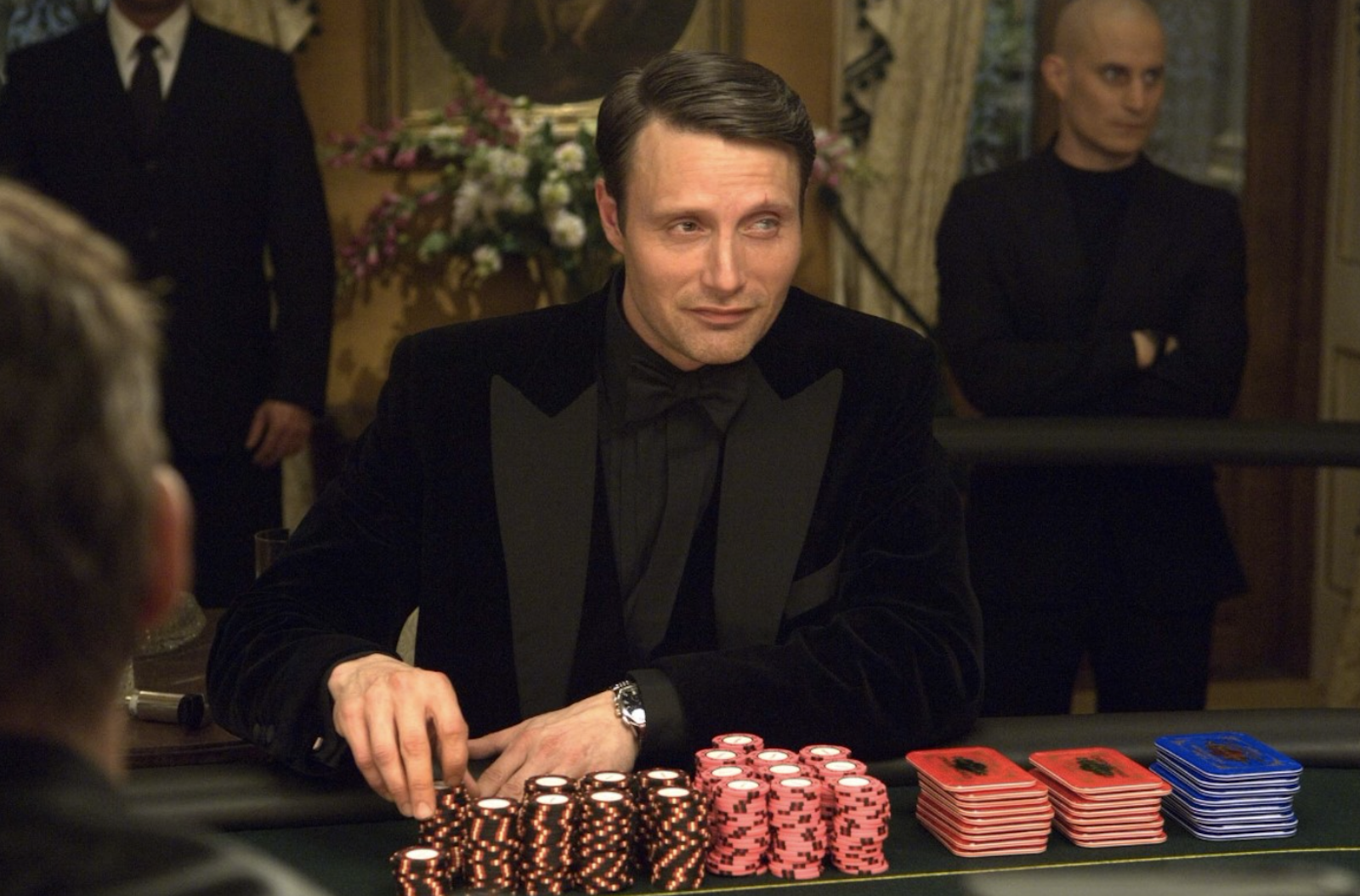
Crypto casinos do not look like the casino movies we grew up on. There is no pit boss leaning over a velvet table, no cigarette smoke curling under a security camera, no desperate gambler sweating through one final hand while the room goes silent.
The drama has moved somewhere colder.
It now lives inside wallet addresses, QR codes, withdrawal queues, provably fair hashes, KYC prompts, and the nervous little pause between clicking “cash out” and seeing whether the system behaves. For readers who want the practical side of how crypto casinos actually work — from operators and supported coins to bonuses, payout speeds, and payment trade-offs — the next step is to learn more before looking at what this does to the movies.
Because cinema has a problem. The casino no longer has to be a room.
The Old Casino Movie Needed Bodies
Classic casino cinema understood physical space. The casino floor was not just a setting; it was the monster.
In Casino, the room is alive with hierarchy. Dealers, bosses, hustlers, tourists, cheats, security teams, and money men all orbit the tables. Every glance matters. Every comped drink is part of the machine. The building itself feels like a living organism that knows more than the people inside it.
That is why the old gambling movie had such a dependable grammar. Chips meant commitment. Cards meant fate. The roulette wheel meant surrender. The cash cage meant consequence.
Film Threat has already explored how the modern casino story is becoming less about luck and more about control in The New Casino Film Isn’t About Luck – It’s About Control. That is the key shift. Once the casino becomes software, the old symbols stop doing all the work.
A character no longer has to walk through neon doors to enter the system. They just unlock a wallet.
The New Casino Drama Is an Interface
The most cinematic thing about a crypto casino is not the slot animation or the live-dealer feed. It is the interface.
That sounds boring until you think about how much modern suspense already comes from screens. A bank app freezing. A rideshare driver taking the wrong turn. A password failing at exactly the wrong moment. A phone battery hitting 1 percent while the whole plot depends on one final message.
Crypto gambling fits that same language.
The wallet connection is the new entrance shot. The blockchain confirmation is the new ticking clock. The withdrawal screen is the new showdown. Instead of asking whether the dealer is crooked, the character asks whether the platform is honest, whether the transaction is final, whether the rules are visible, and whether the system can be trusted.
That is also where regulation enters the story. The UK Gambling Commission treats crypto-assets as a serious licensing and anti-money-laundering issue, especially around source of funds, customer identification, volatility, and payment-risk controls. In film terms, that is not paperwork. That is plot.
A casino movie used to ask, “Can this person beat the house?”
The crypto-era version asks, “Who built the house, where is the money, and can anyone prove the rules are real?”

“Provably Fair” Is Not Sexy — Until It Is
No one goes to the movies to watch someone read a hash.
Still, provably fair gaming might be one of the most interesting storytelling tools modern gambling has handed filmmakers. The phrase refers to systems that let users check the fairness of certain game outcomes through cryptographic proof. That does not make gambling safe, profitable, or risk-free. It does, however, change the emotional contract.
In an old casino movie, suspicion is visual. A loaded die. A marked card. A dealer with a tell. A surveillance room full of men who already know the ending.
In a crypto casino story, suspicion is mathematical. The audience may not understand the code, but they understand the anxiety of trusting something they cannot fully see. Bitcoin, Ethereum, Tether, MetaMask, smart contracts, seed phrases, and blockchain ledgers all carry their own cinematic charge because they are both transparent and alien.
That contradiction is useful.
The system can be public and still feel unknowable. The rules can be visible and still feel intimidating. The proof can exist and still fail emotionally if the user cannot read it. That is a very modern kind of dread.
The Gambler Has Become a User
The great gambling antihero used to be physical. He leaned into the table. He watched faces. He believed, wrongly or rightly, that nerve could bend probability.
The crypto-era gambler is different. He is not only playing the game. He is managing accounts, addresses, limits, networks, volatility, bonuses, and platform terms. He is not just betting against chance. He is navigating design.
That makes him closer to a hacker than a pool shark.
This is why the old poker-movie fantasy feels increasingly detached from online play. Film Threat’s breakdown of the difference between movie poker and online poker gets at the same idea: the screen version loves the big moment, while the online version is built around repetition, systems, and pattern recognition.
Crypto gambling pushes that further. The player’s “read” is no longer just about an opponent. It is about the entire stack.
Is the casino licensed by a real authority?
Does it use meaningful KYC checks?
Are the wagering requirements readable?
Does it support Bitcoin only, or also Litecoin, Ethereum, USDT, and other coins?
Are withdrawals actually fast, or merely advertised that way?
That is not as instantly iconic as tossing chips into the pot. But it is closer to how risk feels now.
What Filmmakers Should Steal From Crypto Casinos
The obvious mistake would be to make a crypto casino movie that is just a laptop thriller with slot sounds.
The better move is to treat the platform like a location.
A strong director could make the interface feel like production design. A clean dashboard might suggest confidence, or it might suggest predation. A delayed transaction could feel like a locked door. A confusing bonus page could play like a legal trap. A wallet signature could become the digital equivalent of crossing a casino threshold.
There are at least three cinematic possibilities here:
- The withdrawal as suspense: not “will the card land?” but “will the money arrive?”
- The ledger as evidence: a blockchain trail that reveals more than the characters want known.
- The interface as villain: not an evil dealer, but a system designed to keep the user moving, clicking, chasing, and misunderstanding.
That last point matters most. The scariest casino stories were never really about gambling. They were about architecture. A place built to make people behave badly while convincing them they were still in control.
Crypto casinos have simply made the architecture invisible.

Frequently Asked Questions
Why are crypto casinos relevant to film culture?
Crypto casinos matter to film culture because they change the visual language of gambling. Traditional casino movies relied on rooms, tables, chips, and human tension. Digital gambling shifts that drama into interfaces, payments, identity checks, and trust systems, giving filmmakers a new way to portray risk and control.
Are crypto casinos safer than traditional online casinos?
Not automatically. Crypto payments can be fast and transparent, but they also introduce volatility, wallet-security issues, and regulatory questions. A safer platform is usually one with clear licensing, readable terms, responsible gambling tools, fair-game verification, and transparent withdrawal rules. Crypto alone does not make a casino trustworthy.
What does “provably fair” mean in crypto gambling?
Provably fair usually means a game uses cryptographic methods that allow players to verify whether an outcome was generated fairly. It can improve transparency, especially in blockchain-based games, but it does not remove gambling risk. Players still need to understand house edge, wagering terms, and bankroll limits.
What do movies usually get wrong about online gambling?
Movies often compress gambling into one dramatic decision: the final hand, the perfect bluff, or the impossible win. Online gambling is usually more repetitive and systems-driven. The real tension often comes from pacing, platform design, payment friction, bonus terms, and whether the user understands the environment.
The Next Casino Movie Needs a Better Machine
The casino movie is not dead. It is just waiting for filmmakers to stop treating digital gambling like a prop and start treating it like a world.
Crypto casinos give the genre a new machine: faster, colder, cleaner, more transparent in theory, and more confusing in practice. That machine can create suspense if filmmakers understand where the pressure now lives. Not under the table. Not behind the dealer’s eyes. Inside the interface.
Gambling involves risk. Please play responsibly and only wager what you can afford to lose. If you feel gambling is becoming a problem, visit BeGambleAware.org or call 1-800-GAMBLER.