


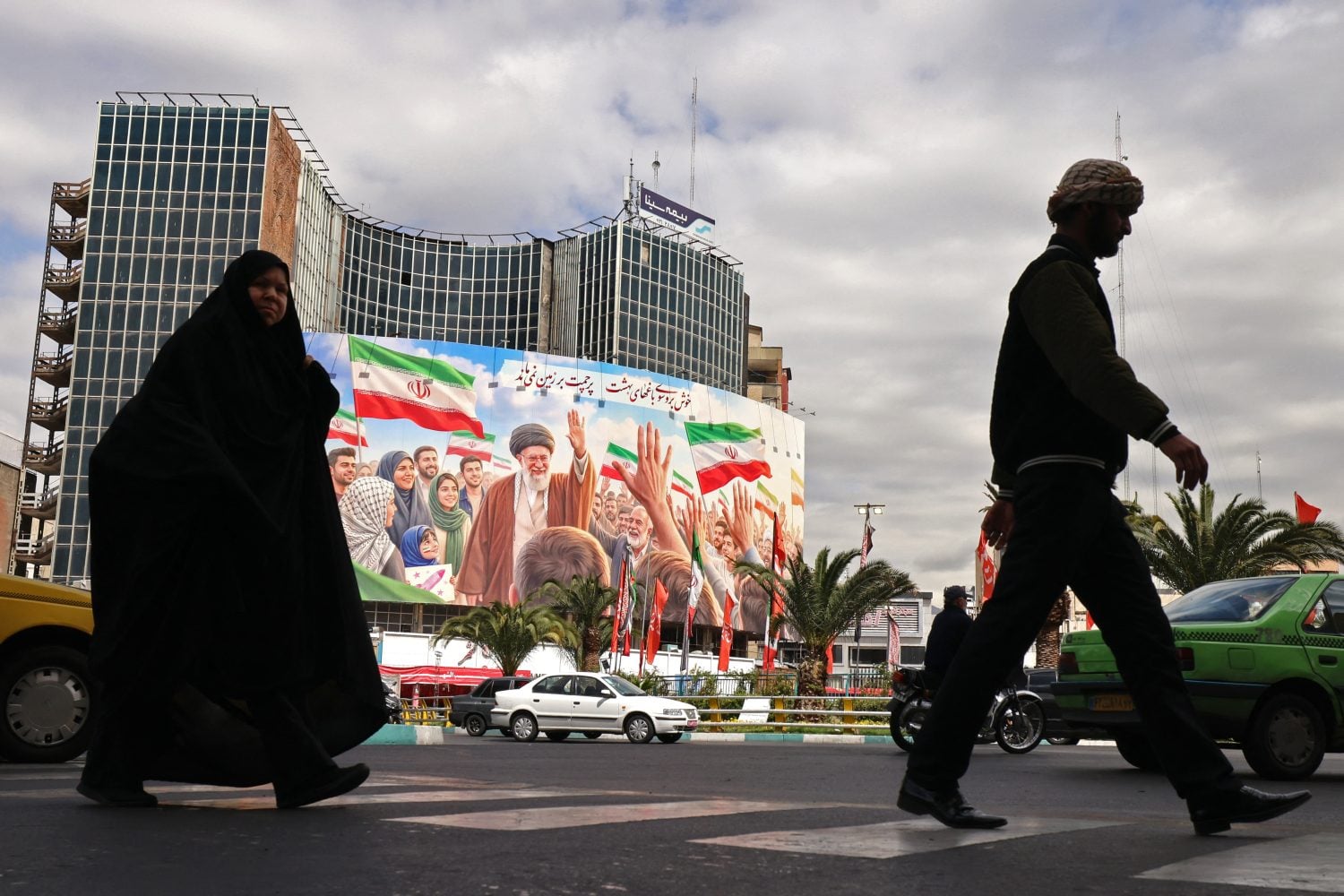
While the conflict in Iran has dominated headlines in the last two months, accounts of ordinary life in the Islamic Republic are scarce. On the latest episode of FP Live, I spoke to the reporter Ali Hashem, who spent six weeks in Tehran during the ongoing war and has previously lived in Iran. Hashem currently works for the Qatari broadcaster Al Jazeera but has been visiting Iran for nearly two decades as a correspondent for the BBC and regional media.
According to Hashem, life in the capital, Tehran, looks more normal than one might imagine. Shops and malls are largely open, and regular people seem to be rallying around the flag in the face of an external threat. And while the internet as we know it is shut down, a local intranet of sorts—with access to local versions of Netflix, Uber, and WhatsApp—is allowing people a semblance of regular life.
Subscribers can watch the full interview on the video box atop this page or download the FP Live podcast. What follows here is a lightly edited and condensed transcript.
Ravi Agrawal: Ali, you spent six weeks in Tehran while the war was going on. You’re out now. Talk a little bit about what that was like. What were you seeing around you?
Ali Hashem: Life in Tehran seemed to be normalizing to the situation of war. That gives you an indication that the system and the people were taking into consideration that this could be a long war—something that could be compared, for example, to the 1980-1988 Iran-Iraq War, where the Iraqi army struck positions and targets in Tehran on a daily basis. And so people have to get back to their lives. What I saw during the 50 days of my stay in Iran was an attempt by the people, the state, and the whole society to normalize the situation.
I arrived in Tehran 10 days after the war began, in which time many people left and returned back to the capital. By then it was clear which neighborhoods were being hit on a daily basis. Many people took precautions and left for other neighborhoods, or at least slept in other places at night. Many friends took their families to the north while they stayed in Tehran to continue their work and daily commitments.
So if I’m to describe life in Tehran during those days, it was close to normal. You can see some restaurants open, some shops open, some malls partially open. Contrary to the 12-day war, which saw Tehran almost empty, people were in the streets.
RA: I have to say, everything you’re saying surprises me. Weren’t people scared to be out?
AH: The issue here is that there is a very striking contrast between my visit in February to Tehran and my visit in March. In February, I went just days after the end of the protests, where there were at least 3,500 people killed, according to numbers from the Iranian government. According to opposition numbers, the numbers were doubled. According to [U.S.] President [Donald] Trump, maybe 40,000 people were killed. The mood in the streets before the war was completely different. We heard a lot from people—and actually we were even concerned by the amount of boldness some people had—who were talking openly about waiting for that war. I’m not saying that’s a majority, but there was a portion of society in Tehran that was anticipating this war and waiting for a solution.
RA: I have to ask, Ali, most journalists who are not Iranian don’t get visas to go to Iran. It’s very, very hard to get in. I can’t go in. You’ve been going in and out as a reporter with Al Jazeera. What kind of access did you have? Did you have government officials following you around? Do you think you got an accurate picture of what life was like on the ground?
AH: Al Jazeera has a bureau there. BBC went there. I think Lyse Doucet was there a few days ago. Also, a CNN reporter was there. Channel 4 was there. So there are quite a few international journalists.
RA: But many times, those are under set conditions.
AH: For us, there is no one with us. We go around. But at the same time, it’s also how people deal with this situation. Especially after the protests, people might deal with a bit of caution, but they were not cautious. That’s why I’m telling you I felt concerned for the people and the way they were expressing themselves before the war, because it was clear that there was a very deep rift between sectors of society and the system in Iran. That rift was reflected in the protests.
When we left and came back for the war, something different was there. Even some people who were anti-establishment, anti-regime, anti-government were expressing in a different way their points of view. I’m not saying everyone was like that, but many people I know were reflecting in a different way: “This is a war, and right now we need to concentrate on war, on how to defend our country.”
RA: What you’re suggesting seems to be what analysts have said would be a rally-around-the-flag effect were Iran to be attacked by an external power. Is that what’s happened?
AH: Absolutely. This is part of what we saw. I cannot generalize. But I can say at least from what I saw, many people decided that it’s time to stand by their country, regardless of their point of view toward the system. They would say that whenever there is no war, we can protest the system. But when there is a war, when there are bombs falling on the country, when there are enemies standing on the borders, then we have to be with our country.
I’ve been covering wars for the past 20 years from Lebanon to Russia to Somalia, Gaza, Libya, wherever. Until this war, I’ve never seen people under bombardment in the squares with their children—women, children, men. This phenomenon wasn’t just happening one day, another day, then there’s nothing. Every day, even if you’re passing by the squares at 4 o’clock in the morning, 3 o’clock in the morning, you’ll see them.
RA: But explain that to me: Why would you take your children to the square when you know that that square could be under attack? That does not make sense to me.
AH: This is how they were reflecting on it: “We need to be here to show that we are together, we are in solidarity with our nation, this our duty to do, and we are gonna do it.” As I was telling you, this was unprecedented for me. I did not see this in other countries.
As I have been writing for FP, this is not just related to the war. This is also related in one way or another to showing the strength of the system. It’s not completely voluntary and it’s not completely managed. It’s somewhere in the middle. The system is allowing those people to come there, providing all the infrastructure for their rallies. At the same time, these people want to be there. The more there are attacks on the country, the more there is a feeling of existential threat to the state, especially, for example, when Trump said he could not guarantee that the map of Iran will look the same—this had a very huge impact on people. Many people went to the streets to express their reaction. Also, when there were attacks on civilians, when Trump said he is going to wipe out Iranian civilization—these were big days in major squares in Iran. Not only in Tehran, in several cities. People gathered there and would show this feeling of resilience and defiance at the same time.
RA: What do Iranians think about Donald Trump?
AH: In general, the way Donald Trump is dealing with Iran is a bit provocative to normal Iranians because these people are proud. Regardless of whether they’re with the system or against the system, even when they are challenging their own government or regime or establishment, they’re very proud. So the moment they see someone talking with them this way, they feel intimidated and at the same time very provoked. This adds to the feeling of defiance and resilience.
RA: And what impact does this have on the regime? When they see their people support the system, might that change how they treat them?
AH: This is, I think, the same question that was asked in 2025, because people also, in one way or another, rallied around the flag. The only different aspect here is that there’s a supreme leader that was killed during this war. I think there is a new, let me say, administration leading the country. We’ll have to wait and see if they are going to derive conclusions out of this moment because the backbone of any system is its people. If you’re not going to preserve your people, if we are not going to preserve moments like this, it’s not going to be repeated.
RA: Can I just push back a little bit, Ali? What you’re saying makes sense, but this is not a normal government. This is a government that is brutal, that is incredibly repressive, that cracked down on protests earlier this year and killed many thousands of people, that has done so before, that will do so again. So it’s not as if this is a government that purely has the interests of its people at heart. It is also primarily focused on its own survival, as it has for the better part of five decades.
AH: In Iran, you have the government, the system, and Iran as a country. For the system and the government, this is a definite moment. If they are not going to build on what happened in the past few weeks and come out with a new social and political contract with their people, this is probably one of the last few chances for the Islamic Republic, because they’ve taken a lot of chances in the past. I think that things have been changing in the country. The way we see social freedoms in the past few months have been changing. After the Mahsa Amini protests, we’ve seen more easing on social freedoms, less—
RA: These were the protests over women’s rights and the issue of the headscarf.
AH: Yes, but problems in Iran are not limited to the headscarf issue. The headscarf was a symbol for several other problems under this umbrella, including the gap between the system and the youth, the gap of narrative, the identity gap—plus the economic and political issues. Political representation, economic hardship, and sanctions come second to the gap between the system and the people, because if these gaps are not bridged, then even if there are political and economic reforms, that gap is still there. There is a sector in this society that lives in a bubble and is not interested in participating. That was the situation in Iran. Before and after the Mahsa Amini protests, many youth didn’t really care about what was going on between the politicians.
RA: But I struggle to understand this, because again, my reading of Tehran is that there’s this massive water crisis that has been brewing for decades now but really has been coming to a head in the last year or two. It’s just very hard for Iranians to get regular drinking water and supplies. And then you add to that the economic pressures that they are no doubt facing, and that will continue to get worse the longer the blockade of the Strait of Hormuz continues. At some point, don’t the people then turn around and say, well, our government is bringing this on us?
AH: For now, the feeling is that there is an existential threat to the nation. It’s not about the government or the country, it is about the nation. But the moment things change, if there are no solutions, then we will probably see the street open once again. This is one of the main reasons why the Islamic Republic wants a complete, comprehensive deal. It doesn’t want to end this with a cease-fire. It doesn’t want to return to the status quo before the war, because that will mean deeper economic problems and more and more reasons for people to rise.
RA: I want to ask you about the internet, because it’s been shut down now for many months. And many countries do this, by the way, they shut down the internet to prevent people from finding ways to organize, to launch protests, demonstrations, to share information, to get imagery and video out into the wider world. This is common in governments around the world. But in Iran, the internet shutdown was seen as particularly draconian because it was complete and national, not just localized. But when you and I were speaking before this, you mentioned that, in fact, Iranians can communicate, and that they use some version of an internal intranet of sorts, a gated internet that allows them to shop and hail cabs and get deliveries. Talk a little bit about what that’s like.
AH: This is how they explain it: The international internet is shut down; the internal internet is on.
RA: So they can’t use, for example, Google. They can’t go to Foreign Policy’s website. But there are things that are domestic and local that they can access.
AH: Well, sometimes Google opens; sometimes you have access to Gmail. It’s selective, in a way. The international internet has been blocked since the beginning of January, so it’s been off for four months. It was blocked during the protests in Iran. We journalists—most of us—get white SIM cards, where we are allowed to get into the internet. But for normal people, there is another option: the local internet. On my Iranian phone, for example, I have several applications for communication such as Rubika and Bale—these are like WhatsApp and Telegram. They give you the chance to communicate with people inside the country. Rubika has its own Netflix, and you can watch films on it. This layer of internet allows you to use delivery applications such as Digikala and Alibaba; for taxis, Snapp! and Tapsi. All these locally developed applications allow you to shop, use taxis, and get delivery.
The Iranian economy partially depends on the internet. There are many sectors within the Iranian economy that depend on digital e-commerce buying. If this is also going to be blocked, then there is going to be a real storm coming. For example, how many people have Tapsi—the Iranian Uber—as one of the main sources of life, because they drive their cars, get people around, and get paid through these applications? If these people are being suffocated economically, this will add another layer of pressure and create many reasons for protest. They do not need that, especially at such a time.
RA: We’ve come to associate the awful phrases “death to Israel, death to America,” as slogans that go alongside Iranian demonstrations. But we’ve also often heard that those chants are not representative of public opinion. Do you think this war has in any way changed how Iranian citizens feel about the United States or Israel?
AH: For 47 years, the Islamic Republic has mobilized enmity and hostility toward the United States and Israel. Frankly, that kind of enmity and hostility couldn’t really be seen except within the ideological sectors of the community. But now, this is the first time broader sections of Iranians are experiencing enmity and hostility organically, because they have been killed; because of the attack on the school in Minab, because of several attacks in Tehran and other Iranian cities, because of attacks on infrastructure, because of threats to obliterate the whole country’s wealth and resources. This time, it’s different. This time, it’s not a cleric preaching enmity and hostility. This time, people are experiencing firsthand this feeling toward the United States and Israel.